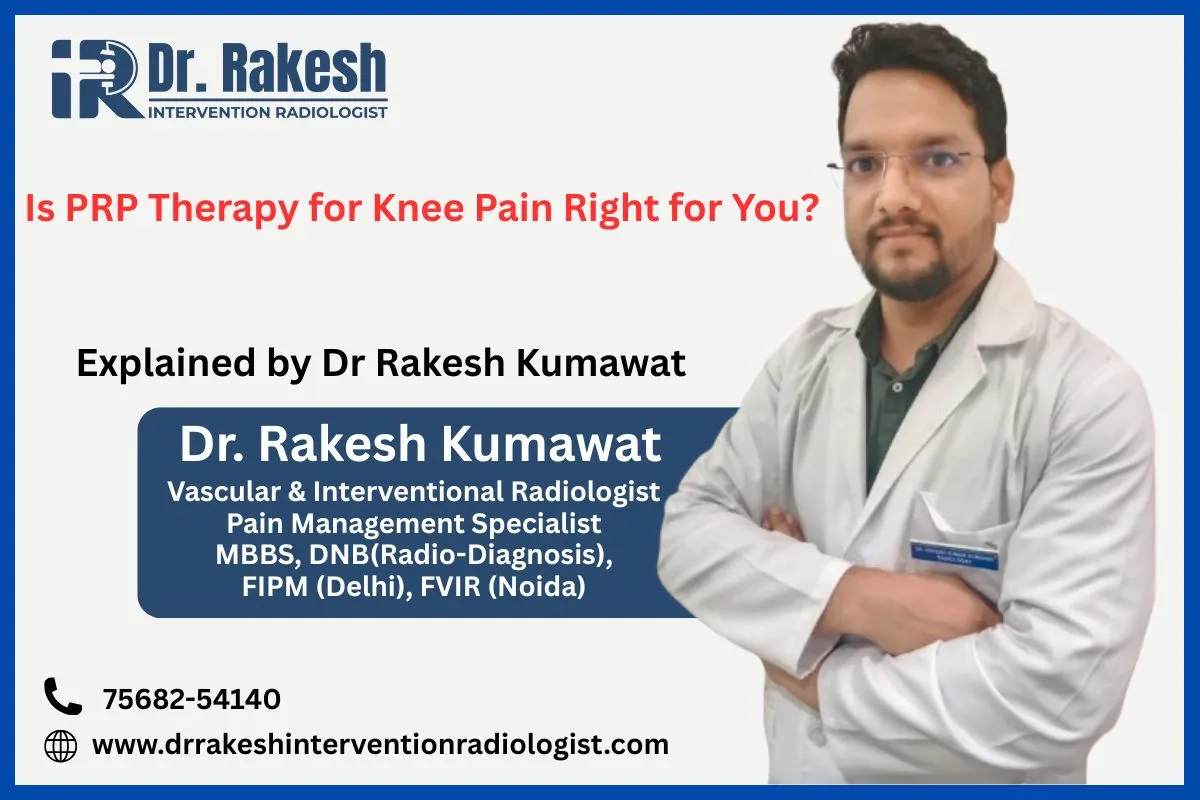
Is PRP Therapy for Knee Pain Right for You?
Knee Pain Doctor In Jaipur is one of the leading causes of reduced mobility and discomfort, affecting people of all ages. Whether it’s caused by osteoarthritis, sports injuries, ligament damage, or age-related wear and tear, persistent knee pain can interfere with daily activities and reduce overall quality of life.
While painkillers and steroid injections may offer temporary relief, many patients today are looking for treatments that support the body’s natural healing process rather than simply masking pain. One such advanced option is PRP (Platelet-Rich Plasma) Therapy, a minimally invasive treatment that has gained popularity for managing selected knee conditions.
But an important question remains: Is PRP Therapy for Knee Pain Right for You?
The answer depends on the cause of your knee pain, the severity of joint damage, your overall health, and your treatment goals. Dr. Rakesh Kumawat – Best Interventional Radiologist and Pain Management Specialist in Jaipur specializes in advanced image-guided pain management and offers personalized evaluations to determine whether PRP Therapy is an appropriate treatment option.
What Is PRP Therapy?
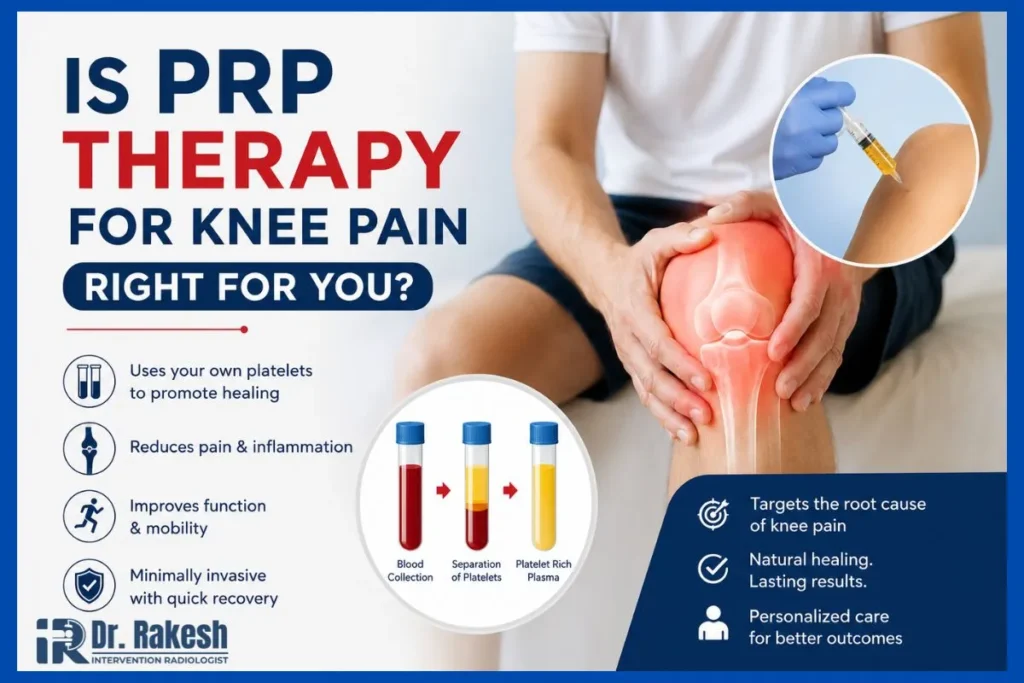
Platelet-Rich Plasma (PRP) Therapy is a regenerative treatment that uses a concentrated portion of your own blood to support the body’s natural healing response.
Platelets are best known for helping blood clot after an injury, but they also contain growth factors and bioactive proteins involved in tissue repair. By concentrating these platelets and injecting them into the affected knee under image guidance, PRP Therapy aims to promote healing in selected tissues.
Because the treatment uses your own blood, PRP is considered an autologous therapy, reducing the risk of allergic reactions or rejection.
How Does PRP Therapy Work?
The procedure involves several carefully controlled steps:
- A small sample of your blood is collected.
- The blood is placed in a centrifuge to separate and concentrate the platelets.
- The platelet-rich plasma is prepared.
- Using ultrasound or other image guidance, the PRP is injected into the targeted area of the knee.
The concentrated platelets release growth factors that may help support tissue repair, reduce inflammation, and improve the healing environment within the joint.
Which Knee Problems May Benefit from PRP Therapy?
PRP Therapy is not a universal solution for every type of Knee Pain Treatment In Jaipur. It is generally considered for carefully selected patients with specific conditions.
These may include:
- Early osteoarthritis
- Mild to moderate cartilage degeneration
- Patellar tendon injuries
- Ligament injuries
- Sports-related knee injuries
- Chronic tendon inflammation
- Soft tissue damage around the knee
A detailed clinical evaluation helps determine whether PRP is likely to be beneficial.
Benefits of PRP Therapy for Knee Pain
PRP Therapy offers several potential advantages for selected patients.
These include:
- Minimally invasive treatment
- Uses the patient’s own blood
- Supports natural healing
- May reduce inflammation
- May improve joint function
- Outpatient procedure
- Minimal recovery time
- Can be combined with physiotherapy and lifestyle modifications
Although results vary from person to person, many patients experience gradual improvement over several weeks or months.
What Happens During the Procedure?
PRP Therapy is usually performed as a day-care procedure.
The process generally includes:
- Clinical evaluation
- Blood sample collection
- PRP preparation
- Image-guided injection into the affected knee
- Short observation period
- Discharge on the same day
The procedure itself typically takes less than an hour.
Recovery After PRP Therapy
Recovery is usually straightforward.
Patients may be advised to:
- Rest the knee for a short period.
- Avoid strenuous activity for several days.
- Follow prescribed physiotherapy exercises.
- Attend follow-up appointments.
- Maintain a healthy body weight.
- Gradually return to normal activities.
Because PRP works by supporting biological healing, improvements usually develop gradually rather than immediately.
PRP Therapy vs Painkillers
Painkillers mainly reduce pain signals and inflammation temporarily.
PRP Therapy takes a different approach by attempting to improve the healing environment inside the affected tissues.
| Painkillers | PRP Therapy |
|---|---|
| Temporary symptom relief | Supports natural healing |
| Requires repeated medication | Usually performed as a procedure |
| May cause long-term side effects | Uses the patient’s own blood |
| Does not repair tissue | Aims to improve tissue recovery |
Both treatments have their role, but they serve different purposes.
Why Choose Dr. Rakesh Kumawat for PRP Therapy?
Selecting the right specialist is just as important as choosing the right treatment.
Dr. Rakesh Kumawat – Best Interventional Radiologist in Jaipur and Pain Management Specialist specializes in advanced image-guided procedures for chronic knee pain.
Patients benefit from:
- Comprehensive knee pain evaluation
- Personalized treatment planning
- Image-guided PRP Therapy
- Advanced interventional pain management
- Modern minimally invasive techniques
- Focus on preserving natural joint function
- Long-term follow-up care
Every treatment plan is based on the patient’s diagnosis, imaging findings, lifestyle, and overall health.
Frequently Asked Questions (FAQs)
1. What is PRP Therapy for knee pain?
PRP Therapy uses platelet-rich plasma prepared from your own blood to support tissue healing and improve the biological environment within the affected knee.
2. Is PRP Therapy suitable for osteoarthritis?
PRP Therapy may be beneficial for selected patients with early to moderate osteoarthritis. A detailed evaluation is necessary to determine suitability.
3. Is PRP Therapy painful?
The procedure is minimally invasive. Some patients experience mild discomfort during or after the injection, which usually settles within a short time.
4. How long does the procedure take?
The complete PRP process, including blood collection, preparation, and injection, generally takes 45 to 60 minutes.
5. How soon will I notice improvement?
Many patients experience gradual improvement over several weeks as the body’s natural healing response develops.
6. Can PRP Therapy replace knee replacement surgery?
PRP Therapy is not a replacement for surgery in every case. However, for selected patients with early joint disease, it may help improve symptoms and delay more invasive procedures.
7. Are there any side effects?
Because PRP uses the patient’s own blood, serious complications are uncommon. Mild temporary soreness or swelling at the injection site may occur.
8. Is PRP Therapy better than steroid injections?
Both treatments have different purposes. Steroids mainly reduce inflammation, while PRP aims to support tissue healing. The appropriate choice depends on your diagnosis.
9. Can PRP Therapy be combined with physiotherapy?
Yes. Physiotherapy, strengthening exercises, and lifestyle modifications are often recommended alongside PRP Therapy to optimize recovery.
10. Where can I receive image-guided PRP Therapy in Jaipur?
Patients looking for advanced, personalized PRP Therapy can consult Dr. Rakesh Kumawat – Best Interventional Radiologist and Pain Management Specialist Doctor In Jaipur, who specializes in image-guided, minimally invasive treatments for chronic knee pain.