What Your Knee Pain Says About Your Joint Health
Knee Pain Doctor In Jaipur is more than just discomfort. The way your knee hurts, when the pain appears, and what activities make it worse can provide important clues about your overall joint health.
Some people feel pain while climbing stairs, others notice stiffness in the morning, while some experience swelling or aching after walking. These patterns can point toward problems such as osteoarthritis, cartilage wear, ligament injuries, inflammation, or irritation of the nerves around the knee.
Understanding these warning signs early can help prevent chronic knee problems and guide the right treatment.
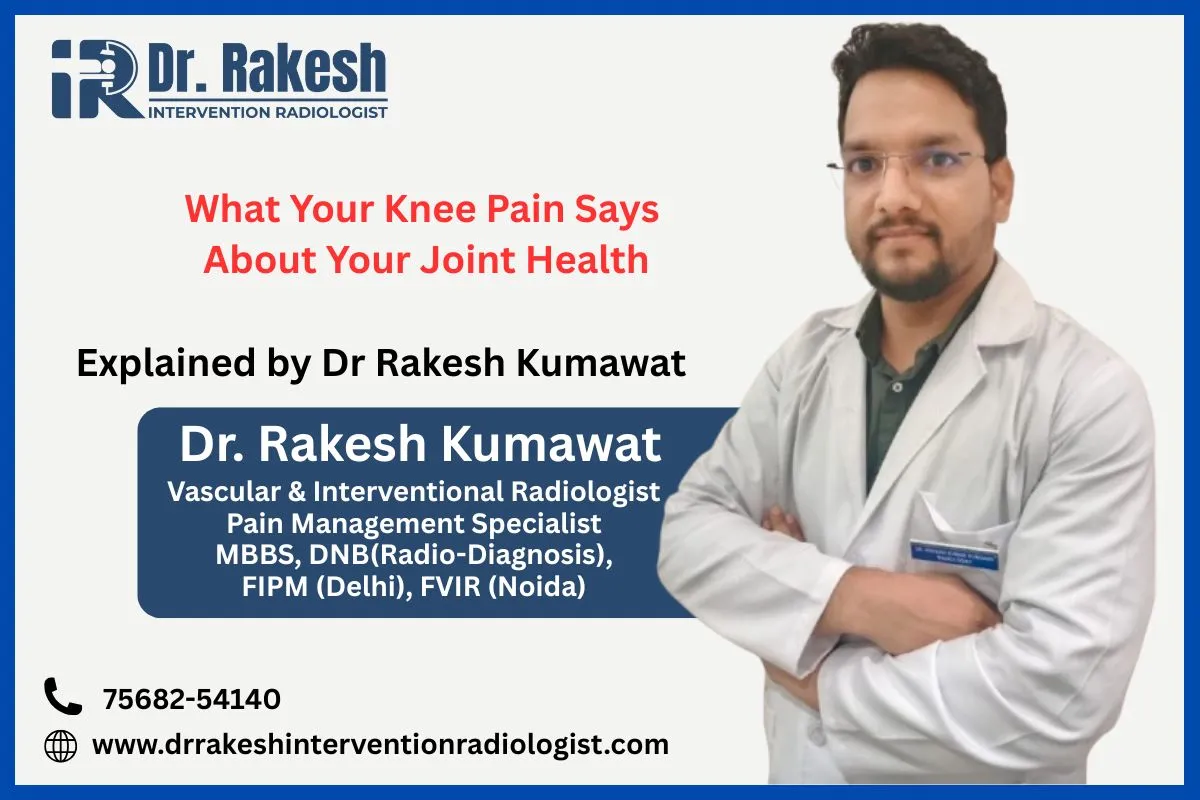
Dr. Rakesh Kumawat – Best Interventional Radiologist and Pain Management Specialist in Jaipur, at VascuCare Diagnostics & Interventions, provides advanced evaluation and minimally invasive treatment options for chronic knee pain.
Why Knee Pain Should Not Be Ignored
The knee carries a significant amount of body weight during walking, standing, climbing stairs, and other daily activities. Persistent pain may indicate that one or more structures inside the joint are under stress or damaged.
Common causes include:
• Osteoarthritis
• Cartilage degeneration
• Meniscus injuries
• Ligament problems
• Tendon inflammation
• Previous injuries
• Chronic joint inflammation
• Age-related changes
Early diagnosis can help determine whether the condition can be managed with conservative or minimally invasive treatment.
What Different Knee Pain Patterns May Mean
Pain While Climbing Stairs
Pain while going up or down stairs may be linked to cartilage wear, patellofemoral problems, or osteoarthritis.
Morning Stiffness
Knee stiffness after waking up may indicate joint inflammation or degenerative changes, especially when it occurs regularly.
Pain After Walking
Pain that becomes worse after walking or standing for long periods can be associated with osteoarthritis, inflammation, or overloading of the joint.
Swelling Around the Knee
Recurrent swelling may indicate inflammation, excess joint fluid, injury, or arthritis and should be properly evaluated.
Clicking or Grinding with Pain
Knee Pain Treatment In Jaipur sounds are not always abnormal. However, clicking or grinding accompanied by pain, stiffness, or swelling may indicate cartilage or joint problems.
Pain at Rest or During the Night
Pain that continues even when you are resting may suggest more advanced inflammation or joint degeneration and deserves medical assessment.
How Doctors Evaluate Joint Health
The right treatment begins with identifying the actual source of pain.
Evaluation may include:
• Detailed medical history
• Physical examination
• Digital X-rays
• MRI when required
• Ultrasound in selected cases
• Assessment of walking and joint movement
These investigations help doctors understand whether the pain is coming from cartilage, nerves, inflammation, ligaments, or other structures.
Modern Treatment Options for Knee Pain
Treatment depends on the diagnosis and severity of the problem.
PRP Therapy
Platelet-Rich Plasma Therapy uses concentrated platelets prepared from the patient’s own blood. It may be considered for selected patients with early osteoarthritis, tendon injuries, or mild degenerative joint changes.
Genicular Nerve Block
A Genicular Nerve Block targets the sensory nerves that carry pain signals from the knee. It can provide temporary relief and help determine whether those nerves are contributing significantly to the pain.
Genicular Nerve Ablation
If a patient responds well to a diagnostic nerve block, Genicular Nerve Ablation may provide longer-lasting relief by reducing pain transmission through selected genicular nerves.
Genicular Artery Embolization
Genicular Artery Embolization Doctor In Jaipur (GAE) is a minimally invasive, image-guided procedure used for selected patients with knee osteoarthritis where inflammation plays an important role.
The procedure targets abnormal blood vessels associated with chronic inflammation around the knee.

When Should You See a Knee Pain Specialist?
Seek medical evaluation if you notice:
• Pain lasting for several weeks
• Recurrent swelling
• Difficulty climbing stairs
• Reduced walking distance
• Knee instability
• Persistent morning stiffness
• Night pain
• Pain that does not improve with routine treatment
Waiting until the pain becomes severe may make the condition more difficult to manage.
Why Personalized Treatment Matters
Two people with similar-looking X-rays may experience very different symptoms. That is why treatment should not be based on imaging alone.
A specialist considers:
• Age
• Severity of pain
• Joint condition
• Activity level
• Previous treatments
• Medical history
• Functional limitations
This helps determine whether physiotherapy, medication, PRP, nerve treatment, embolization, or another approach is most suitable.
Why Choose Dr. Rakesh Kumawat?
Dr. Rakesh Kumawat – Best Interventional Radiologist and Pain Management Specialist Doctor In Jaipur, at VascuCare Diagnostics & Interventions, specializes in advanced image-guided treatment for chronic knee pain.
Treatment options include:
• PRP Therapy
• Genicular Nerve Block
• Genicular Nerve Ablation
• Genicular Artery Embolization
• Personalized pain management
• Image-guided diagnostic procedures
The focus is on identifying the source of pain and selecting the least invasive effective treatment for each patient.
Frequently Asked Questions (FAQs)
1. What does persistent knee pain usually indicate?
Persistent knee pain may be related to osteoarthritis, cartilage damage, inflammation, ligament injuries, or other joint problems.
2. Is knee pain while climbing stairs a sign of arthritis?
It can be associated with osteoarthritis or patellofemoral joint problems, but a proper evaluation is needed to determine the exact cause.
3. Why does my knee feel stiff in the morning?
Morning stiffness can occur with osteoarthritis or inflammatory joint conditions, especially when it happens frequently.
4. Is swelling around the knee serious?
Repeated or significant swelling should be evaluated because it may indicate inflammation, injury, arthritis, or excess joint fluid.
5. What is PRP Therapy for knee pain?
PRP Therapy uses concentrated platelets from the patient’s own blood to support healing and may help selected patients with early degenerative or soft tissue knee problems.
6. What is a Genicular Nerve Block?
It is an image-guided procedure that temporarily reduces pain signals from the sensory nerves around the knee.
7. What is Genicular Nerve Ablation?
Genicular Nerve Ablation uses radiofrequency energy to reduce pain transmission from selected nerves and may provide longer-lasting relief in suitable patients.
8. What is Genicular Artery Embolization?
GAE is a minimally invasive procedure that targets abnormal blood vessels associated with inflammation in selected patients with knee osteoarthritis.
9. Can chronic knee pain be treated without surgery?
Yes. Depending on the diagnosis, treatment may include physiotherapy, medication, PRP Therapy, nerve procedures, or Genicular Artery Embolization.
10. Where can I get advanced knee pain treatment in Jaipur?
For comprehensive evaluation and minimally invasive knee pain treatment, consult Dr. Rakesh Kumawat – Best Interventional Radiologist and Pain Management Specialist Doctor In Jaipur at VascuCare Diagnostics & Interventions.