Pain Management Specialist Doctor in Jaipur for Back, Knee, Shoulder, and Nerve Pain
Chronic pain can affect every part of life. Whether it is back pain, knee pain, shoulder pain, or nerve pain, constant discomfort can make walking, sleeping, working, and daily activities difficult. Many people keep taking painkillers for temporary relief, but the real cause of pain often remains untreated. This is where a pain management specialist doctor in Jaipur helps by diagnosing the source of pain and offering advanced treatment options.
Dr. Rakesh Kumawat, Best Interventional Radiologist and Pain Management Specialist in Jaipur, provides advanced and minimally invasive pain management solutions for patients suffering from chronic pain conditions. With image-guided techniques and modern interventional procedures, many painful conditions can be treated without major surgery.
What Does a Pain Management Specialist Doctor Do?
A pain management specialist focuses on finding the exact reason behind pain and treating it with a targeted approach. Instead of only giving general pain medicines, the doctor evaluates whether the pain is coming from joints, nerves, muscles, discs, ligaments, inflammation, or blood flow-related problems.
Pain may be acute or chronic. Acute pain happens suddenly after injury, strain, or surgery. Chronic pain lasts for weeks or months and may continue even after basic treatment. Back pain, knee arthritis pain, frozen shoulder pain, sciatica, cervical pain, nerve compression pain, and post-surgical pain are common reasons why patients visit a pain management specialist.
Common Pain Conditions Treated in Jaipur
A pain management specialist doctor in Jaipur treats several conditions related to the spine, joints, nerves, and soft tissues. These include lower back pain, slip disc pain, sciatica, neck pain, shoulder pain, knee arthritis pain, sports injury pain, nerve pain, heel pain, and chronic musculoskeletal pain.
Many patients with knee pain believe that surgery is the only option. However, in selected cases, advanced procedures like genicular nerve block, genicular nerve ablation, genicular artery embolization, and PRP therapy may help reduce pain and improve mobility. The right treatment depends on the patient’s age, pain severity, joint condition, medical history, and diagnostic reports.
Pain Management for Back Pain
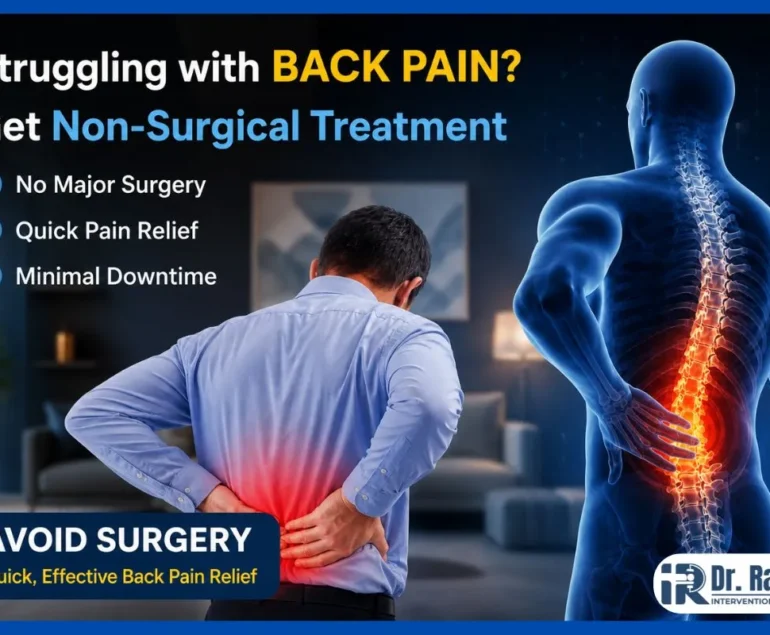
Back pain is one of the most common reasons people visit a pain specialist. It may occur due to muscle strain, disc bulge, nerve compression, arthritis, poor posture, injury, or age-related spine changes. Some patients experience pain only in the lower back, while others feel pain spreading to the legs due to sciatica.
A pain management doctor first identifies the exact pain generator. Diagnosis may include physical examination, X-ray, MRI, or nerve-related evaluation. Treatment may include medicines, physiotherapy guidance, lifestyle correction, image-guided injections, nerve blocks, or other minimally invasive procedures. The goal is to reduce pain, improve movement, and avoid unnecessary surgery whenever possible.
Pain Management for Knee Pain
Knee pain is commonly seen in patients with osteoarthritis, ligament injury, meniscus problems, inflammation, or age-related joint degeneration. When medicines, exercises, and basic treatments do not give enough relief, advanced pain procedures may be considered.
Genicular Nerve Block for Knee Pain
A Genicular Nerve Block Treatment In Jaipur is a minimally invasive procedure used for knee pain management. In this treatment, medicine is injected near the genicular nerves around the knee. These nerves carry pain signals from the knee joint to the brain. By blocking these pain signals, the patient may experience relief from chronic knee pain.
This procedure is often used as a diagnostic and therapeutic option. If the patient gets good relief from a genicular nerve block, the doctor may consider genicular nerve ablation for longer-lasting pain control.
Genicular Nerve Ablation for Chronic Knee Pain
Genicular nerve ablation is an advanced pain management procedure for patients with chronic knee pain, especially due to knee osteoarthritis. In this procedure, targeted heat energy is used to reduce pain signals from selected genicular nerves.
The benefit of genicular nerve ablation is that it does not replace or remove the knee joint. It focuses on pain control and can help patients who are not ready for knee replacement surgery or are not suitable candidates for major surgery. It may help improve walking comfort, daily activity level, and quality of life in selected patients.
Genicular Artery Embolization for Knee Arthritis Pain
Genicular artery embolization is a minimally invasive interventional radiology procedure used for selected patients with knee osteoarthritis pain. In arthritis, abnormal inflammation and increased blood flow around the knee joint may contribute to pain. During genicular artery embolization, tiny particles are used to reduce abnormal blood flow to the inflamed area.
This treatment may be suitable for patients who have chronic knee pain, swelling, and inflammation and want a non-surgical option. Since it is a specialized procedure, proper evaluation by an interventional radiologist is very important.
PRP Therapy for Joint and Soft Tissue Pain
PRP therapy, also known as platelet-rich plasma therapy, is a regenerative treatment that uses a patient’s own blood. A small amount of blood is collected, processed to concentrate platelets, and then injected into the affected area. Platelets contain growth factors that may support healing and reduce inflammation.
PRP therapy may be used in selected cases of knee pain, shoulder pain, tendon injury, ligament injury, and early joint degeneration. It is especially useful for patients looking for a natural and minimally invasive treatment option. However, results vary from person to person, and the doctor decides suitability after proper examination.
Pain Management for Shoulder Pain
Shoulder pain may occur due to frozen shoulder, rotator cuff injury, tendon inflammation, arthritis, or nerve-related problems. Patients may face difficulty lifting the arm, sleeping on one side, wearing clothes, or doing routine work.
Treatment may include medicines, physiotherapy, PRP therapy, joint injections, nerve blocks, or image-guided procedures. Early diagnosis can prevent stiffness and long-term movement restriction.
Pain Management for Nerve Pain
Nerve pain can feel like burning, tingling, electric shock, numbness, or shooting pain. It may happen due to diabetes, nerve compression, spine problems, injury, or inflammation. Nerve pain should not be ignored because delayed treatment may worsen symptoms.
A pain management specialist identifies the affected nerve and plans treatment accordingly. Options may include medicines, nerve blocks, radiofrequency treatment, image-guided injections, and lifestyle changes.
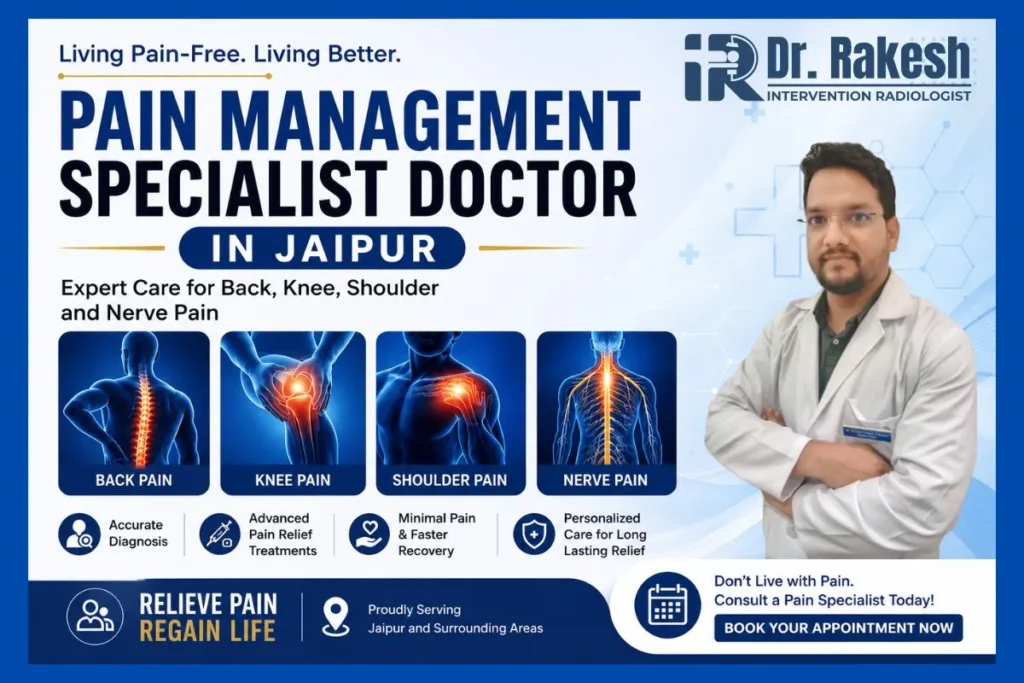
Why Choose Dr. Rakesh Kumawat in Jaipur?
Dr. Rakesh Kumawat is known as the Best Interventional Radiologist and Pain Management Specialist in Jaipur. His expertise in image-guided and minimally invasive procedures helps patients get targeted treatment for back pain, knee pain, shoulder pain, nerve pain, and vascular-related pain conditions.
Instead of only focusing on temporary pain relief, the approach is to diagnose the root cause and create a personalized treatment plan. Advanced options like genicular nerve block, genicular artery embolization, PRP therapy, and genicular nerve ablation can help suitable patients manage pain without major surgery.
Conclusion
Chronic pain should not be accepted as a normal part of life. With modern pain management techniques, many conditions can be treated effectively through targeted and minimally invasive procedures. Whether you are suffering from back pain, knee pain, shoulder pain, or nerve pain, timely consultation with a pain management specialist doctor can help you find the right treatment path.
For advanced pain treatment in Jaipur, Dr. Rakesh Kumawat, Best Interventional Radiologist in Jaipur and Pain Management Specialist, offers expert care for patients looking for safe, modern, and personalized pain relief solutions.
FAQs
1. Who is a pain management specialist doctor?
A pain management specialist doctor diagnoses and treats acute and chronic pain conditions related to the spine, joints, nerves, muscles, and soft tissues.
2. When should I visit a pain management specialist in Jaipur?
You should visit a pain specialist if pain continues for several weeks, affects daily activities, causes numbness, or does not improve with basic medicines and rest.
3. What is genicular nerve block?
Genicular nerve block is an injection-based procedure that targets nerves around the knee to reduce pain signals and provide relief from chronic knee pain.
4. What is genicular nerve ablation?
Genicular nerve ablation is a minimally invasive procedure that uses controlled heat energy to reduce pain signals from selected nerves around the knee.
5. What is genicular artery embolization?
Genicular artery embolization is an image-guided procedure that reduces abnormal blood flow and inflammation around the knee joint in selected arthritis pain patients.
6. Is PRP therapy useful for knee pain?
PRP therapy may help selected patients with knee pain, early arthritis, tendon injury, or soft tissue damage by using concentrated platelets from the patient’s own blood.
7. Can back pain be treated without surgery?
Yes, many back pain conditions can be managed without surgery through medicines, physiotherapy, posture correction, nerve blocks, injections, and image-guided procedures.
8. What causes nerve pain?
Nerve pain may be caused by diabetes, disc problems, nerve compression, injury, inflammation, or certain medical conditions.
9. Are pain management procedures safe?
Most modern pain management procedures are minimally invasive and image-guided. Safety depends on proper diagnosis, patient selection, and expert medical care.
10. Who is the best pain management specialist doctor in Jaipur?
Dr. Rakesh Kumawat is known as the Best Interventional Radiologist and Pain Management Specialist in Jaipur, offering advanced treatment for back, knee, shoulder, and nerve pain.