Genicular Nerve Block for Chronic Knee Pain: What Patients Should Know
Chronic Knee Pain Treatment In Jaipur is not always explained by how damaged a knee looks on an X-ray. Some people have significant arthritis but manageable symptoms, while others experience severe pain that limits walking, sleep, and everyday activities. This difference highlights an important part of knee pain management: understanding how pain is being generated and transmitted.
For selected patients, a Genicular Nerve Block (GNB) can help address this question. Rather than treating cartilage or changing the structure of the knee, the procedure targets sensory nerves involved in carrying pain signals from the knee joint.
What Exactly Is a Genicular Nerve Block?
Genicular nerves are small sensory nerve branches located around the knee. They contribute to transmitting pain information from the joint toward the nervous system.
During a Genicular Nerve Block, medication—typically a local anesthetic—is carefully delivered near selected genicular nerves.
An important point patients should understand is that GNB can have both therapeutic and diagnostic value. Temporary improvement after the block may indicate that the targeted nerves are significantly involved in the patient’s chronic pain.
Why Is GNB Different From a Regular Knee Injection?
A conventional intra-articular knee injection places medication inside the knee joint. A Genicular Nerve Block takes a different approach.
Instead of entering the joint to address intra-articular symptoms, GNB targets specific sensory nerves outside the joint.
This distinction matters because chronic knee pain can involve multiple mechanisms. Some patients have inflammation-dominant symptoms, while others may have an important nerve-mediated component.
Therefore, GNB should not simply be considered another type of knee injection.
Which Patients May Be Considered for GNB?
A Genicular Nerve Block may be considered when knee pain has become persistent and conservative measures have not provided adequate improvement.
Potential candidates may include selected patients who:
• Have chronic knee osteoarthritis pain
• Continue to experience symptoms despite medicines and physiotherapy
• Have difficulty walking or climbing stairs
• Experience pain that significantly affects daily activities
• Cannot undergo surgery because of certain medical considerations
• Want evaluation for a nerve-targeted pain procedure
• Have persistent pain after knee surgery once other causes have been assessed
The decision requires clinical evaluation rather than simply looking at the patient’s age or X-ray.
What Can a Diagnostic Nerve Block Tell Us?
This is one of the most useful aspects of Genicular Nerve Block Treatment In Jaipur.
Imagine a patient with chronic knee arthritis who has tried exercise, medication, physiotherapy, and other conservative treatments but still has considerable pain. If temporarily blocking selected genicular nerves produces meaningful improvement, it provides useful information about the pain pathway.
The physician can assess changes in activities that normally trigger symptoms, such as walking or moving the knee.
A positive response may support consideration of Genicular Nerve Ablation in an appropriately selected patient.
How Is Genicular Nerve Block Performed?
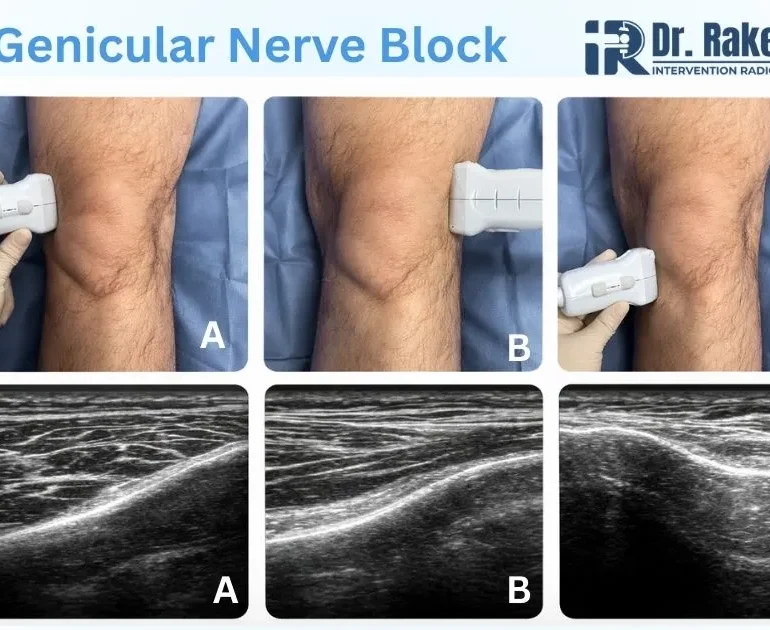
The procedure is generally performed with image guidance so the physician can accurately identify anatomical landmarks around the knee.
The skin is cleaned, and a thin needle is carefully positioned near the targeted genicular nerve location. A small amount of medication is then administered.
Depending on the technique and clinical situation, fluoroscopy or ultrasound may be used for guidance.
Because this is a targeted procedure, precise needle positioning is an important part of treatment.
What Should Patients Expect After GNB?
Patients may experience temporary improvement soon after the procedure because of the local anesthetic.
The amount and duration of relief vary considerably.
Patients may be asked to observe:
• Changes in pain intensity
• Improvement while walking
• Ability to climb stairs
• Pain during routine activities
• How long the improvement lasts
Keeping track of these changes can provide valuable information for the next treatment decision.
Does Genicular Nerve Block Cure Knee Arthritis?
No. GNB does not regenerate cartilage, reverse osteoarthritis, or repair structural joint damage.
Its role is related to controlling or evaluating pain signals.
This distinction prevents unrealistic expectations. A patient may experience meaningful pain reduction while the underlying arthritis remains present.
For this reason, exercise, rehabilitation, weight management when appropriate, and other aspects of joint care may still remain important.
What Happens If the Block Works?
When a diagnostic GNB produces significant temporary relief, Genicular Nerve Ablation (GNA) may sometimes be considered.
GNA uses controlled radiofrequency energy to reduce pain transmission through selected sensory nerves for a longer period.
However, progressing from a nerve block to ablation is not automatic. The physician should consider the degree of relief, duration, functional improvement, diagnosis, imaging, and overall health before recommending further treatment.
What If the Genicular Nerve Block Does Not Help?
A poor response can also provide useful information.
It may indicate that the targeted nerves are not the dominant source of the patient’s symptoms. The physician may then reconsider other pain mechanisms.
For example, selected knee osteoarthritis patients with an inflammatory and vascular component may be evaluated for Genicular Artery Embolization Doctor In Jaipur (GAE). Others may be candidates for PRP Therapy, rehabilitation, orthopedic treatment, or another approach.
This is why personalized knee pain management is more useful than repeatedly performing the same procedure.
Is GNB an Alternative to Knee Replacement?
GNB and knee replacement have completely different purposes.
A knee replacement addresses severely damaged joint structures, whereas GNB targets pain transmission. A nerve block cannot reconstruct an advanced arthritic joint.
For selected patients who do not currently require surgery or are unsuitable for it, minimally invasive pain treatments may help manage symptoms. Severe deformity or extensive structural damage may still require orthopedic evaluation.
Are There Risks?
Genicular Nerve Block is minimally invasive, but every procedure carries potential risks. These can include temporary soreness, bruising, bleeding, infection, allergic reaction, or unintended effects on nearby structures.
Patients taking blood-thinning medicines or having significant medical conditions should inform their physician before treatment.
Personalized Knee Pain Treatment in Jaipur
At VascuCare Diagnostics & Interventions, patients with persistent knee pain can be evaluated by Dr. Rakesh Kumawat – Best Interventional Radiologist and Pain Management Specialist in Jaipur.
The aim is to determine whether symptoms are more likely to benefit from Genicular Nerve Block, Genicular Nerve Ablation, PRP Therapy, Genicular Artery Embolization, rehabilitation, or another treatment rather than applying one procedure to every knee pain patient.

Conclusion
A Genicular Nerve Block can be both a treatment and a diagnostic tool for selected patients with chronic knee pain. Its greatest value may be in helping doctors understand whether specific sensory nerves are contributing significantly to ongoing symptoms.
GNB does not cure arthritis, but the patient’s response can provide useful information for creating a more individualized long-term pain-management strategy.
Frequently Asked Questions (FAQs)
1. How quickly does a Genicular Nerve Block work?
Local anesthetic can produce relief relatively quickly, although individual responses vary.
2. Is GNB the same as Genicular Nerve Ablation?
No. Genicular Nerve Block Treatment In Jaipur temporarily blocks pain signals, while ablation uses radiofrequency energy to reduce nerve-mediated pain for longer.
3. Can GNB repair knee cartilage?
No. It targets pain transmission and does not regenerate cartilage.
4. Is the procedure performed with imaging?
Ultrasound or fluoroscopic guidance may be used for accurate needle positioning.
5. Can GNB help severe osteoarthritis?
It may help pain in selected patients, but it cannot correct severe structural joint damage.
6. What if I get only temporary relief?
Temporary relief may still provide valuable diagnostic information about the source of pain.
7. Can GNB be repeated?
Repeat treatment depends on the patient’s response, diagnosis, and specialist assessment.
8. Is physiotherapy still needed after GNB?
Often yes. Improved pain control may help some patients participate more effectively in rehabilitation.
9. Who should avoid Genicular Nerve Block?
Patients with certain infections, bleeding risks, allergies, or other medical issues may not be suitable without further evaluation.
10. What treatment comes after a successful GNB?
For selected patients, a successful diagnostic block may lead to consideration of Genicular Nerve Ablation, depending on the overall clinical assessment.