
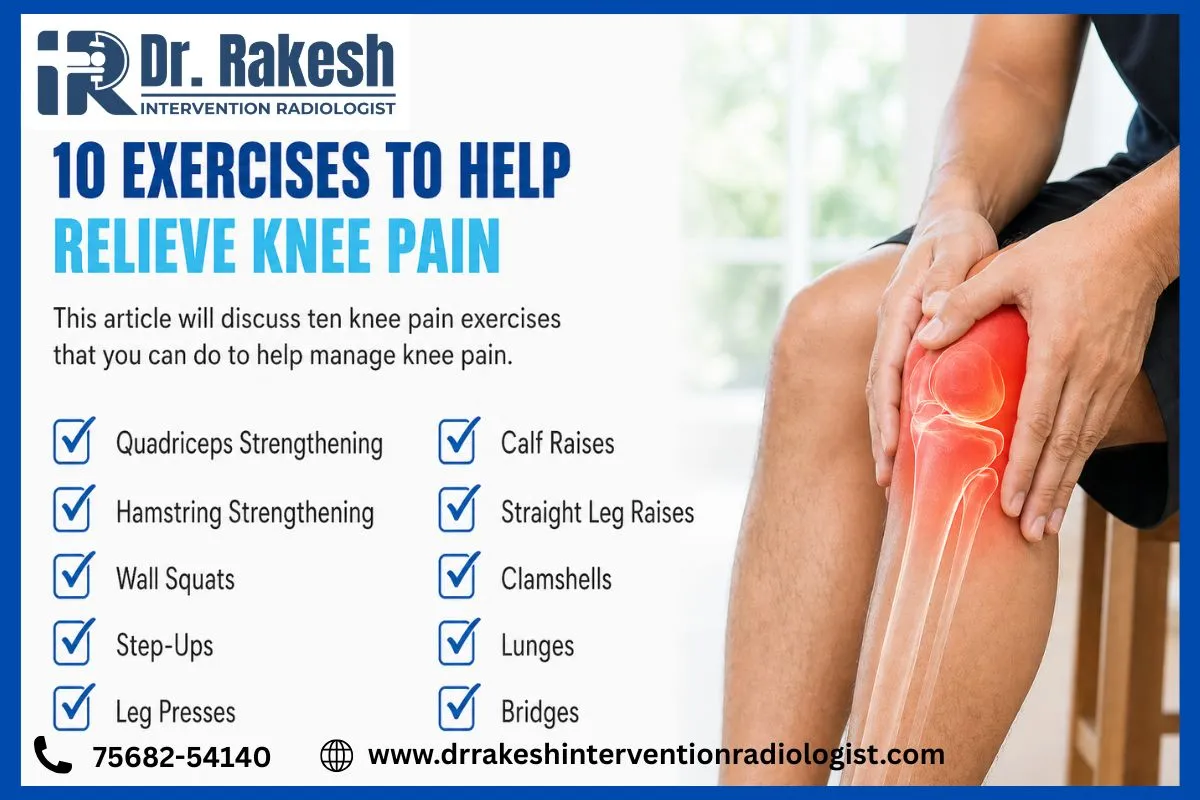
Best Exercises Recommended by Knee Pain Doctors for Fast Relief
Knee pain can affect your daily routine—whether it’s climbing stairs, walking, or even sitting comfortably. The right exercises, when done correctly, can significantly reduce pain, improve mobility, and strengthen the muscles supporting your knee.
Doctors and specialists often recommend low-impact, targeted exercises to relieve pain and prevent further damage. In many cases, combining exercise with expert guidance from specialists like Dr. Rakesh Kumawat – Interventional Radiologist and Pain Management Specialist can provide faster and more effective results.
Why Exercise is Important for Knee Pain
Regular exercise helps:
• Strengthen muscles around the knee
• Improve flexibility and joint movement
• Reduce stiffness and swelling
• Prevent further injury
Weak muscles can increase pressure on the knee joint, making pain worse over time.
Top Exercises for Knee Pain Relief
1. Straight Leg Raises
How to Do It:
• Lie flat on your back
• Keep one leg bent and the other straight
• Slowly lift the straight leg to the height of the opposite knee
• Hold for 5 seconds and lower slowly
Strengthens thigh muscles without stressing the knee
2. Quadriceps Sets
How to Do It:
• Sit or lie with your leg straight
• Tighten the thigh muscle
• Hold for 5–10 seconds
• Relax and repeat
Improves muscle strength and knee stability
3. Heel Slides
How to Do It:
• Lie on your back
• Slowly slide your heel toward your hips
• Bend the knee as much as comfortable
• Slide back to starting position
Enhances flexibility and range of motion
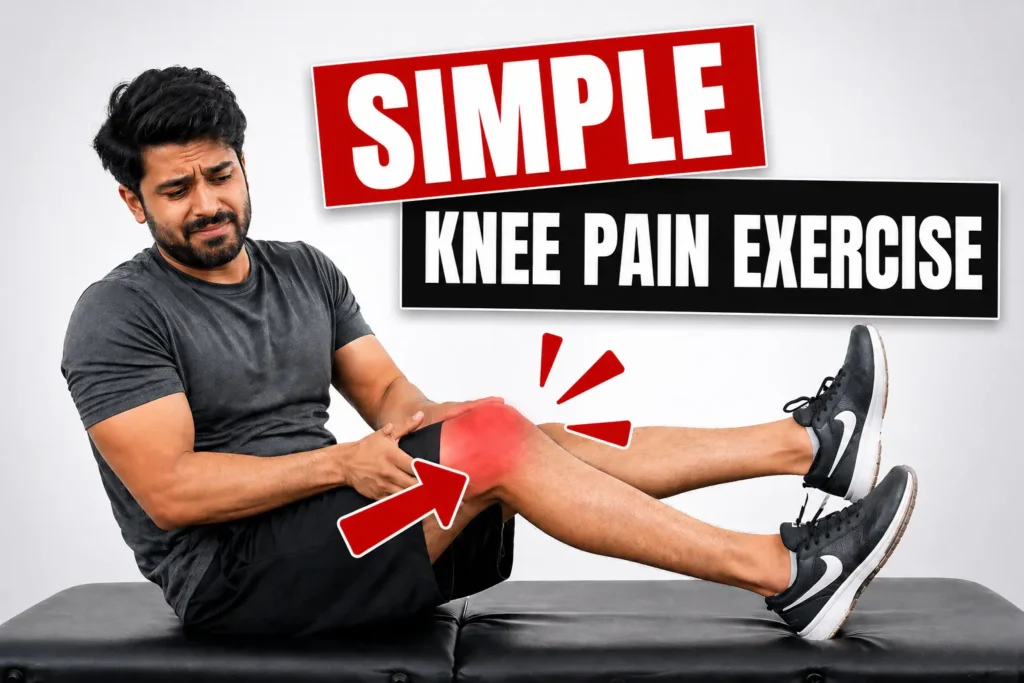
4. Hamstring Stretch
How to Do It:
• Sit with one leg extended
• Reach toward your toes
• Hold for 15–20 seconds
Reduces stiffness and improves flexibility
5. Wall Squats (Modified)
How to Do It:
• Stand with your back against a wall
• Slowly slide down into a partial squat
• Hold for a few seconds and rise back
Strengthens knees without excessive strain
6. Step-Ups
How to Do It:
• Use a low step or platform
• Step up with one leg, then step down
• Repeat slowly
Improves balance and functional strength
7. Knee Extensions
How to Do It:
• Sit on a chair
• Slowly extend your leg straight
• Hold for a few seconds and lower
Builds strength in the front thigh muscles
Tips for Safe Exercise
• Start slowly and increase intensity gradually
• Avoid exercises that cause sharp pain
• Maintain proper posture
• Warm up before exercising
• Consult a specialist if pain persists
When Exercise Isn’t Enough
If knee pain continues despite regular exercise, it may indicate an underlying issue that requires medical attention.
Advanced treatments such as:
1. Genicular Nerve Block
A minimally invasive injection that targets specific knee nerves to block pain signals and provide quick relief.
2. Genicular Artery Embolization
A modern procedure that reduces abnormal blood flow in inflamed knee tissues, helping decrease pain and swelling.
3. PRP Therapy (Platelet-Rich Plasma)
Uses the patient’s own blood platelets to promote healing, reduce inflammation, and improve joint function naturally.
4. Genicular Nerve Ablation
A long-lasting pain relief technique where targeted nerves are treated using heat to stop pain transmission.
These advanced options are offered by Dr. Rakesh Kumawat – Interventional Radiologist and Pain Management Specialist, providing effective, non-surgical solutions for long-term knee pain management.
Conclusion
Exercise is one of the most effective ways to manage knee pain naturally. With the right techniques and consistency, you can reduce discomfort, improve strength, and regain mobility.
However, if your pain persists, combining exercise with expert care ensures faster and lasting recovery. Don’t ignore knee pain—take proactive steps today for a healthier tomorrow.
Frequently Asked Questions (FAQs)
1. Which exercise is best for knee pain?
Straight leg raises and quad sets are among the safest and most effective.
2. Can exercise worsen knee pain?
Incorrect or excessive exercise can worsen pain, so proper technique is important.
3. How often should I exercise?
3–5 times a week is generally recommended.
4. Is walking good for knee pain?
Yes, but only if it doesn’t increase discomfort.
5. Can I do squats with knee pain?
Modified squats are safe if done correctly.
6. How long before I see results?
Improvement can be seen within a few weeks of regular exercise.
7. Should I use heat or ice after exercise?
Ice helps reduce swelling, while heat relaxes muscles.
8. When should I stop exercising?
If you feel sharp or severe pain, stop immediately.
9. Do I need physiotherapy?
It can be beneficial for guided and personalized exercise routines.
10. Who should I consult for knee pain?
A specialist like Dr. Rakesh Kumawat – Interventional Radiologist and Pain Management Specialist can guide proper treatment.