Knee Pain While Walking: Causes, Diagnosis & Treatment in Jaipur
Knee pain while walking is a common problem that can affect daily life, work routine, travel, exercise, and even simple activities like climbing stairs or standing for a long time. Many people ignore knee pain in the beginning, thinking it is due to tiredness or age, but repeated pain while walking may be a sign of an underlying joint, nerve, ligament, cartilage, or inflammation-related issue. In Jaipur, patients often look for Knee Pain Treatment In Jaipur, including non-surgical and advanced pain management options when medicines, rest, or physiotherapy do not provide long-term relief.
Knee pain while walking can feel different from person to person. Some patients feel sharp pain inside the knee, while others feel stiffness, swelling, heaviness, burning sensation, or difficulty in bending the knee. The pain may increase while walking on stairs, getting up from a chair, walking on uneven roads, sitting cross-legged, or standing after a long time. Early diagnosis is important because the right treatment depends on the actual cause of pain.
Common Causes of Knee Pain While Walking
The most common cause of knee pain while walking is osteoarthritis, where the protective cartilage inside the knee gradually wears down. This can lead to friction, stiffness, swelling, and pain during movement. Apart from arthritis, knee pain can also happen because of:
- Meniscus injury due to twisting or sudden movement
- Ligament strain or injury after trauma or sports activity
- Patellofemoral pain syndrome, commonly felt around the kneecap
- Tendonitis or bursitis, caused by inflammation around the knee
- Excess body weight, which increases pressure on the knee joint
- Old injury or untreated knee trauma
- Poor posture, weak muscles, or wrong walking pattern
- Nerve-related knee pain, where genicular nerves carry pain signals around the knee
In many patients, especially those with long-term knee pain, the problem is not only mechanical but also pain-signal related. This is where advanced pain management procedures like genicular nerve block and Genicular Nerve ablation may help selected patients.
Symptoms That Should Not Be Ignored
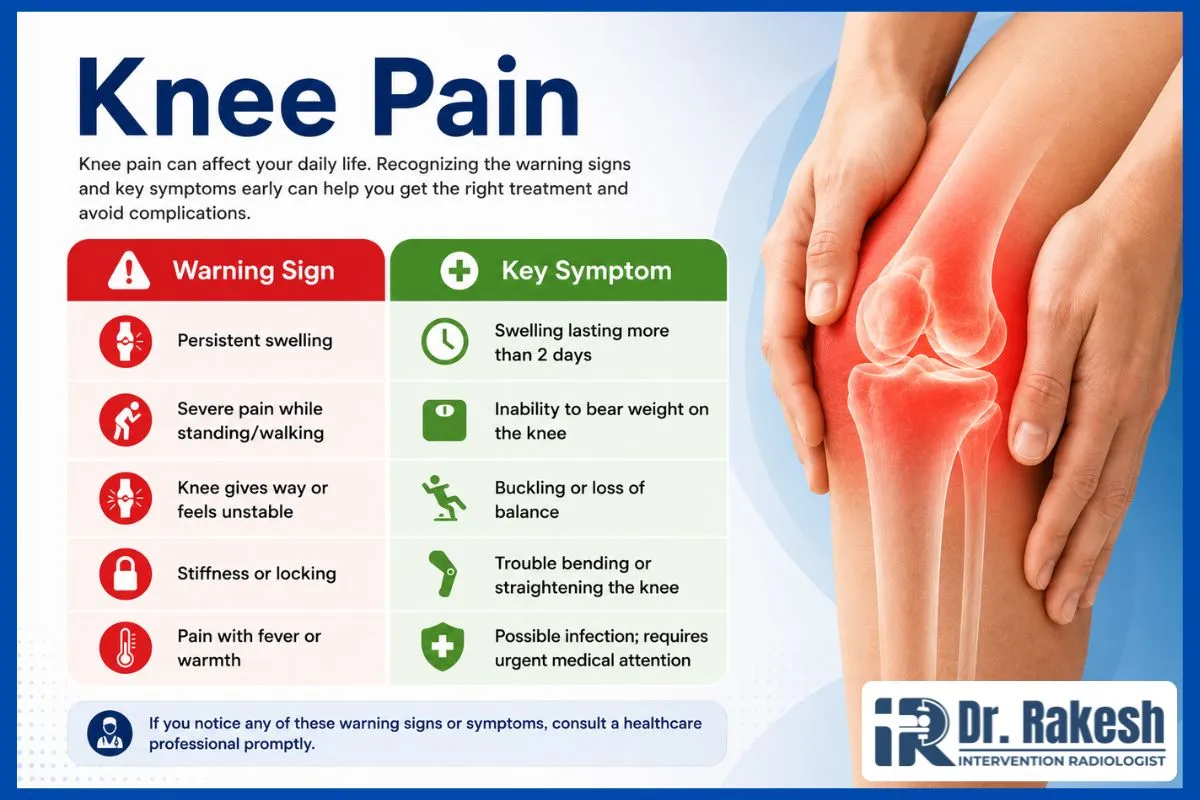
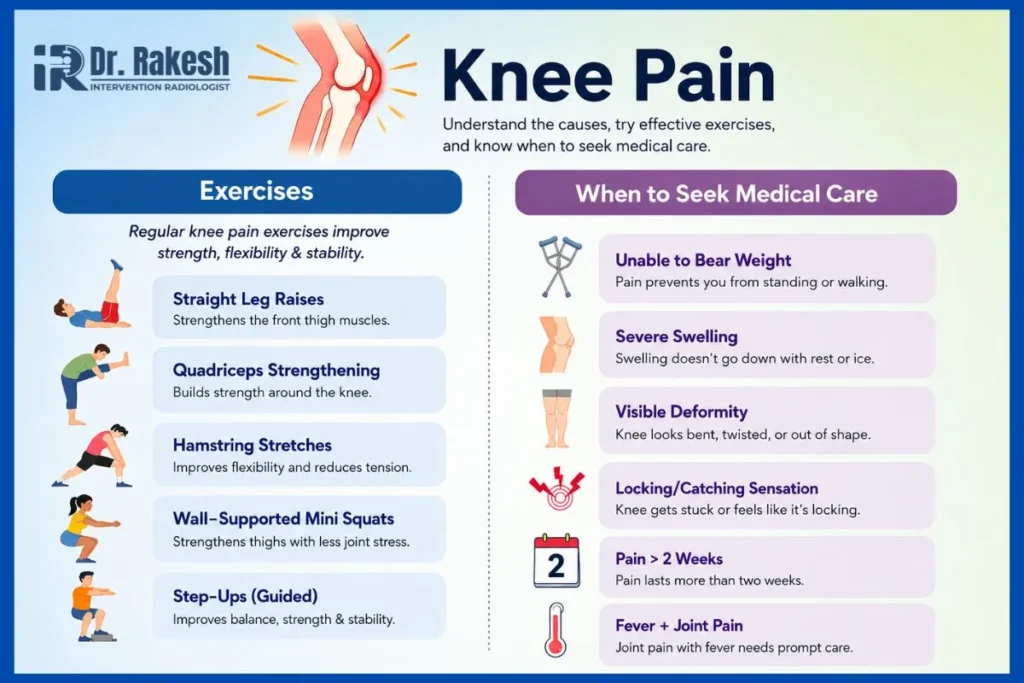
A person should consider medical evaluation for Knee Pain Treatment In Jaipur if knee pain continues for several days or keeps returning. Important warning signs include:
- Pain while walking or climbing stairs
- Swelling around the knee joint
- Stiffness after sitting or waking up
- Difficulty bending or straightening the knee
- Clicking, locking, or instability in the knee
- Pain that increases with daily activities
- Reduced walking distance due to discomfort
- Pain not improving with basic medicines or rest
Ignoring these symptoms may worsen mobility and make treatment more difficult later.
Diagnosis of Knee Pain in Jaipur
A proper diagnosis starts with a detailed consultation. The doctor checks the location of pain, type of pain, walking pattern, swelling, movement range, previous injury history, and lifestyle factors. Depending on the condition, diagnosis may include:
- Physical examination to check movement, swelling, tenderness, and stability
- X-ray to identify arthritis, joint space reduction, or bone changes
- MRI to evaluate meniscus, ligament, cartilage, and soft tissue injuries
- Blood tests if inflammatory arthritis or infection is suspected
- Diagnostic genicular nerve block to identify nerve-mediated knee pain and evaluate the need for Genicular Nerve Block Treatment In Jaipur
A genicular nerve block is an injection of medicine near specific nerves around the knee to provide temporary pain relief and help confirm whether those nerves are contributing to chronic knee pain. Cleveland Clinic describes it as an injection near certain knee nerves used for temporary pain relief.
Treatment Options for Knee Pain While Walking
Treatment depends on the patient’s age, diagnosis, pain severity, walking ability, and knee condition. In early stages, the doctor may suggest lifestyle correction, weight control, physiotherapy, muscle strengthening, posture improvement, knee support, and medicines. However, when pain becomes chronic or does not respond well to basic treatment, advanced non-surgical options may be considered.
PRP Therapy for Knee Pain
PRP therapy, or Platelet-Rich Plasma therapy, is a regenerative treatment in which a small amount of the patient’s own blood is processed to concentrate platelets and growth factors. This prepared plasma is then injected into the affected knee area. PRP therapy may be useful in selected patients with mild to moderate knee osteoarthritis, early cartilage-related pain, and chronic knee inflammation. Recent reviews report that PRP has potential for improving pain and function in knee osteoarthritis, although results may vary depending on patient selection, arthritis stage, and PRP preparation method.
Genicular Nerve Block
A genicular nerve block is commonly used for patients with chronic knee pain, especially when the pain is coming from sensory nerves around the knee. It may be advised when conservative treatment has not provided enough relief or when the doctor wants to confirm whether the genicular nerves are responsible for pain. If the patient gets good temporary relief after this block, the doctor may consider a longer-lasting procedure like Genicular Nerve ablation.
Genicular Nerve Ablation
Genicular Nerve ablation, also known as genicular nerve radiofrequency ablation, is an advanced pain management procedure. In this treatment, radiofrequency energy is used to target pain-carrying genicular nerves around the knee. The goal is to reduce pain signals so the patient can walk more comfortably. Literature reviews suggest that genicular nerve radiofrequency ablation may be an effective alternative for selected patients with painful knee osteoarthritis, especially when conservative care has failed.
Genicular Artery Embolization
Genicular Artery embolization, also called GAE, is a minimally invasive image-guided procedure performed by an interventional radiologist. In knee osteoarthritis, abnormal blood vessels and inflammation around the knee lining can contribute to pain. During GAE, selected small arteries supplying the inflamed area are targeted and blocked using tiny particles to reduce inflammation-related pain. UCLA Health describes GAE as a non-surgical option for knee osteoarthritis patients who have failed conservative therapy and do not want or are not suitable for knee replacement surgery. Radiology references also describe GAE as a minimally invasive procedure for symptomatic management of knee osteoarthritis.
Best Knee Pain Treatment in Jaipur
For patients looking for advanced non-surgical knee pain treatment in Jaipur, proper evaluation by an experienced specialist is very important. Every patient does not need the same treatment. Some may improve with physiotherapy and lifestyle changes, some may need PRP therapy, some may benefit from genicular nerve block or Genicular Nerve ablation, and selected arthritis patients may be candidates for genicular Artery embolization.
If you are searching for Dr. Rakesh Kumawat – Best Interventional Radiologist and Pain Management Specialist In Jaipur, he provides advanced image-guided and pain management solutions for patients suffering from knee pain, arthritis pain, walking difficulty, and chronic joint discomfort. With the right diagnosis and personalized treatment planning, patients can reduce pain, improve mobility, and return to daily activities with better confidence.
Knee pain while walking should not be ignored, especially when it affects your routine life. Early consultation, accurate diagnosis, and modern pain management options can help avoid unnecessary delay and provide better relief. Whether your knee pain is due to arthritis, inflammation, injury, or nerve-related pain, advanced treatments like PRP therapy, genicular nerve block, Genicular Nerve ablation, and genicular Artery embolization can offer new hope for patients in Jaipur.