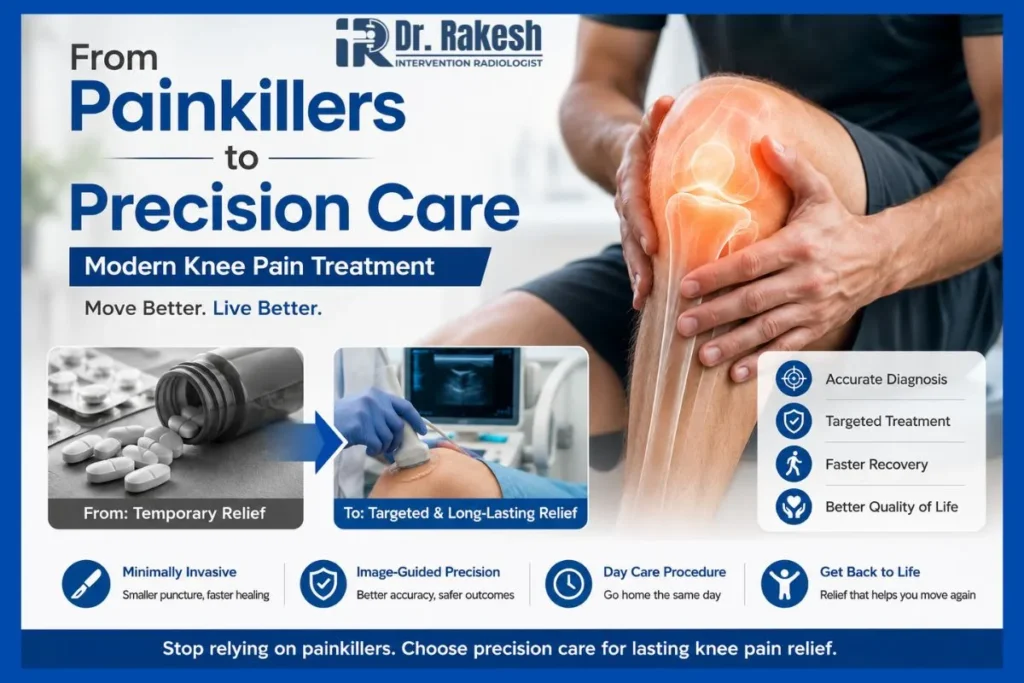
From Painkillers to Precision Care: Modern Knee Pain Treatment
Knee pain is one of the most common musculoskeletal problems affecting people of all ages. Whether caused by osteoarthritis, injury, inflammation, or age-related wear and tear, persistent knee pain can make everyday activities like walking, climbing stairs, exercising, or even standing for long periods extremely difficult.
For many years, treatment for chronic knee pain primarily relied on painkillers, physiotherapy, steroid injections, and eventually knee replacement surgery. While these approaches remain appropriate in certain situations, advances in medical science have introduced a more targeted approach known as precision pain care. Instead of simply masking pain, modern treatments focus on identifying the exact source of pain and delivering minimally invasive therapies tailored to each patient’s condition.
Today, procedures such as Genicular Nerve Block Treatment In Jaipur, Genicular Nerve Ablation, Genicular Artery Embolization (GAE), and PRP (Platelet-Rich Plasma) Therapy are expanding the options available for patients seeking non-surgical knee pain relief.
Under the expertise of Dr. Rakesh Kumawat – Best Interventional Radiologist and Pain Management Specialist in Jaipur, patients receive personalized, image-guided treatment plans designed to relieve pain, improve mobility, and enhance quality of life.
Understanding Chronic Knee Pain
The knee is a complex joint that supports body weight and allows smooth movement. Over time, injuries, repetitive stress, inflammation, or degenerative conditions can affect the bones, cartilage, ligaments, tendons, and surrounding tissues.
Common causes of chronic knee pain include:
- Osteoarthritis
- Rheumatoid arthritis
- Cartilage degeneration
- Meniscus injuries
- Ligament tears
- Tendon disorders
- Sports injuries
- Obesity
- Previous trauma
- Chronic inflammation
Because several different structures can generate pain, an accurate diagnosis is essential before deciding on treatment.
Why Painkillers Alone Are Often Not Enough
Painkillers may temporarily reduce discomfort, but they usually do not address the underlying reason for chronic knee pain.
Long-term dependence on pain medications may also increase the risk of:
- Stomach ulcers
- Kidney problems
- Liver damage
- Medication-related side effects
- Reduced effectiveness over time
Simply suppressing pain without identifying its source can delay proper treatment and allow joint damage to progress.
Modern pain management focuses on treating the cause—not just the symptom.
What Is Precision Care for Knee Pain?
Precision care means selecting the right treatment for the right patient based on:
- Detailed medical history
- Physical examination
- Diagnostic imaging
- Severity of arthritis
- Source of pain
- Activity level
- Overall health
- Individual treatment goals
Instead of applying the same treatment to everyone, specialists develop personalized treatment plans tailored to the patient’s specific condition.
Genicular Nerve Block: Targeting Pain Signals
A Genicular Nerve Block Treatment In Jaipur is a minimally invasive procedure performed under imaging guidance. A local anesthetic, sometimes combined with an anti-inflammatory medication, is injected around the genicular nerves that transmit pain signals from the knee.
Benefits include:
- Rapid pain relief
- Improved walking ability
- Reduced dependence on painkillers
- Outpatient treatment
- Diagnostic confirmation of the pain source
Patients who respond well to a Genicular Nerve Block may later be considered for Genicular Nerve Ablation.
Genicular Nerve Ablation: Longer-Lasting Relief
When knee pain returns after a successful nerve block, Genicular Nerve Ablation may provide longer-lasting relief.
Using radiofrequency energy, this image-guided procedure interrupts pain transmission through selected sensory nerves while preserving normal muscle function and joint movement.
Potential benefits include:
- Long-term pain control
- Better mobility
- Improved quality of life
- Reduced medication use
- Minimal recovery time
It is commonly recommended for patients with chronic osteoarthritis who continue to experience significant pain despite conservative treatment.
Genicular Artery Embolization (GAE): Treating Inflammation at Its Source
Research has shown that chronic inflammation is an important contributor to osteoarthritis-related knee pain. In many patients, abnormal blood vessels develop around the inflamed joint and help sustain this inflammatory process.
Genicular Artery Embolization Doctor In Jaipur (GAE) is an advanced image-guided procedure that selectively reduces blood flow to these abnormal vessels without affecting the healthy circulation of the knee.
GAE may help:
- Reduce inflammation
- Decrease chronic pain
- Improve joint function
- Enhance mobility
- Delay the need for knee replacement in selected patients
Because the procedure targets inflammation rather than simply blocking pain signals, it offers a different treatment approach for appropriate candidates.
PRP Therapy: Supporting Natural Healing
Platelet-Rich Plasma (PRP) Therapy uses platelets obtained from the patient’s own blood. These platelets contain growth factors that may support the body’s natural healing processes.
After preparation, the platelet-rich plasma is injected into the affected knee under image guidance.
PRP Therapy may be considered for:
- Early osteoarthritis
- Tendon injuries
- Ligament injuries
- Mild cartilage degeneration
- Sports-related knee conditions
Its goal is to support tissue repair, reduce inflammation, and improve joint function.
Which Knee Pain Treatment Is Right for You?
There is no single treatment that works for every patient.
The most suitable option depends on several factors, including:
Genicular Nerve Block
Often recommended when the primary goal is to diagnose or temporarily relieve pain transmitted by the genicular nerves.
Genicular Nerve Ablation
Usually considered when patients experience good relief from a nerve block and require longer-lasting pain control.
Genicular Artery Embolization
May be appropriate for selected patients with osteoarthritis in whom inflammation plays a significant role.
PRP Therapy
Often recommended for early degenerative changes and soft tissue injuries where biological healing may provide additional benefit.
A detailed consultation helps determine which option best matches your condition.
Why Choose Dr. Rakesh Kumawat for Modern Knee Pain Treatment?
Choosing an experienced specialist is essential when considering advanced interventional pain procedures.
Dr. Rakesh Kumawat – Best Interventional Radiologist and Pain Management Specialist in Jaipur specializes in minimally invasive, image-guided treatments that address the underlying causes of chronic knee pain rather than simply controlling symptoms.
Patients benefit from:
- Comprehensive knee pain evaluation
- Personalized treatment planning
- Image-guided procedures
- Advanced interventional radiology techniques
- Minimally invasive therapies
- Outpatient treatment options
- Long-term follow-up and rehabilitation guidance
The focus is always on helping patients regain mobility, reduce pain, and improve their quality of life with the most appropriate treatment.
Frequently Asked Questions (FAQs)
1. What is precision care for knee pain?
Precision care is a personalized treatment approach that identifies the exact cause of knee pain and recommends targeted therapies instead of relying on generalized pain management.
2. Why are painkillers not enough for chronic knee pain?
Painkillers may temporarily relieve symptoms but usually do not treat the underlying cause of chronic knee pain. Long-term use may also lead to unwanted side effects.
3. What is a Genicular Nerve Block?
A Genicular Nerve Block is an image-guided injection around the sensory nerves of the knee that helps relieve pain and identify whether those nerves are the source of symptoms.
4. How is Genicular Nerve Ablation different from a nerve block?
A nerve block provides temporary pain relief, while Genicular Nerve Ablation uses radiofrequency energy to provide longer-lasting relief by reducing pain transmission through the genicular nerves.
5. What is Genicular Artery Embolization (GAE)?
GAE is a minimally invasive procedure that reduces abnormal blood flow associated with inflammation around the knee, helping relieve pain caused by osteoarthritis in selected patients.
6. How does PRP Therapy work?
PRP Therapy uses concentrated platelets prepared from the patient’s own blood to support tissue healing, reduce inflammation, and improve joint function.
7. Can these treatments help avoid knee replacement surgery?
For carefully selected patients, minimally invasive treatments may significantly reduce pain, improve mobility, and delay the need for knee replacement surgery.
8. Are these procedures performed without major surgery?
Yes. Genicular Nerve Block, Genicular Nerve Ablation, Genicular Artery Embolization, and PRP Therapy are minimally invasive procedures generally performed on an outpatient basis.
9. How does a doctor decide which treatment is right?
The choice depends on the patient’s diagnosis, imaging findings, severity of arthritis, medical history, lifestyle, and treatment goals.
10. Where can I get advanced non-surgical knee pain treatment in Jaipur?
Patients seeking personalized, minimally invasive knee pain management can consult Dr. Rakesh Kumawat – Best Interventional Radiologist and Pain Management Specialist in Jaipur, who offers advanced image-guided treatments tailored to each individual’s condition.