
Biopsy Test Explained: Why Doctors Recommend It and What to Expect
A biopsy test is one of the most important diagnostic procedures used to identify the exact nature of an abnormal lump, swelling, tissue change, or suspicious lesion in the body. Many patients feel anxious when a doctor recommends a biopsy, but in most cases, it is advised to get a clear and accurate diagnosis rather than relying only on symptoms or imaging reports.
If you are looking for a Biopsy Testing Centre in Jaipur, consulting an experienced image-guided procedure specialist can help make the process safer, more accurate, and more comfortable. Dr. Rakesh Kumawat – Best Interventional Radiologist and Pain Management Specialist in Jaipur provides advanced diagnostic and image-guided procedures for patients who need accurate evaluation of suspicious tissues, lumps, or lesions.
What is a Biopsy Test?
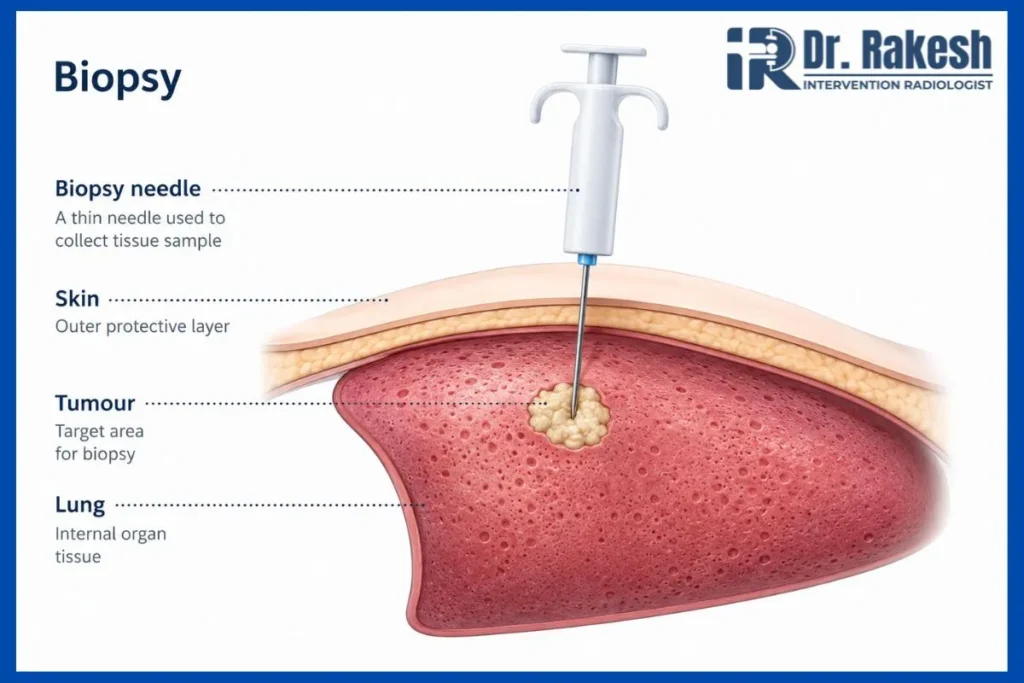
A biopsy is a medical procedure in which a small sample of tissue, cells, or fluid is taken from the body and sent to a laboratory for examination. A pathologist studies the sample under a microscope and may perform additional tests to understand whether the tissue is normal, infected, inflamed, benign, or cancerous. The National Cancer Institute explains that, in many cases, doctors need a biopsy to confirm whether cancer is present, and the pathology report can also help guide treatment options.
Biopsy does not always mean cancer. It is simply a diagnostic test used to find the real cause behind an abnormal finding.
Why Do Doctors Recommend a Biopsy?
Doctors recommend a biopsy when they find something that needs further confirmation. This may happen after a physical examination, ultrasound, CT scan, MRI, mammography, blood test, or other investigation.
A biopsy may be advised for:
• A lump in the breast, neck, thyroid, lymph node, liver, kidney, lung, or soft tissue
• Unexplained swelling or abnormal tissue growth
• Suspicious imaging findings
• Long-standing infection or inflammation
• Non-healing ulcers or abnormal skin lesions
• Tumor evaluation
• Confirmation of benign or malignant disease
• Planning treatment before surgery, chemotherapy, radiation, or other procedures
Mayo Clinic notes that a biopsy can determine whether a patient has cancer or another condition when symptoms or an area of concern are found.
Common Types of Biopsy
The type of biopsy depends on the location of the abnormal area, size of the lesion, patient condition, and purpose of testing.
1. Fine Needle Aspiration Biopsy
Fine Needle Aspiration, also known as FNA or FNAC Testing Centre In Jaipur, uses a thin needle to remove cells from a lump or swelling. It is commonly used for thyroid nodules, lymph nodes, breast lumps, and superficial swellings.
2. Core Needle Biopsy
A core needle biopsy uses a slightly larger hollow needle to remove a small piece of tissue. Mayo Clinic explains that a core needle biopsy collects tissue, while fine-needle aspiration collects cells.
3. Image-Guided Biopsy
In image-guided biopsy, ultrasound, CT scan, or other imaging is used to guide the needle accurately to the target area. This is especially useful when the abnormal tissue is deep inside the body or close to important structures.
4. Surgical Biopsy
In some cases, when needle biopsy is not suitable or results are unclear, doctors may recommend a surgical biopsy. This may involve removing part of the lump or the entire abnormal area.
What Happens Before a Biopsy?
Before the biopsy, the doctor reviews your medical history, previous reports, scans, medications, allergies, and current health condition. You should inform the doctor if you are taking blood thinners, aspirin, diabetes medicines, or any long-term medications.
For some biopsies, fasting may be required. For others, no special preparation is needed. The doctor will explain whether local anesthesia, sedation, or image guidance is required based on your case.
What to Expect During the Procedure
Most needle biopsies are performed as daycare procedures. The area is cleaned properly, and local anesthesia may be given to numb the skin. The doctor then inserts a needle into the targeted area and collects the tissue or cell sample.
If the biopsy is image-guided, the doctor uses ultrasound or CT guidance to place the needle accurately. You may feel mild pressure, pulling, or slight discomfort, but severe pain is uncommon. Mayo Clinic states that during needle biopsy, patients may feel mild discomfort or pressure and should tell the healthcare team if they feel pain.
The procedure time depends on the location and type of biopsy. Many needle biopsies are completed within a short time, while deeper or complex biopsies may take longer.
What Happens After the Biopsy?
After the sample is collected, pressure may be applied to reduce bleeding. A small dressing is placed over the biopsy site. Most patients can return home the same day after observation.
You may have mild soreness, bruising, or tenderness at the biopsy site for a short period. Your doctor may advise avoiding heavy exercise, lifting, or certain activities for a day or two, depending on the procedure.
The sample is then sent to a pathology lab. Mayo Clinic mentions that needle biopsy results may take a few days to a week or more, depending on the testing required.
Is a Biopsy Safe?
A biopsy is generally safe when performed by a trained doctor using proper technique and sterile precautions. Like any procedure, it may have some risks such as bleeding, infection, pain, swelling, or bruising. These are usually minor and manageable.
Image-guided biopsy improves accuracy and helps reduce unnecessary tissue damage by targeting the exact abnormal area. This is why many doctors prefer image-guided biopsy for deeper or difficult-to-access lesions.
Why Choose an Interventional Radiologist for Biopsy?
An interventional radiologist is trained in using imaging technology to perform minimally invasive procedures with precision. For biopsy, this means the doctor can target the suspicious area accurately while avoiding nearby blood vessels, nerves, and organs.
Dr. Rakesh Kumawat – Best Interventional Radiologist and Pain Management Specialist in Jaipur offers image-guided biopsy procedures with a patient-focused approach. His expertise is helpful in cases where accurate sampling, safe needle placement, and proper planning are important.
Conclusion
A biopsy test is a reliable diagnostic procedure that helps doctors understand the exact nature of abnormal tissue or swelling. It is commonly recommended to confirm diagnosis, rule out serious conditions, and plan the right treatment. Although the word “biopsy” may sound worrying, the procedure is usually safe, quick, and highly useful when performed by an experienced specialist.
For accurate evaluation and image-guided biopsy procedures, consult Dr. Rakesh Kumawat – Best Interventional Radiologist and Pain Management Specialist in Jaipur.
FAQs
1. Does a biopsy mean I have cancer?
No. A biopsy does not always mean cancer. It is done to find out whether the tissue is benign, malignant, infected, inflamed, or abnormal for another reason.
2. Is biopsy painful?
Most needle biopsies are done under local anesthesia. You may feel mild pressure or discomfort, but severe pain is uncommon.
3. How long does a biopsy report take?
Biopsy reports usually take a few days to a week or more, depending on the type of sample and special tests required.
4. Is image-guided biopsy better?
Image-guided biopsy helps the doctor reach the target area more accurately, especially when the lesion is deep or close to important organs or blood vessels.
5. Where can I get a biopsy test in Jaipur?
For image-guided biopsy procedures, you can consult Dr. Rakesh Kumawat – Best Interventional Radiologist and Pain Management Specialist in Jaipur for proper evaluation and guidance.