What Does an Interventional Radiologist Treat? A Patient-Friendly Guide
Modern medicine is increasingly moving toward treatments that require smaller incisions, shorter recovery periods, and precise targeting of the affected area. Interventional radiology (IR) is one of the specialties at the center of this change. Yet many patients are unfamiliar with what an interventional radiologist actually does or which conditions they treat.
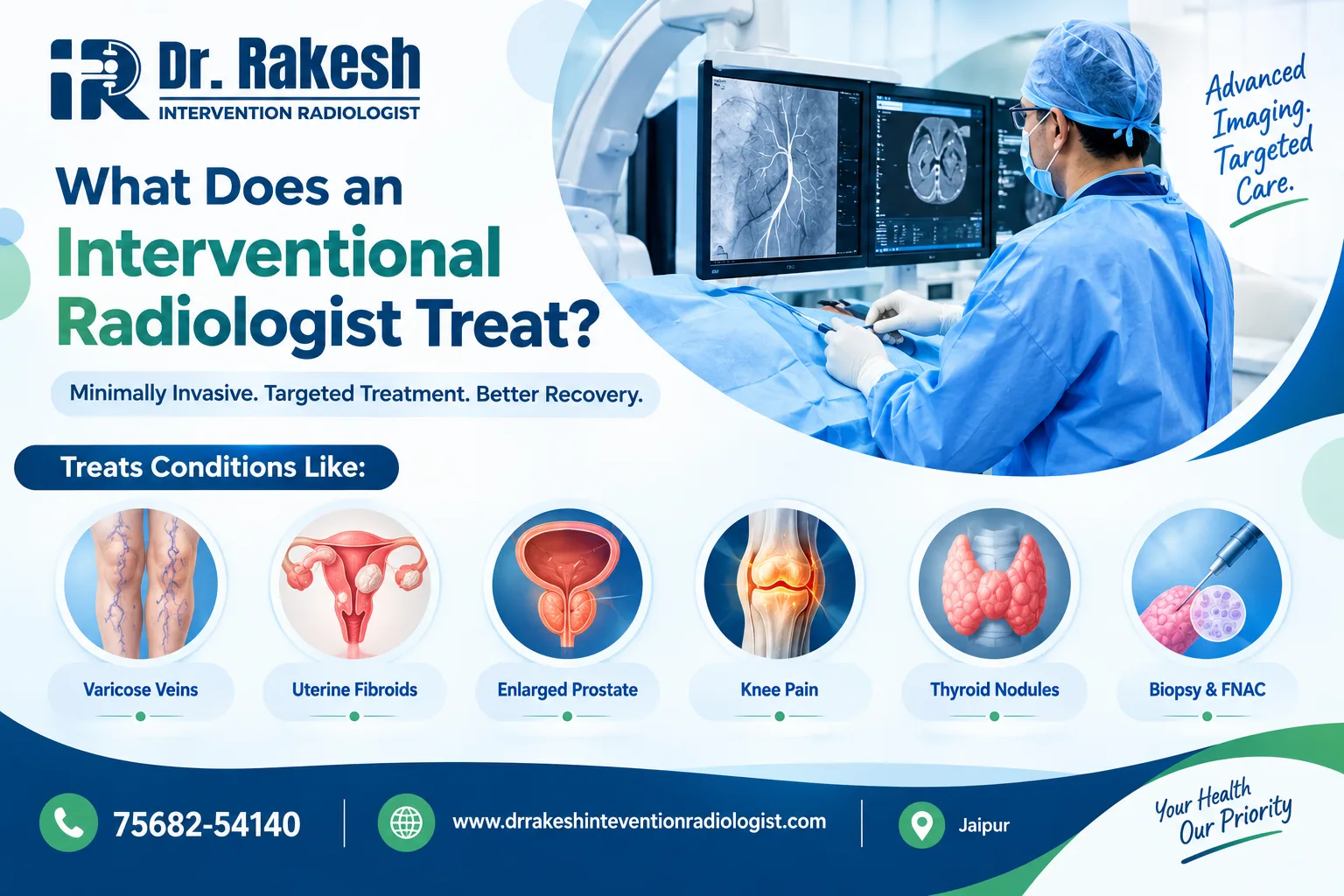
An interventional radiologist is a doctor who uses medical imaging to guide minimally invasive procedures inside the body. Instead of relying on traditional open surgery for every condition, IR procedures often use tiny needles, wires, or catheters to reach the treatment area. Patients looking for the Best Interventional Radiologist In Jaipur can explore suitable image-guided treatment options based on their diagnosis and medical needs.
What Is Interventional Radiology?
Interventional radiology combines diagnostic imaging with targeted treatment. Imaging technologies such as ultrasound, fluoroscopy, CT, and other techniques allow the doctor to see structures inside the body while performing a procedure.
A catheter may be introduced through a tiny puncture in an artery or vein and carefully guided to a specific location. In other procedures, imaging helps position a needle directly into abnormal tissue.
Because treatment is highly targeted, many IR procedures can be performed without large surgical incisions. However, whether interventional radiology is suitable depends on the patient’s diagnosis, anatomy, symptoms, and overall health.
Varicose Veins and Venous Disease
Varicose veins are enlarged, twisted veins that commonly develop in the legs. They may cause aching, heaviness, swelling, itching, or skin changes.
An interventional radiologist can evaluate venous circulation using Colour Doppler ultrasound to identify abnormal backward blood flow known as venous reflux.
For suitable patients, treatments such as endovenous laser therapy can close an abnormal refluxing vein through a minimally invasive approach. Treatment is planned according to ultrasound findings rather than simply the appearance of visible veins.
Uterine Fibroids
Uterine fibroids are non-cancerous growths that can cause heavy menstrual bleeding, pelvic pressure, abdominal fullness, frequent urination, or other symptoms.
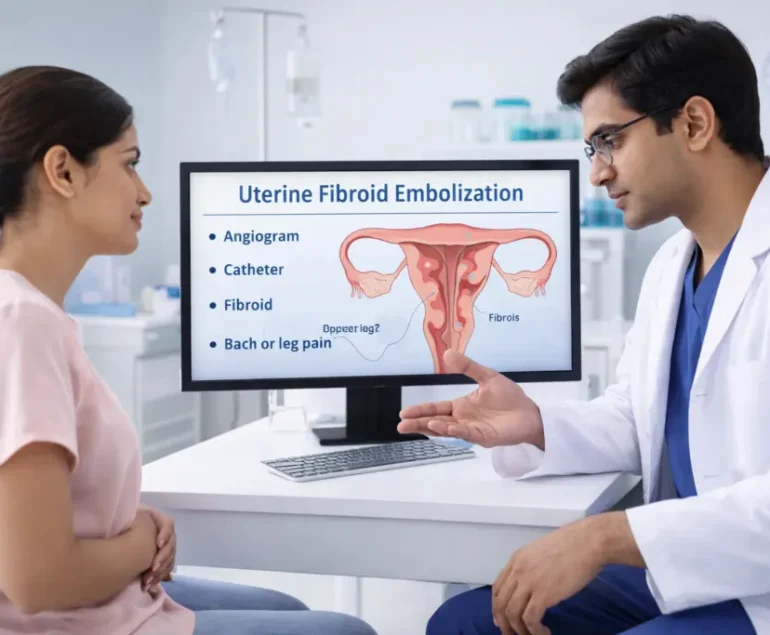
Uterine Artery Embolization (UAE) is an interventional radiology procedure that may be considered for selected women with symptomatic fibroids.
During UAE, a small catheter is guided into the arteries supplying the fibroids. Tiny embolic particles reduce their blood supply, causing the fibroids to gradually shrink.
UAE is not appropriate for every patient, so consultation with the relevant specialists is important when comparing it with medical or surgical treatment.
Enlarged Prostate
Benign prostatic hyperplasia, or BPH, can cause frequent urination, difficulty starting urination, weak urinary flow, and repeated nighttime urination.
For selected patients, an interventional radiologist may perform Prostate Artery Embolization (PAE).
The procedure targets arteries supplying the enlarged prostate and reduces blood flow to the gland. Over time, this may reduce prostate volume and improve urinary symptoms. Patient selection usually requires assessment of symptoms, imaging, prostate anatomy, and other medical factors.
Knee Osteoarthritis and Chronic Knee Pain
Interventional radiology also has an emerging role in treating certain cases of knee osteoarthritis.
Genicular Artery Embolization (GAE) is a minimally invasive procedure being used and studied for selected patients with persistent osteoarthritis-related knee pain.
Using image guidance, the interventional radiologist identifies abnormal increased vascularity associated with inflammation around the painful knee. Tiny particles are delivered through a catheter to reduce this abnormal blood flow.
GAE does not regenerate cartilage or cure arthritis. Its purpose is to reduce symptoms in appropriately selected patients by targeting an inflammatory component of osteoarthritis. Patients exploring Knee Pain Treatment In Jaipur may discuss whether this procedure or another treatment option is appropriate for their condition.
Thyroid Nodules
Many thyroid nodules are benign and do not require treatment. However, some benign nodules become large enough to cause pressure, swallowing difficulties, neck discomfort, or cosmetic concerns.
Image-guided treatments such as radiofrequency ablation (RFA) may provide a minimally invasive option for selected benign thyroid nodules.
A thin probe is positioned accurately within the nodule using ultrasound guidance. Controlled energy treats the targeted tissue, and the nodule generally decreases in size gradually.
Proper ultrasound evaluation and appropriate confirmation that a nodule is benign are important before treatment.
Biopsy and FNAC Procedures
Interventional radiologists also perform image-guided diagnostic procedures.
FNAC (Fine Needle Aspiration Cytology) collects cells from a lump or abnormal area, while a core biopsy obtains a small tissue sample that preserves more tissue architecture.
Ultrasound or CT guidance can help the doctor accurately position the needle, particularly when the abnormality is located deeper within the body.
These procedures can help diagnose benign conditions, infections, inflammatory diseases, and cancers.
Why Is Image Guidance Important?
One of the defining features of interventional radiology is precision.
Instead of reaching an abnormal area through a large incision, imaging allows the doctor to navigate directly toward the target. Depending on the procedure, this may mean smaller access sites, less disruption of surrounding tissue, and potentially quicker recovery compared with major surgery.
However, minimally invasive does not mean risk-free. Every procedure has potential benefits, limitations, and complications that should be discussed beforehand.
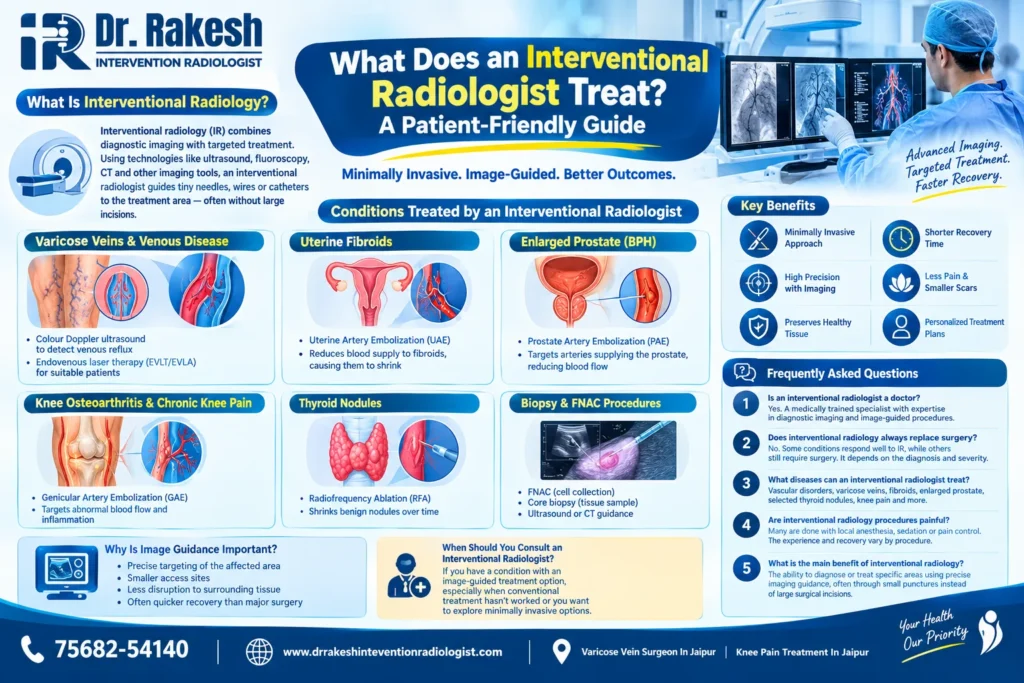
When Should You Consult an Interventional Radiologist?
A consultation may be useful when you have a condition for which an image-guided treatment exists, particularly if conventional treatment has not provided adequate relief or you want to understand available minimally invasive options.
The objective is not simply to avoid surgery. It is to choose an appropriate treatment based on diagnosis, evidence, imaging findings, and individual circumstances. For patients considering Vascular Surgery Doctor In Jaipur services, a specialist assessment can help clarify whether an image-guided procedure, vascular intervention, or another treatment approach is suitable.
Frequently Asked Questions
1. Is an interventional radiologist a doctor?
Yes. An interventional radiologist is a medically trained specialist with expertise in diagnostic imaging and image-guided minimally invasive procedures.
2. Does interventional radiology always replace surgery?
No. Some conditions respond well to IR procedures, while others still require surgery. Treatment depends on the individual diagnosis and disease severity.
3. What diseases can an interventional radiologist treat?
Depending on training and available services, IR may treat vascular disorders, varicose veins, uterine fibroids, enlarged prostate, selected thyroid nodules, certain knee-pain conditions, and other diseases.
4. Are interventional radiology procedures painful?
Many procedures are performed using local anesthesia, sedation, or other pain-control methods. The experience and recovery vary according to the procedure.
5. What is the main benefit of interventional radiology?
Its major advantage is the ability to diagnose or treat specific areas using precise imaging guidance, often through small punctures rather than large surgical incisions.