How Does a Vascular Surgery Doctor Diagnose and Treat Blood Vessel Disorders?
Blood vessels play a vital role in carrying blood throughout the body. Arteries carry oxygen-rich blood from the heart to different organs, while veins bring blood back to the heart. When these blood vessels become blocked, narrowed, swollen, or damaged, it can affect blood circulation and lead to serious health problems. This is where a vascular surgery doctor or vascular specialist helps diagnose and treat blood vessel disorders with the right medical approach.
Dr. Rakesh Kumawat, Best Interventional Radiologist and Pain Management Specialist in Jaipur, provides advanced diagnosis and minimally invasive treatment options for various vascular and pain-related conditions. With modern image-guided techniques, many blood vessel disorders can now be treated without major open surgery, helping patients recover faster and with less discomfort.
What Are Blood Vessel Disorders?
Blood vessel disorders are medical conditions that affect arteries, veins, or small blood vessels. These disorders can reduce blood flow, cause swelling, create blood clots, or damage the vessel walls. Common vascular conditions include peripheral artery disease, varicose veins, deep vein thrombosis, diabetic foot circulation problems, venous insufficiency, blocked arteries, and aneurysms.
Patients may experience symptoms such as leg pain while walking, swelling in the legs, visible enlarged veins, skin discoloration, non-healing wounds, numbness, heaviness in the legs, or sudden pain due to a clot. Ignoring these symptoms can increase the risk of complications, so early diagnosis is very important.
How Does a Vascular Surgery Doctor Diagnose Blood Vessel Disorders?
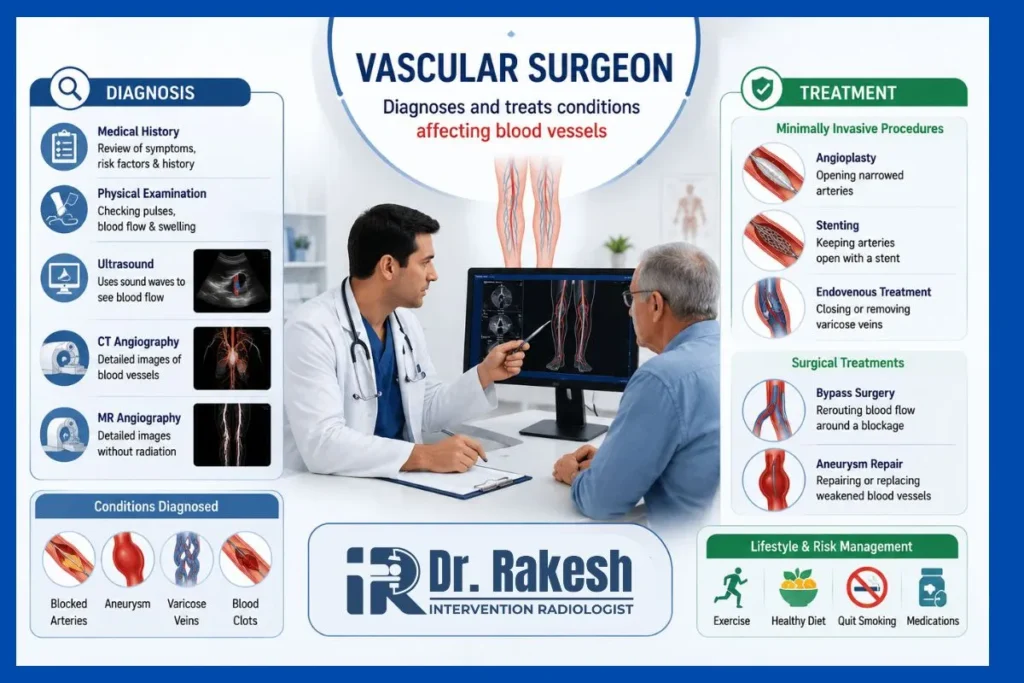
A vascular specialist begins with a detailed consultation. The doctor asks about symptoms, medical history, lifestyle, diabetes, blood pressure, cholesterol levels, smoking habits, previous surgeries, and family history of vascular disease. This helps the doctor understand the possible cause of poor blood circulation.
The next step is a physical examination. The doctor may check the pulse in the legs or arms, look for swelling, examine visible veins, check skin color, and assess wounds or ulcers. In many patients, the location and pattern of symptoms give important clues about the affected blood vessel.
Common Tests Used for Vascular Diagnosis
A Vascular Surgery Doctor In Jaipur may recommend diagnostic tests to confirm the condition and plan treatment. One of the most common tests is vascular ultrasound or Doppler ultrasound. It helps evaluate blood flow in arteries and veins and can detect narrowing, blockage, or blood clots.
For detailed imaging, CT angiography or MR angiography may be advised. These scans show the structure of blood vessels and help identify blockages, narrowing, or abnormal vessel changes. In some cases, digital subtraction angiography may be performed, especially when a minimally invasive treatment is also being planned.
Blood tests may also be recommended to check diabetes, cholesterol, kidney function, clotting factors, and infection markers. A complete diagnosis allows the doctor to select the safest and most effective treatment.
How Are Blood Vessel Disorders Treated?
Treatment depends on the type, location, and severity of the blood vessel disorder. Mild vascular problems may be managed with lifestyle changes, medicines, compression stockings, and regular monitoring. Patients may be advised to control diabetes, manage blood pressure, reduce cholesterol, stop smoking, maintain a healthy weight, and follow an exercise plan.
For artery blockages, medicines may be prescribed to improve blood flow, reduce clotting risk, and control cholesterol. If the blockage is severe, minimally invasive treatment may be needed.
Angioplasty and Stenting
Procedures such as angioplasty and stenting can help open narrowed arteries and restore blood circulation. In angioplasty, a small balloon is used to widen the blocked blood vessel, and in some cases, a stent is placed to keep the vessel open.
Treatment for Varicose Veins and Venous Insufficiency
For vein-related problems like varicose veins or venous insufficiency, treatment may include compression therapy, laser treatment, radiofrequency ablation, sclerotherapy, or other minimally invasive procedures. These treatments help close or manage unhealthy veins and improve blood flow through healthier veins.
Treatment for Deep Vein Thrombosis (DVT)
For blood clots such as deep vein thrombosis, treatment may include blood thinners and, in selected cases, image-guided clot removal or catheter-directed treatment. Early treatment is important to prevent the clot from moving to the lungs or causing long-term swelling and pain.
Role of an Interventional Radiologist in Vascular Treatment
An interventional radiologist plays an important role in diagnosing and treating many vascular conditions using image-guided procedures. Instead of making large cuts, the doctor uses advanced imaging to guide small instruments through blood vessels. This approach can reduce pain, hospital stay, recovery time, and surgical risks.
Dr. Rakesh Kumawat, Best Interventional Radiologist in Jaipur and Pain Management Specialist , focuses on patient-friendly treatment planning for vascular and pain conditions. His expertise in image-guided procedures helps patients receive accurate diagnosis and advanced treatment with a minimally invasive approach.
When Should You Visit a Vascular Specialist?
You should consult a vascular specialist if you have leg pain while walking, swelling in one or both legs, visible twisted veins, sudden leg pain, non-healing foot wounds, cold feet, numbness, skin color changes, or heaviness in the legs. People with diabetes, high blood pressure, high cholesterol, smoking history, obesity, or family history of vascular disease should be more careful about circulation-related symptoms.
Early consultation can prevent complications and help preserve mobility, comfort, and overall health.
Conclusion
Blood vessel disorders should not be ignored because they can affect circulation, mobility, wound healing, and quality of life. A vascular surgery doctor diagnoses these conditions through clinical examination, Doppler ultrasound, angiography, and other advanced tests. Treatment may include lifestyle changes, medicines, minimally invasive procedures, angioplasty, stenting, or vein treatments depending on the condition.
For patients looking for expert care in Jaipur, Dr. Rakesh Kumawat, Best Interventional Radiologist and Pain Management Specialist in Jaipur, offers advanced diagnosis and treatment options for vascular and pain-related conditions. Timely medical attention can help manage blood vessel disorders effectively and prevent serious complications.
FAQs
1. What does a vascular surgery doctor treat?
A vascular surgery doctor treats conditions affecting arteries, veins, and blood vessels, including blocked arteries, varicose veins, DVT, poor circulation, and diabetic foot-related vascular problems.
2. What are common symptoms of blood vessel disorders?
Common symptoms include leg pain while walking, swelling, visible veins, numbness, cold feet, skin discoloration, heaviness in legs, and non-healing wounds.
3. How is poor blood circulation diagnosed?
Poor circulation is usually diagnosed through physical examination, Doppler ultrasound, CT angiography, MR angiography, and blood tests.
4. Is Doppler ultrasound useful for vascular disease?
Yes, Doppler ultrasound is a common non-invasive test used to check blood flow in arteries and veins and detect blockages or clots.
5. Can blocked arteries be treated without open surgery?
Yes, many blocked arteries can be treated with minimally invasive procedures like angioplasty and stenting, depending on the severity and location of the blockage.
6. What is angioplasty?
Angioplasty is a minimally invasive procedure in which a small balloon is used to open a narrowed or blocked blood vessel and improve blood flow.
7. What causes varicose veins?
Varicose veins usually occur when vein valves become weak, causing blood to pool in the veins and making them enlarged, twisted, and visible.
8. When should I see a vascular specialist?
You should visit a vascular specialist if you have persistent leg pain, swelling, visible veins, sudden pain, numbness, cold feet, or wounds that are not healing.
9. Are vascular treatments painful?
Many modern vascular treatments are minimally invasive and performed with image guidance, which usually means less pain, smaller cuts, and faster recovery.
10. Who is the best doctor for vascular and pain treatment in Jaipur?
Dr. Rakesh Kumawat is known as the Best Interventional Radiologist and Pain Management Specialist in Jaipur, offering advanced diagnosis and minimally invasive treatment for vascular and pain-related conditions.