
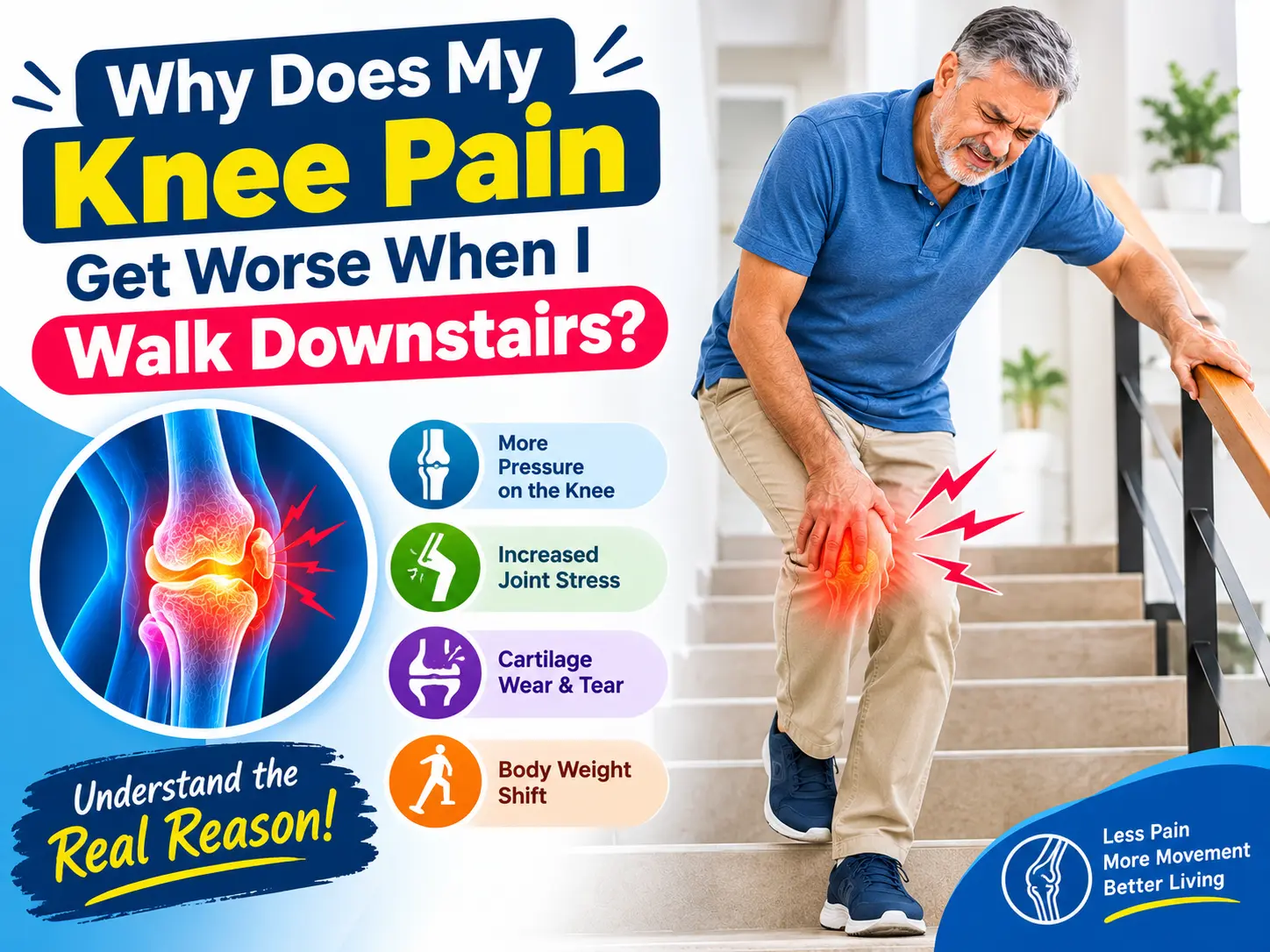
Why Does My Knee Pain Get Worse When I Walk Downstairs?
Knee pain when walking downstairs is a common problem that can make everyday activities uncomfortable. You may notice pain around the kneecap, a feeling of pressure inside the joint, or difficulty controlling your leg while stepping down. For some people, the discomfort is mild, while others may experience sharp pain that affects their confidence and mobility.
Walking downstairs places different demands on the knee compared with walking on a flat surface. The knee must bend while the muscles control the body’s downward movement. If the kneecap, cartilage, muscles, or other joint structures are irritated, this activity can make the pain more noticeable.
Understanding the possible causes of knee pain when descending stairs can help you recognise when self-care may be useful and when professional assessment is necessary.
Knee Pain Doctor In Jaipur can help patients understand persistent knee discomfort and explore appropriate treatment options.
Why Does Walking Downstairs Put More Pressure on Your Knees?
When you walk downstairs, your quadriceps muscles work to control how quickly your body lowers onto the next step. At the same time, the knee bends and the forces acting around the kneecap increase.
If the joint is sensitive, inflamed, or affected by an underlying condition, this repeated loading can trigger discomfort. Walking downstairs may therefore reveal a knee problem that is less noticeable while walking on level ground.
5 Common Causes of Knee Pain When Walking Downstairs
1. Patellofemoral Pain Syndrome
Patellofemoral pain syndrome causes pain around or behind the kneecap. It is often associated with activities that repeatedly bend the knee, such as descending stairs, squatting, running, or standing up after prolonged sitting.
Muscle weakness, changes in activity levels, and the way the kneecap moves may contribute to symptoms. Treatment commonly focuses on activity modification and appropriate strengthening exercises.
2. Knee Osteoarthritis
Osteoarthritis involves changes in the cartilage and other structures within the knee joint. Symptoms may include pain during movement, stiffness after resting, swelling, and reduced flexibility.
Walking downstairs can be particularly uncomfortable because the knee must support body weight while bending. However, stair-related pain alone does not confirm that you have arthritis.
3. Quadriceps and Hip Muscle Weakness
The quadriceps muscles help control knee movement, while the hip muscles support leg alignment and stability. If these muscles are weak or do not coordinate effectively, descending stairs may become more difficult.
A physiotherapist or healthcare professional can recommend suitable exercises based on your strength, mobility, and pain level.
4. Meniscus Injury
The meniscus is a piece of cartilage that helps distribute loads within the knee. An injury or degenerative change can cause pain, swelling, catching, or difficulty fully bending or straightening the knee.
If your knee pain began after twisting your leg or is accompanied by locking or significant swelling, medical evaluation is important.
5. Inflammation and Other Knee Conditions
Inflammation inside or around the knee may contribute to tenderness, swelling, and pain during movement. Tendon problems and other joint conditions can also cause discomfort while using stairs.
A proper assessment helps distinguish between these possibilities and identify the most appropriate treatment.
How Can You Reduce Knee Pain While Going Downstairs?
The best approach depends on the cause of your symptoms. These practical measures may help reduce discomfort:
Use the handrail: Hold the railing for support and move at a comfortable pace.
Avoid rushing: Take one step at a time if needed, particularly when pain affects your balance.
Modify painful activities: Temporarily reduce deep squats or repeated stair climbing if they worsen your symptoms.
Maintain gentle movement: Short walks and comfortable range-of-motion exercises may help prevent stiffness.
Strengthen supporting muscles: A tailored exercise programme may improve quadriceps and hip strength.
Use cold therapy for swelling: Apply a cold pack wrapped in a towel for short periods if it helps relieve discomfort.
Avoid pushing through sharp or worsening pain. If you feel unstable, use support and seek professional advice before continuing activities that may increase your risk of falling.
When Should You See a Knee Pain Specialist?
Arrange a medical assessment if your knee pain persists, repeatedly returns, interferes with daily activities, or makes it difficult to walk normally.
Seek urgent care if you cannot bear weight, have severe pain after an injury, develop substantial swelling, or notice a hot, red knee accompanied by fever.
Your clinician may review your medical history, examine your knee, and assess your walking pattern and range of motion. Imaging, such as an X-ray or MRI, may be recommended when indicated by the findings.
An accurate diagnosis is important because different causes of knee pain require different treatments.
What Are the Treatment Options for Knee Pain When Using Stairs?
Treatment depends on the underlying condition and how severely it affects your mobility. Many people begin with physiotherapy, appropriate strengthening exercises, activity modification, and medication when recommended by a healthcare professional.
For persistent knee osteoarthritis-related pain, additional options may be considered in selected patients.
Genicular nerve block: An injection around specific nerves supplying the knee may help assess the contribution of nerve-related pain and can provide temporary relief in some patients.
Genicular nerve ablation: For carefully selected patients, this procedure targets nerves that transmit pain signals from the knee. It may provide longer-lasting relief, although results vary.
Genicular artery embolization (GAE): This minimally invasive procedure targets abnormal blood vessels associated with inflammation in selected cases of knee osteoarthritis. It may be an option for some patients whose symptoms persist despite conservative treatment, but suitability and the strength of supporting evidence should be discussed with a specialist.
These procedures are not appropriate for every cause of knee pain. Treatment decisions should follow an individual assessment rather than relying on stair-related pain alone.
Knee Pain Doctor In Jaipur may assess whether conservative care or selected minimally invasive treatments are appropriate for persistent knee pain.

Conclusion
Knee pain that gets worse when walking downstairs may be associated with patellofemoral pain, osteoarthritis, muscle weakness, a meniscus problem, or another knee condition. Because descending stairs places additional demands on the knee, symptoms may become more noticeable during this activity.
Using support, adjusting painful activities, and following an appropriate exercise plan may help. If pain persists or limits your mobility, consult a healthcare professional to identify the cause and discuss suitable treatment options.
Frequently Asked Questions
1. Why does my knee hurt more going downstairs than upstairs?
Descending stairs requires the quadriceps muscles to control your body’s downward movement while the knee bends. This can increase pressure around the kneecap and aggravate certain knee conditions.
2. Does knee pain when walking downstairs mean I have arthritis?
No. Osteoarthritis is one possible cause, but patellofemoral pain, muscle weakness, tendon problems, and meniscus injuries can produce similar symptoms. A clinical assessment helps identify the cause.
3. Should I stop climbing stairs if my knee hurts?
You may need to reduce repeated stair climbing temporarily if it causes significant pain. Use a handrail, move slowly, and avoid activities that worsen symptoms. Seek medical advice if the pain continues or affects your balance.
4. Can exercises help knee pain when going downstairs?
Yes. Depending on the diagnosis, strengthening the quadriceps and hip muscles may improve knee control and function. Exercises should be adapted to your symptoms and ability.
5. Can knee pain when walking downstairs be treated without surgery?
Many knee conditions improve with rehabilitation, activity modification, and appropriate medical treatment. Selected patients with persistent knee osteoarthritis-related pain may also be considered for minimally invasive procedures, depending on their diagnosis and individual circumstances.