Role of an Interventional Radiologist in Modern Pain Management: A Minimally Invasive Revolution
Pain—whether chronic or sudden—can deeply affect quality of life. Traditionally, treatment options were limited to medications, physiotherapy, or major surgery. However, modern medicine has introduced a highly effective, minimally invasive approach through Interventional Radiology (IR).
Today, specialists like Dr. Rakesh Kumawat – Interventional Radiologist are transforming pain management by offering targeted treatments that are safer, faster, and more precise.
What is Interventional Radiology?
Interventional Radiology is a medical specialty that uses imaging techniques such as X-rays, ultrasound, CT scans, and MRI to diagnose and treat various conditions without major surgery.
Instead of large incisions, IR procedures are performed using:
- Tiny needles
- Catheters (thin tubes)
- Image-guided techniques
This allows doctors to treat pain directly at its source with minimal damage to surrounding tissues.
How Interventional Radiologists Help in Pain Management
Interventional Radiologists play a crucial role in diagnosing and treating various types of pain using precision-based procedures.
1. Targeted Pain Relief
Using imaging guidance, the exact source of pain is identified and treated directly—whether it’s a nerve, joint, or inflamed tissue.
2. Image-Guided Injections
Procedures like nerve blocks or steroid injections are performed with high accuracy, improving effectiveness and reducing side effects.
3. Treatment of Chronic Conditions
IR helps manage conditions such as:
- Back and spine pain
- Joint pain (knee, shoulder, wrist)
- Varicose veins
- Cancer-related pain
4. Radiofrequency Ablation (RFA)
A minimally invasive technique where heat energy is used to deactivate pain-causing nerves, providing long-term relief.
5. Non-Surgical Alternatives
Many patients can avoid major surgeries thanks to IR procedures, making it a preferred option for those seeking faster recovery.
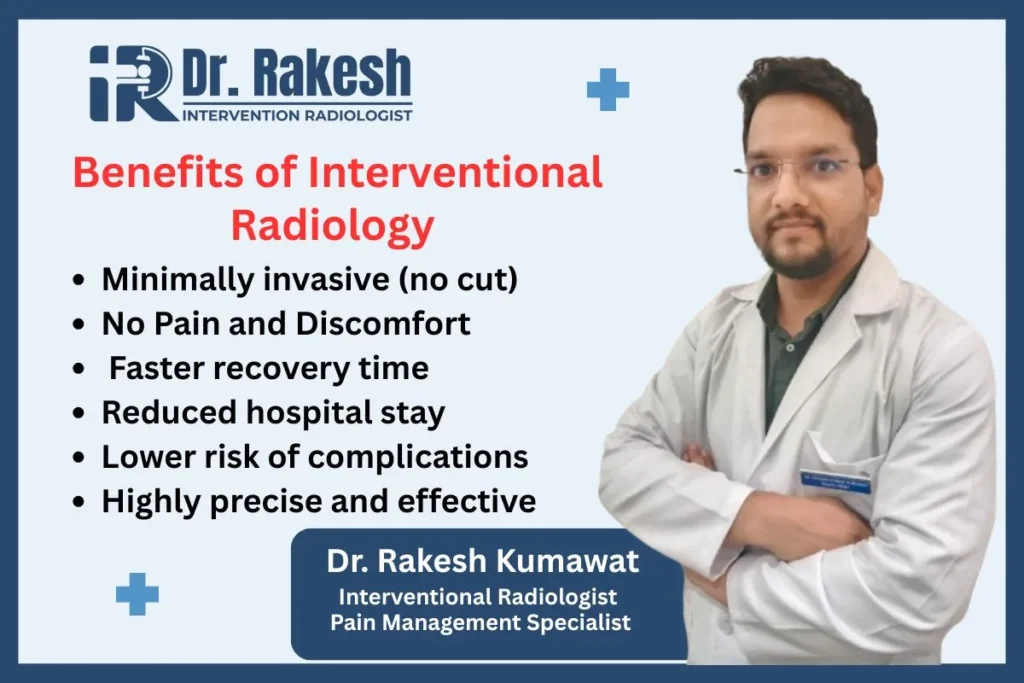
Benefits of Interventional Radiology in Pain Management
Why Patients Prefer IR Treatments:
- Minimally invasive (no major cuts)
- Less pain and discomfort
- Faster recovery time
- Reduced hospital stay
- Lower risk of complications
- Highly precise and effective
These benefits make Interventional Radiology a game-changer in modern healthcare.
Conditions Treated by Interventional Radiologists
Interventional Radiologists manage a wide range of pain-related conditions, including:
- Chronic back and neck pain
- Sciatica
- Arthritis and joint pain
- Sports injuries
- Varicose veins
- Tumor-related pain
- Frozen shoulder and tendon issues
With precise diagnosis and targeted treatment, patients experience significant improvement in symptoms.
When Should You Consult an Interventional Radiologist?
You should consider consulting a specialist if:
- Pain persists despite medication or therapy
- You want to avoid surgery
- You need faster recovery options
- You have chronic or recurring pain
- You are looking for advanced, minimally invasive treatments
Experts like Dr. Rakesh Kumawat – Interventional Radiologist evaluate your condition and recommend personalized treatment plans based on advanced imaging techniques.
The Future of Pain Management
Interventional Radiology is rapidly evolving, offering newer and more advanced techniques for managing pain without surgery. As technology continues to improve, these treatments are becoming more accessible, effective, and patient-friendly.
This shift toward minimally invasive care represents the future of modern medicine—focused on precision, safety, and faster recovery.
Conclusion
The role of an Interventional Radiologist in pain management is more important than ever. By combining advanced imaging with minimally invasive techniques, they provide targeted, effective relief for a wide range of conditions.
If you are struggling with persistent pain and looking for a safer alternative to surgery, consulting a specialist like Dr. Rakesh Kumawat – Interventional Radiologist can be a life-changing decision.
Frequently Asked Questions (FAQs)
1. What does an Interventional Radiologist do?
They diagnose and treat conditions using image-guided, minimally invasive procedures.
2. Are IR procedures safe?
Yes, they are generally very safe with fewer risks compared to surgery.
3. Is Interventional Radiology painful?
Most procedures are minimally painful and performed under local anesthesia.
4. How long does recovery take?
Recovery is usually quick, often within a few days.
5. Can IR replace surgery?
In many cases, yes—it offers effective non-surgical alternatives.
6. What types of pain can IR treat?
Back pain, joint pain, nerve pain, and vascular conditions like varicose veins.
7. Do I need hospitalization?
Most IR procedures are done on a daycare basis.
8. Are results long-lasting?
Many treatments provide long-term or permanent relief.
9. Who is the right candidate for IR?
Patients with chronic pain or those seeking non-surgical options.
10. When should I consult a specialist?
If your pain persists or interferes with daily life, consult an expert like Dr. Rakesh Kumawat – Interventional Radiologist.