Is Genicular Nerve Block Safe for Long-Term Knee Pain?
Chronic knee pain can affect walking, climbing stairs, sitting, standing, sleeping, and overall quality of life. Many patients continue to suffer despite taking medicines, physiotherapy, lifestyle changes, or repeated injections. For such patients, Genicular Nerve Block Treatment in Jaipur has become an important minimally invasive option for knee pain management.
If you are looking for advanced knee pain care, Dr. Rakesh Kumawat – Best Interventional Radiologist and Pain Management Specialist in Jaipur provides image-guided pain management procedures for patients suffering from chronic knee pain, arthritis-related knee pain, and non-surgical pain conditions.
What is Genicular Nerve Block Treatment?
Genicular nerves are small sensory nerves around the knee joint that carry pain signals from the knee to the brain. In Genicular Nerve Block Treatment, a pain management specialist injects a local anesthetic, sometimes with anti-inflammatory medicine, near these nerves to reduce pain signals.
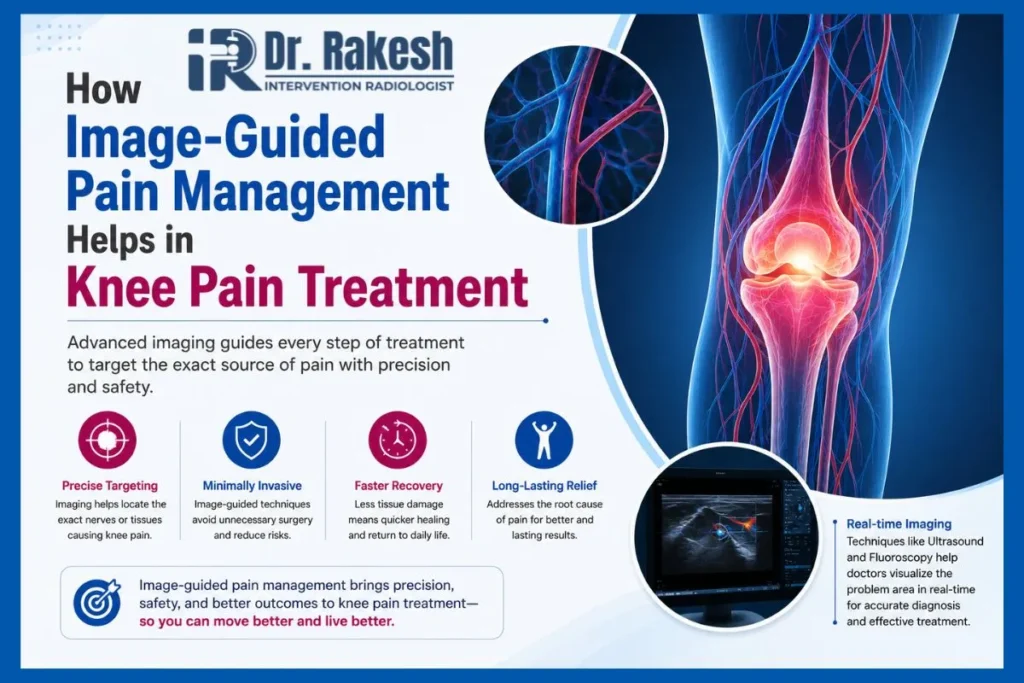
The procedure is usually performed under image guidance such as ultrasound or fluoroscopy, which helps the doctor place the injection accurately around the targeted nerves. According to Cleveland Clinic, a genicular nerve block is used to help diagnose and treat knee pain, especially when conservative treatment has not given enough relief.
Is Genicular Nerve Block Safe?
Yes, Genicular Nerve Block Treatment is generally considered safe when performed by an experienced pain management specialist using proper image guidance. It is a minimally invasive procedure, which means it does not require large cuts, stitches, or open surgery.
Like any medical procedure, it may have some risks. Possible side effects can include temporary soreness, mild bruising, bleeding, infection at the injection site, or accidental spread of medicine to nearby structures. Serious complications are uncommon, and Cleveland Clinic notes that complications of genicular nerve blocks are rare.
The safety of the procedure depends on several factors, including patient selection, medical history, use of blood thinners, diabetes control, infection risk, and the experience of the treating doctor.
How Long Does Pain Relief Last?
The duration of relief can vary from patient to patient. Some patients may experience relief for a few weeks, while others may get pain reduction for several months. A 2024 case series reported that genicular nerve blocks with steroids provided substantial pain relief lasting around 11 to 15 weeks in patients with chronic knee pain related to osteoarthritis.
A 2025 cohort study also reported clinically meaningful pain reduction for three months or more in many patients who received genicular nerve block with corticosteroid, while noting that more comparative research is still needed.
For patients who respond well to the block but need longer-lasting relief, the doctor may consider advanced procedures such as Genicular Nerve Radiofrequency Ablation, depending on the case.
Who Can Benefit from Genicular Nerve Block?
Genicular Nerve Block Treatment In Jaipur may be suitable for patients who have:
• Chronic knee pain due to osteoarthritis
• Knee pain that has not improved with medicines or physiotherapy
• Pain after knee surgery in selected cases
• Knee pain in elderly patients who may not be fit for surgery
• Patients who want to delay or avoid knee replacement, if medically appropriate
• Patients who need diagnostic confirmation before radiofrequency treatment
It is especially useful for patients who are not getting enough relief from routine painkillers or injections. However, not every knee pain patient is suitable for this treatment. A proper diagnosis is necessary before planning the procedure.
Why Image Guidance Matters
Accurate placement is very important in Genicular Nerve Block Treatment. Image guidance helps the doctor identify the correct area around the knee and deliver the medicine close to the targeted nerves.
This is where an interventional radiologist and pain management specialist plays an important role. Dr. Rakesh Kumawat, Best Interventional Radiologist and Pain Management Specialist in Jaipur, uses image-guided techniques to improve precision, safety, and treatment planning for knee pain patients.
Is It a Permanent Solution?
Genicular Nerve Block is usually not considered a permanent cure for the underlying knee condition. It helps reduce pain by blocking pain signals. If knee arthritis or joint degeneration is the cause, the structural problem may still remain.
However, pain relief can help patients move better, do physiotherapy more comfortably, reduce dependence on painkillers, and improve daily activity. For some patients, it works as a bridge treatment before surgery. For others, it may be part of a long-term pain management plan.
Genicular Nerve Block vs Knee Surgery
Genicular Nerve Block is not the same as knee replacement or surgical correction. Surgery may be needed in advanced joint damage, deformity, or severe arthritis cases. But for patients who are not ready for surgery, are medically unfit for surgery, or have moderate chronic knee pain, Genicular Nerve Block may provide meaningful relief without major surgical intervention.
The best approach depends on the patient’s age, X-ray/MRI findings, pain severity, mobility, lifestyle, and medical conditions.
When Should You Consult a Pain Management Specialist?
You should consult a pain management specialist if you have knee pain lasting more than a few weeks, pain while walking, swelling, stiffness, difficulty climbing stairs, or pain that is not improving with medicines.
Early evaluation helps identify whether the pain is due to arthritis, ligament injury, meniscus issue, nerve-related pain, or another cause. Based on diagnosis, the doctor can suggest medicines, physiotherapy, injections, nerve block, radiofrequency treatment, or referral for surgery if needed.
Conclusion
Genicular Nerve Block Treatment is a safe and effective minimally invasive option for many patients suffering from long-term knee pain, especially when performed by a skilled specialist with image guidance. It may not permanently cure arthritis, but it can provide significant pain relief, improve movement, and help patients return to daily activities with better comfort.
For expert evaluation and advanced knee pain management, consult Dr. Rakesh Kumawat – Best Interventional Radiologist and Pain Management Specialist in Jaipur.
FAQs
1. Is Genicular Nerve Block Treatment painful?
The procedure is usually well tolerated. A local anesthetic is used to reduce discomfort during the injection. Some patients may feel mild pressure or temporary soreness after the procedure.
2. How soon can I feel relief after Genicular Nerve Block?
Some patients may feel relief within a few hours, while others may notice improvement over a few days, especially if anti-inflammatory medicine is used.
3. Is Genicular Nerve Block safe for elderly patients?
It can be safe for many elderly patients, especially those who are not suitable candidates for surgery. However, proper evaluation is necessary before treatment.
4. Can Genicular Nerve Block avoid knee replacement surgery?
It may help delay surgery or reduce pain in selected patients, but it does not replace knee replacement when severe joint damage requires surgical correction.
5. Who is the best doctor for Genicular Nerve Block in Jaipur?
For image-guided knee pain procedures, you can consult Dr. Rakesh Kumawat, Best Interventional Radiologist and Pain Management Specialist in Jaipur, for proper diagnosis and treatment planning.