Best Non-Surgical Treatments for Wrist Pain (Carpal Tunnel Syndrome): Advanced, Effective & Minimally Invasive Options
Wrist pain, especially caused by Carpal Tunnel Syndrome (CTS), is becoming increasingly common due to prolonged computer use, repetitive hand movements, and poor ergonomics. Symptoms like tingling, numbness, weakness, and pain in the hand can disrupt daily life and productivity.
The good news? You don’t always need surgery. Modern non-surgical treatments offer highly effective, minimally invasive solutions for long-term relief.
Specialists like Dr. Rakesh Kumawat – Interventional Radiologist and Pain Management Specialist use advanced imaging techniques to deliver precise, targeted treatments for carpal tunnel syndrome.
What is Carpal Tunnel Syndrome?
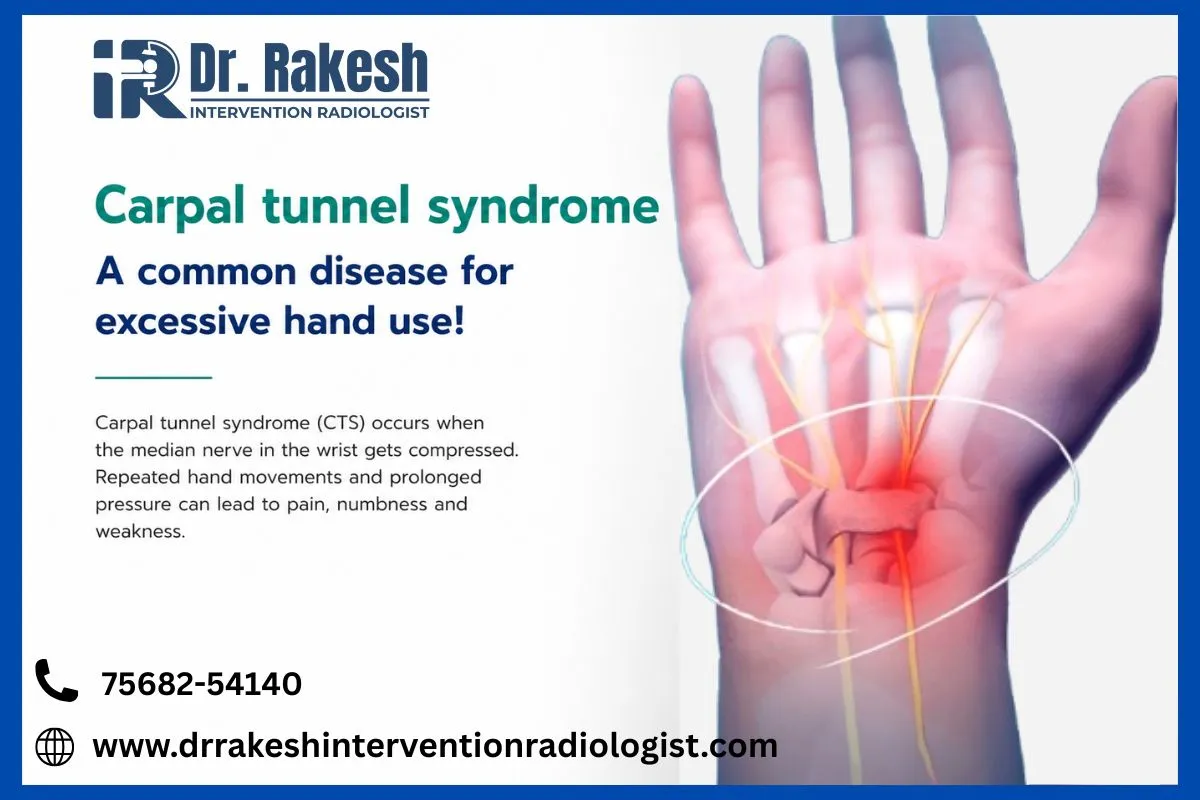
Carpal Tunnel Syndrome occurs when the median nerve—which runs through the wrist—is compressed due to swelling or inflammation.
Common Symptoms:
• Tingling or numbness in fingers (especially thumb, index, middle)
• Weak grip strength
• Pain radiating to the forearm
• Burning sensation in the wrist
• Difficulty holding objects
Top Non-Surgical Treatments for Carpal Tunnel Syndrome
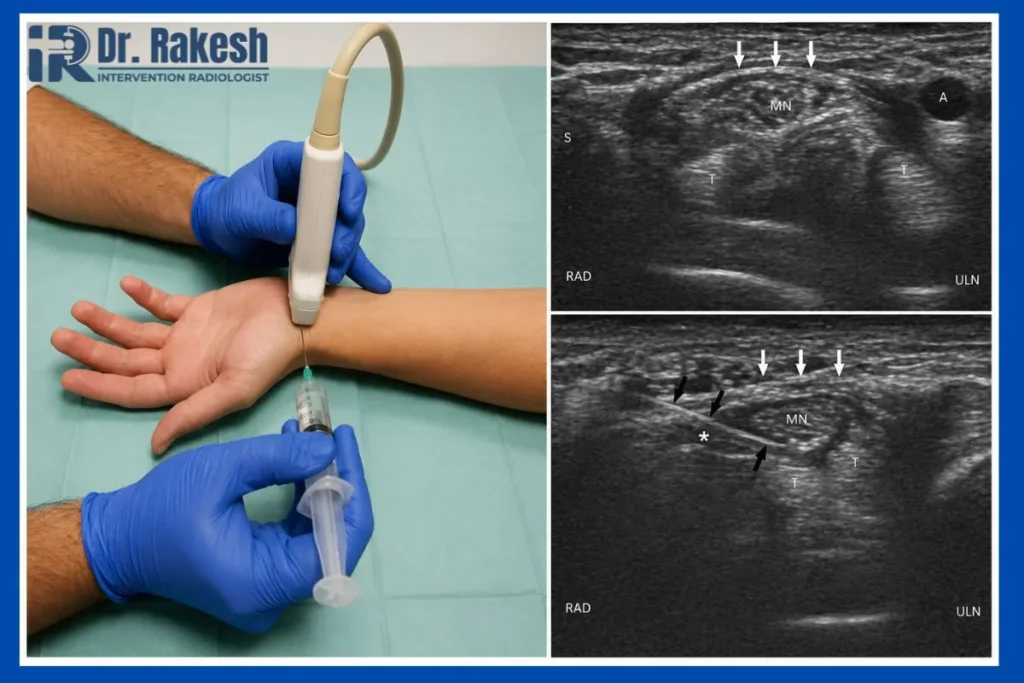
1. USG Guided Injections (Ultrasound-Guided Precision Treatment)
This advanced technique uses ultrasound (USG) to accurately guide injections directly into the affected area.
How It Works:
• Real-time imaging ensures precise needle placement
• Anti-inflammatory medication is injected around the nerve
• Reduces swelling and pressure on the median nerve
Benefits:
• Highly accurate and safe
• Immediate pain relief
• Minimal side effects
• No blind injections
2. Perineural Hydrodissection (Advanced Nerve Release Technique)
Perineural hydrodissection is a cutting-edge, non-surgical technique used to release trapped nerves.
How It Works:
• A fluid (saline or medication) is injected around the nerve
• The fluid separates the nerve from surrounding tissues
• This reduces compression and restores nerve movement
Why It’s Effective:
• Treats the root cause, not just symptoms
• Improves nerve mobility
• Long-lasting relief
3. USG Guided Carpal Tunnel Release (Minimally Invasive Alternative to Surgery)
This is one of the most advanced minimally invasive procedures available today.
Procedure Overview:
• Performed under ultrasound guidance
• A small instrument is used to release the compressed ligament
• No large incision required
Advantages:
• No major surgery
• Faster recovery
• Minimal scarring
• High success rate
Additional Advanced Pain Management Procedures
1. Genicular Nerve Block
A targeted injection around the knee nerves to reduce pain signals, commonly used for chronic knee pain and arthritis relief.
2. Genicular Artery Embolization
A minimally invasive procedure that reduces abnormal blood flow in the knee, helping decrease inflammation and pain in osteoarthritis.
3. PRP Therapy (Platelet-Rich Plasma)
Uses the patient’s own blood platelets to promote healing, tissue regeneration, and long-term pain relief.
4. Genicular Nerve Ablation
A procedure that uses heat or radiofrequency to deactivate pain-causing nerves, providing longer-lasting relief for chronic knee pain.
Other Supportive Non-Surgical Treatments
1. Wrist Splints
Keep the wrist in a neutral position, especially during sleep.
2. Physiotherapy
Improves strength, flexibility, and reduces strain.
3. Ergonomic Changes
• Proper typing posture
• Use of ergonomic keyboards
• Frequent breaks
4. Ice Therapy
Reduces inflammation and swelling.
Why Choose Non-Surgical Treatment?
Key Benefits:
• No hospital stay
• Minimal pain and discomfort
• Quick recovery
• No large cuts or stitches
• Highly precise treatment
With modern advancements, most patients can avoid traditional surgery.
When Should You See a Specialist?
Consult a specialist if:
• Symptoms persist for weeks
• You experience numbness or weakness
• Pain affects daily work or sleep
• Grip strength decreases
Early treatment prevents permanent nerve damage.
Expert Care Matters
Choosing the right specialist is crucial for effective treatment.
Dr. Rakesh Kumawat – Interventional Radiologist and Pain Management Specialist specializes in USG-guided, minimally invasive procedures that offer precise and long-lasting relief for carpal tunnel syndrome.
Conclusion
Carpal Tunnel Syndrome can significantly impact your daily life, but surgery is not always necessary. With advanced non-surgical treatments like USG guided injections, perineural hydrodissection, and USG guided carpal tunnel release, you can achieve effective relief with minimal downtime.
Take action early and consult a specialist to restore comfort, strength, and mobility in your hands.
Frequently Asked Questions (FAQs)
1. Can carpal tunnel syndrome be treated without surgery?
Yes, many cases can be treated with non-surgical methods like injections and hydrodissection.
2. What is USG guided injection?
It is an ultrasound-guided injection for precise and effective treatment.
3. Is hydrodissection safe?
Yes, it is a safe and minimally invasive procedure.
4. How long does recovery take?
Most patients recover within a few days to weeks.
5. Is the procedure painful?
Minimal discomfort is expected, as procedures are done under guidance and anesthesia.
6. Do I need hospitalization?
No, these are daycare procedures.
7. Are results permanent?
Many patients experience long-term relief, especially with proper care.
8. When should I consult a doctor?
If symptoms persist or worsen over time.
9. Can typing worsen carpal tunnel syndrome?
Yes, repetitive strain can increase symptoms.
10. Who should I consult for treatment?
A specialist like Dr. Rakesh Kumawat – Interventional Radiologist and Pain Management Specialist is ideal for advanced non-surgical care.