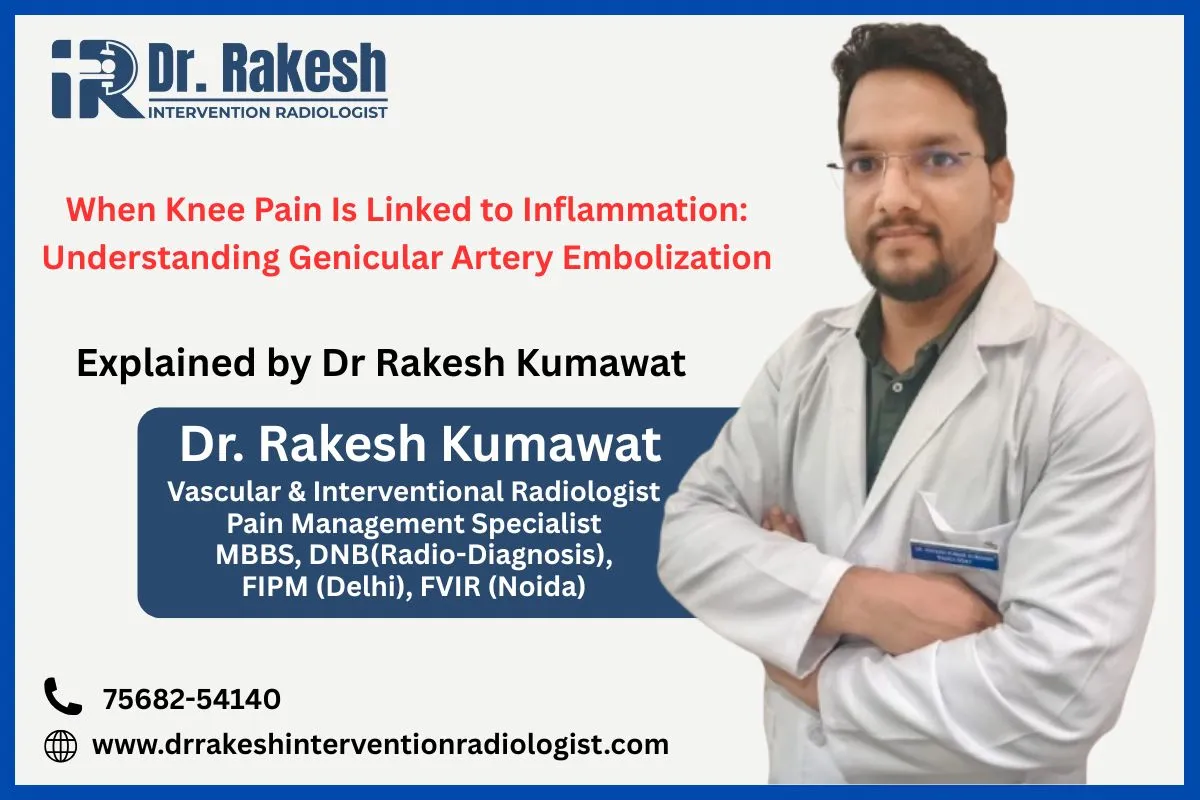
When Knee Pain Is Linked to Inflammation: Understanding Genicular Artery Embolization
Chronic knee pain affects millions of people and is one of the leading causes of reduced mobility and disability. While many people associate knee pain with aging or “wear and tear,” inflammation inside and around the knee joint often plays a significant role in ongoing pain, especially in osteoarthritis.
For years, treatment options mainly included painkillers, physiotherapy, steroid injections, or knee replacement surgery. However, advancements in interventional radiology have introduced innovative, minimally invasive procedures that target the underlying cause of pain rather than simply masking symptoms. One such breakthrough treatment is Genicular Artery Embolization Doctor In Jaipur.
If you have persistent knee pain that has not improved with conventional treatment, Dr. Rakesh Kumawat – Best Interventional Radiologist and Pain Management Specialist in Jaipur offers advanced evaluation and minimally invasive procedures, including Genicular Artery Embolization, to help reduce pain and improve quality of life.
Understanding Chronic Knee Pain
The knee is one of the largest and most frequently used joints in the body. Every step, squat, climb, or movement places stress on the joint.
Chronic knee pain may develop due to:
- Osteoarthritis
- Previous injuries
- Cartilage degeneration
- Ligament damage
- Meniscus tears
- Rheumatoid arthritis
- Obesity
- Repetitive strain
- Age-related joint changes
Among these, osteoarthritis is one of the most common causes of long-term knee pain.
The Hidden Role of Inflammation
Many people believe osteoarthritis is simply caused by cartilage wearing away. While cartilage loss is an important factor, research has shown that chronic inflammation inside the knee joint also contributes significantly to pain.
Inflammation causes:
- Joint swelling
- Increased sensitivity of pain nerves
- Reduced mobility
- Morning stiffness
- Ongoing discomfort even during simple activities
This inflammation is often supported by the growth of abnormal tiny blood vessels around the affected joint. These vessels help sustain inflammation and contribute to persistent pain.
What Is Genicular Artery Embolization (GAE)?
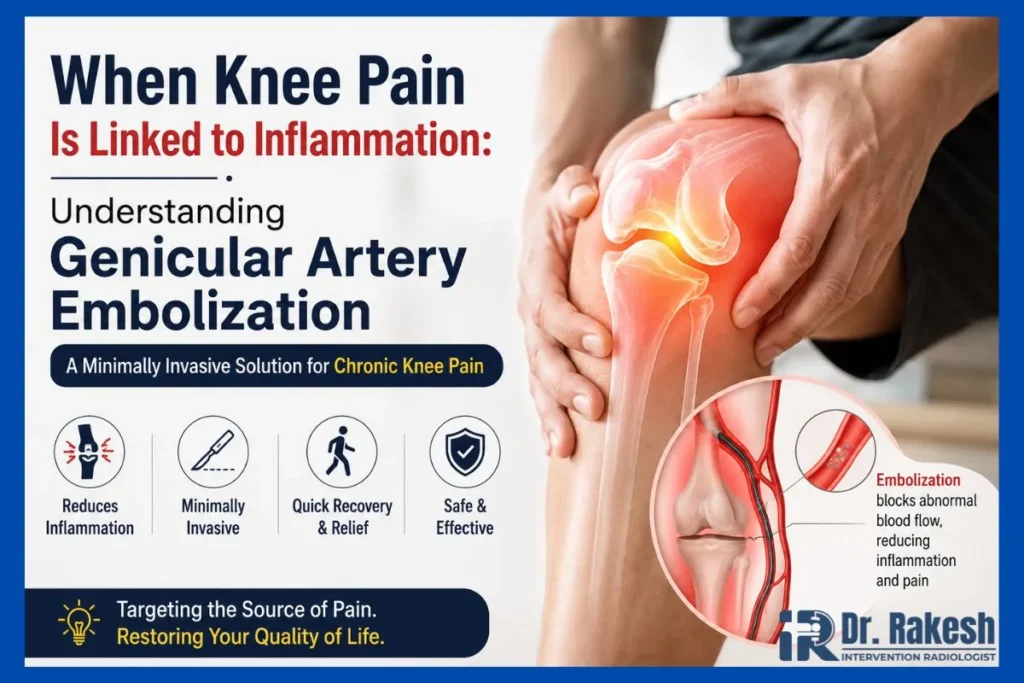
Genicular Artery Embolization Doctor In Jaipur (GAE) is an advanced, minimally invasive procedure performed by an interventional radiologist to reduce chronic knee pain caused by osteoarthritis.
Rather than treating only the symptoms, GAE targets the abnormal blood vessels that contribute to inflammation inside the knee.
Using image guidance, a tiny catheter is inserted through a small puncture, usually in the wrist or groin, and carefully guided to the arteries supplying the inflamed area around the knee. Tiny embolic particles are then injected to reduce abnormal blood flow while preserving normal circulation to healthy tissues.
By decreasing inflammation, many patients experience meaningful pain relief and improved joint function.
How Does GAE Help Reduce Knee Pain?
Inflamed tissues require an increased blood supply. Over time, abnormal new blood vessels develop around the arthritic joint, sustaining inflammation and stimulating pain-sensitive nerves.
Genicular Artery Embolization works by:
- Reducing abnormal blood flow
- Decreasing inflammation
- Lowering irritation of pain receptors
- Improving knee function
- Helping patients perform daily activities more comfortably
Unlike painkillers, which temporarily suppress symptoms, GAE targets one of the biological processes responsible for chronic pain.
Who May Benefit from Genicular Artery Embolization?
GAE may be considered for carefully selected patients who have:
- Mild to moderate knee osteoarthritis
- Persistent knee pain despite medications
- Pain that limits walking or daily activities
- Inadequate relief from physiotherapy
- A desire to delay or avoid knee replacement surgery
- Medical conditions that make major surgery high risk
A detailed evaluation is necessary to determine whether the procedure is appropriate for each individual.
Benefits of Genicular Artery Embolization
GAE offers several advantages compared with more invasive treatment options.
Potential benefits include:
- Minimally invasive procedure
- No large surgical incision
- Reduced inflammation
- Significant pain relief
- Improved mobility
- Short recovery period
- Day-care treatment
- Preservation of the natural knee joint
- Reduced dependence on pain medications
Because the procedure is image-guided, it allows precise treatment while minimizing damage to surrounding tissues.
Recovery After GAE
Recovery is usually faster than with major knee surgery.
Patients are commonly advised to:
- Rest for a short period after the procedure.
- Gradually resume normal activities as instructed.
- Follow rehabilitation recommendations.
- Attend scheduled follow-up visits.
Improvement often develops gradually over the following weeks as inflammation decreases.
How Is GAE Different from Other Knee Pain Treatments?
Every minimally invasive treatment targets a different aspect of chronic knee pain.
Genicular Nerve Block
A Genicular Nerve Block temporarily interrupts pain signals from the nerves around the knee and is commonly used both for diagnosis and short-term pain relief.
Genicular Nerve Ablation
Genicular Nerve Ablation provides longer-lasting pain control by using radiofrequency energy to reduce pain transmission through the genicular nerves.
PRP Therapy
Platelet-Rich Plasma (PRP) Therapy uses concentrated platelets from the patient’s own blood to promote healing and reduce inflammation in selected patients with early joint degeneration.
Genicular Artery Embolization
Unlike these treatments, GAE specifically targets the abnormal blood vessels that contribute to inflammation in osteoarthritis, addressing a different mechanism of chronic knee pain.
The most appropriate treatment depends on the underlying diagnosis, severity of arthritis, imaging findings, and individual health status.
Lifestyle Measures That Complement Treatment
Medical treatment is most effective when combined with healthy lifestyle habits.
Doctors often recommend:
- Maintaining a healthy body weight
- Regular low-impact exercise
- Strengthening the muscles around the knee
- Avoiding prolonged inactivity
- Following physiotherapy guidance
- Eating a balanced diet
- Managing chronic conditions such as diabetes
These measures help reduce stress on the knee and support long-term joint health.
Expert Knee Pain Care in Jaipur
If chronic Knee Pain Doctor In Jaipur has been affecting your mobility and quality of life, expert evaluation is essential. Dr. Rakesh Kumawat – Best Interventional Radiologist and Pain Management Specialist in Jaipur specializes in advanced, image-guided treatments for chronic knee pain, including Genicular Artery Embolization (GAE).
Each patient receives a detailed clinical assessment to determine the underlying cause of pain and whether minimally invasive treatment is appropriate. The goal is to reduce inflammation, improve joint function, and help patients return to an active lifestyle with less pain.
Frequently Asked Questions (FAQs)
1. What is Genicular Artery Embolization (GAE)?
Genicular Artery Embolization is a minimally invasive image-guided procedure that reduces abnormal blood flow associated with inflammation around the knee, helping relieve chronic pain caused by osteoarthritis.
2. How does inflammation contribute to knee pain?
Inflammation increases swelling, irritates pain-sensitive nerves, and contributes to ongoing joint discomfort and stiffness, especially in osteoarthritis.
3. Who is a suitable candidate for GAE?
Patients with persistent knee pain due to mild or moderate osteoarthritis who have not responded adequately to conservative treatments may be considered after a detailed evaluation.
4. Is GAE a surgical procedure?
No. GAE is a minimally invasive catheter-based procedure performed through a small puncture using image guidance, without the need for major surgery.
5. How long does the procedure take?
Most Genicular Artery Embolization procedures are completed within one to two hours, depending on the patient’s condition.
6. Is GAE painful?
The procedure is usually performed under local anesthesia. Most patients experience minimal discomfort during and after treatment.
7. How long is the recovery period?
Many patients return home the same day and gradually resume normal activities over the following days, as advised by their doctor.
8. Can GAE replace knee replacement surgery?
GAE is not a replacement for surgery in every case. However, for carefully selected patients, it may significantly reduce pain and help delay or avoid knee replacement.
9. Can GAE be combined with other treatments?
Yes. Depending on the diagnosis, GAE may be part of a comprehensive treatment plan that includes physiotherapy, lifestyle modifications, or other minimally invasive procedures.
10. Who should I consult for Genicular Artery Embolization in Jaipur?
For advanced evaluation and minimally invasive treatment of chronic knee pain, many patients consult Dr. Rakesh Kumawat – Best Interventional Radiologist and Pain Management Specialist in Jaipur, who specializes in image-guided procedures including Genicular Artery Embolization (GAE).