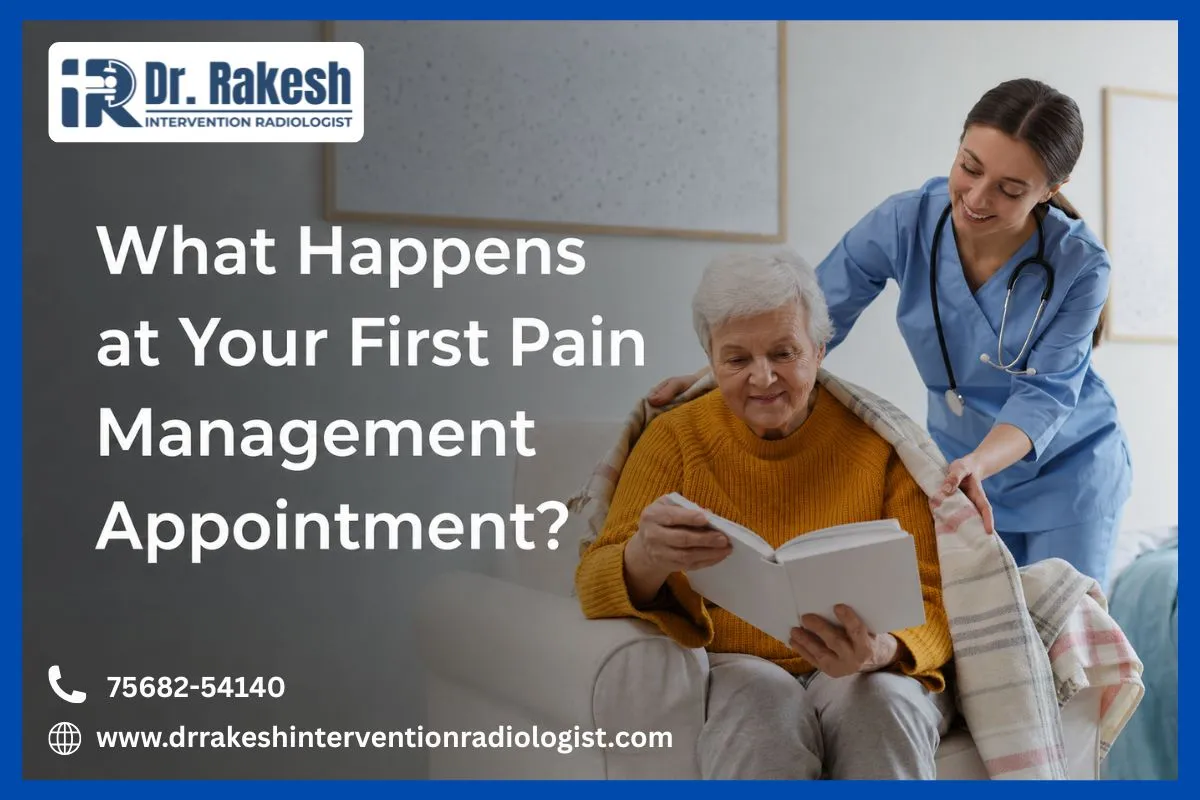
What to Expect During Your First Pain Management Consultation
Living with chronic pain can affect every part of daily life — from walking and working to sleeping and enjoying simple activities. Whether it is knee pain, back pain, neck pain, joint pain, or nerve-related discomfort, seeking professional help at the right time is important.
For many patients, the first question is often: “What happens during a pain management consultation?” Understanding the process can help reduce anxiety and prepare you for effective treatment.
If you are planning to consult Dr. Rakesh Kumawat – Best Interventional Radiologist and Pain Management Specialist in Jaipur, this guide explains what you can expect during your first visit.
Understanding Pain Management
Pain management is a specialized medical approach focused on diagnosing, treating, and reducing chronic or severe pain using modern, minimally invasive techniques.
Unlike temporary pain relief with medicines, pain management aims to:
- Identify the root cause of pain
- Improve mobility and quality of life
- Reduce dependence on long-term medications
- Avoid unnecessary surgery whenever possible
Modern pain management combines advanced imaging, targeted therapies, rehabilitation, and minimally invasive procedures for long-term relief.
Why You Should Visit a Pain Management Specialist
Many people continue taking painkillers for months without understanding the actual reason behind their pain. A pain management specialist focuses on finding the exact source of discomfort and creating a personalized treatment plan.
You should consider consulting a specialist if you have:
- Persistent knee or back pain
- Neck pain or nerve pain
- Joint pain affecting daily activities
- Pain after injury or surgery
- Pain not improving with medications or physiotherapy
Early diagnosis often prevents the condition from worsening.
What Happens During Your First Consultation?
Your first consultation is mainly focused on understanding your pain, medical history, lifestyle, and treatment goals. It is a detailed process designed to identify the best treatment approach for your condition.
1. Detailed Medical History Review
The consultation usually begins with a discussion about your symptoms and medical background.
The doctor may ask:
- When did the pain start?
- What activities worsen the pain?
- Is the pain sharp, burning, or dull?
- Have you taken any medications or therapies?
- Do you have any existing medical conditions?
This step helps the specialist understand the severity and pattern of your pain.
2. Physical Examination
A physical examination is performed to evaluate:
- Joint movement
- Muscle strength
- Swelling or tenderness
- Nerve function
- Mobility limitations
For example, if you have knee pain, the doctor may check your walking pattern, range of motion, and pain points.
3. Review of Reports & Imaging
If you already have reports such as:
- X-rays
- MRI scans
- CT scans
- Blood tests
the doctor will review them carefully.
In some cases, additional imaging or diagnostic tests may be recommended to identify the exact cause of pain.
4. Diagnosis & Pain Assessment
After evaluation, the doctor explains:
- The likely cause of your pain
- Severity of the condition
- Possible treatment options
Pain is often assessed on a scale to understand how much it affects your daily life and activities.
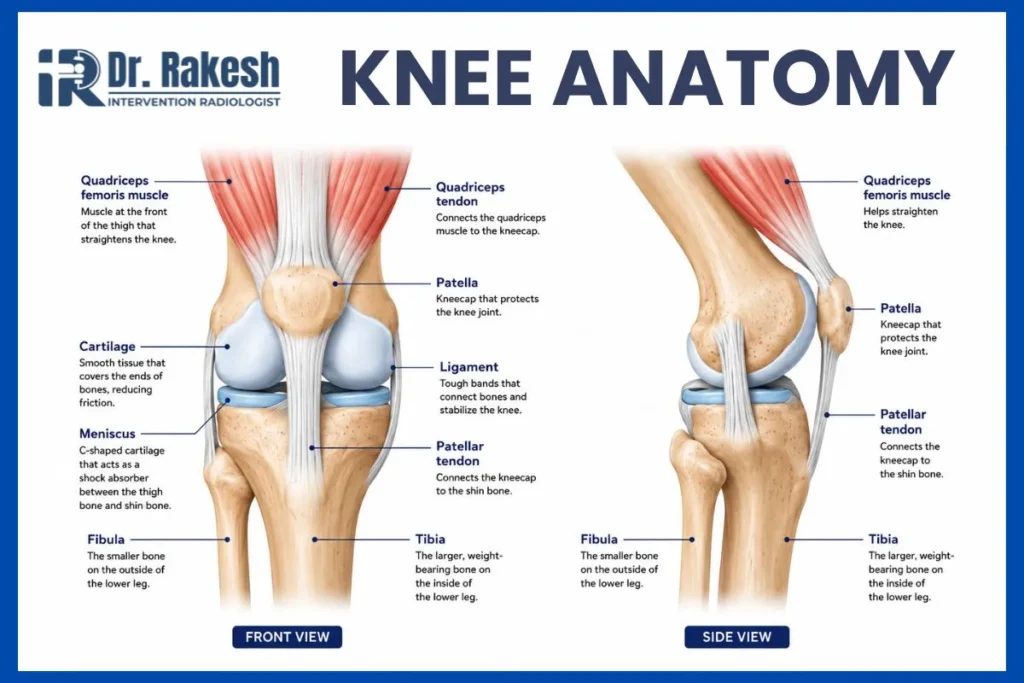
Advanced Pain Management Treatments
One major advantage of consulting a specialist like Dr. Rakesh Kumawat is access to advanced, minimally invasive treatment options.
Depending on the condition, treatments may include:
Genicular Nerve Block
This procedure is commonly used for chronic knee pain and arthritis-related discomfort.
A targeted injection is given near specific nerves to block pain signals and provide relief.
Genicular Nerve Ablation
If knee pain becomes chronic, radiofrequency energy may be used to reduce pain transmission from affected nerves.
This provides long-lasting relief without major surgery.
PRP Therapy (Platelet-Rich Plasma)
PRP therapy uses the patient’s own blood platelets to support healing and reduce inflammation in joints and tissues.
Genicular Artery Embolization (GAE)
Genicular Artery Embolization is an advanced minimally invasive procedure used for chronic knee pain and osteoarthritis.
In this treatment, tiny particles are used to reduce abnormal blood flow and inflammation around the knee joint, helping decrease pain and improve mobility without major surgery.
Image-Guided Pain Procedures
Using imaging technology like ultrasound or fluoroscopy, treatments are performed with high precision, improving safety and effectiveness.
Benefits of Seeing Dr. Rakesh Kumawat
Dr. Rakesh Kumawat is known as one of the leading Interventional Radiologists and Pain Management Specialists in Jaipur.
His expertise in minimally invasive procedures helps patients achieve effective relief without extensive surgery.
Key Advantages:
- Personalized treatment approach
- Advanced image-guided procedures
- Focus on long-term pain relief
- Minimally invasive techniques
- Faster recovery and reduced downtime
Patients dealing with chronic pain often benefit from treatments that are safer and more targeted compared to traditional methods.
How to Prepare for Your Consultation
To make the most of your appointment, it is helpful to:
- Carry previous medical reports and scans
- List current medications
- Note down symptoms and pain patterns
- Wear comfortable clothing
- Be prepared to discuss lifestyle habits and medical history
This helps the doctor evaluate your condition more effectively.
Will You Need Surgery?
One of the biggest concerns for patients is whether surgery will be necessary.
In many cases, modern pain management treatments can significantly reduce pain without surgery. Procedures like nerve blocks, PRP therapy, and minimally invasive interventions often help patients return to daily activities with less discomfort.
However, treatment recommendations depend on the severity and type of condition.
Importance of Early Consultation
Delaying treatment can worsen pain and reduce mobility over time. Early consultation offers several benefits:
- Faster diagnosis
- Better treatment outcomes
- Reduced risk of complications
- Improved quality of life
Ignoring chronic pain can affect both physical and emotional well-being.
Conclusion
Your first pain management consultation is an important step toward understanding and treating chronic pain effectively. The process involves careful evaluation, diagnosis, and personalized treatment planning to help improve comfort and mobility.
With advanced techniques and minimally invasive procedures, Dr. Rakesh Kumawat – Best Interventional Radiologist and Pain Management Specialist in Jaipur provides modern solutions for patients dealing with persistent pain conditions.
Seeking timely medical attention can help you regain control of your daily life and move toward long-term pain relief.
FAQs
1. What should I bring to my first consultation?
Carry previous medical reports, scans, prescriptions, and a list of symptoms for better evaluation.
2. Are pain management procedures painful?
Most procedures are minimally invasive and performed with techniques to reduce discomfort.
3. Can pain management help avoid surgery?
Yes, many patients experience relief through non-surgical and image-guided treatments.
4. How long does a consultation take?
The first consultation may take 20–40 minutes depending on the condition.
5. Is pain management only for older patients?
No, people of different age groups can benefit from pain management treatments depending on their condition.