PRP Therapy for Knee Pain in Jaipur: Is It Right for You?
Knee pain is one of the most common problems affecting people of different age groups today. Whether it is due to osteoarthritis, sports injury, ligament strain, cartilage wear, or age-related joint degeneration, knee pain can affect daily walking, climbing stairs, sitting, standing, and overall quality of life. For many patients who want to avoid or delay surgery, PRP Therapy for knee pain in Jaipur has become a popular non-surgical treatment option.
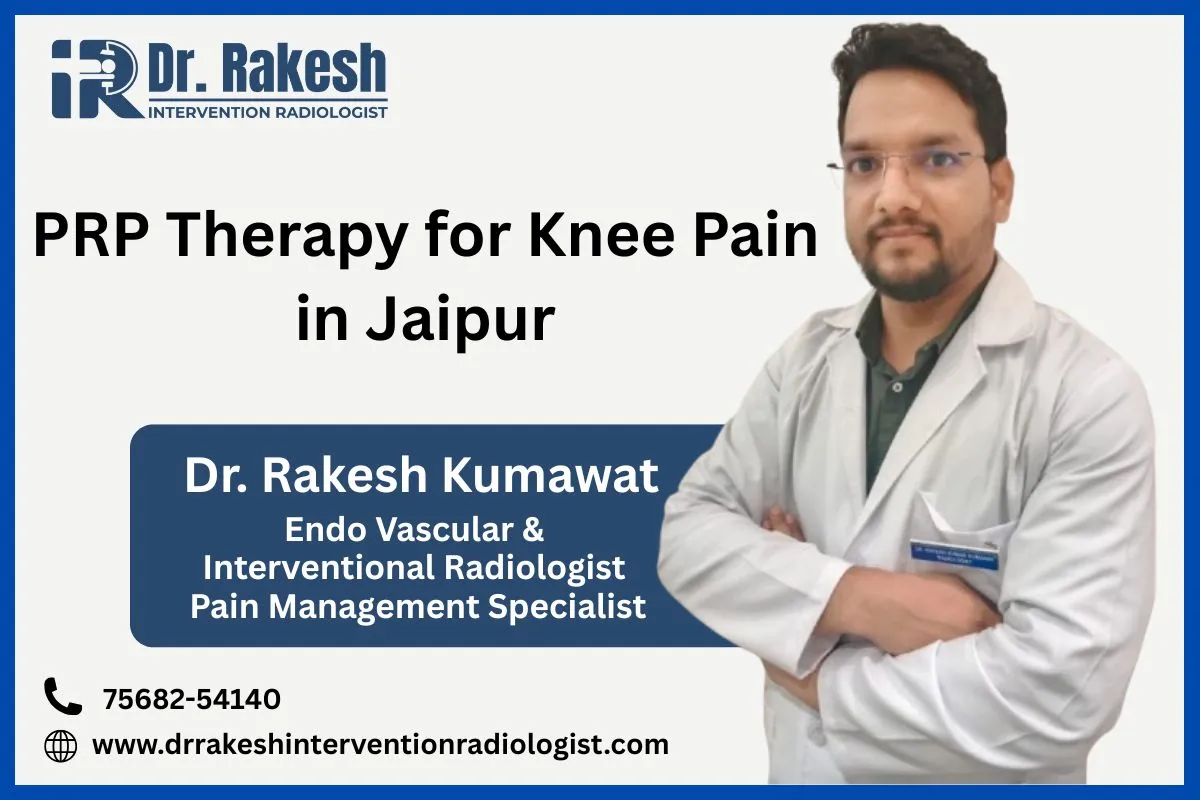
Under the expert care of Dr. Rakesh Kumawat – Best Interventional Radiologist and Pain Management Specialist in Jaipur, patients can receive advanced image-guided pain management solutions designed to target the root cause of knee pain and improve mobility.
What is PRP Therapy?
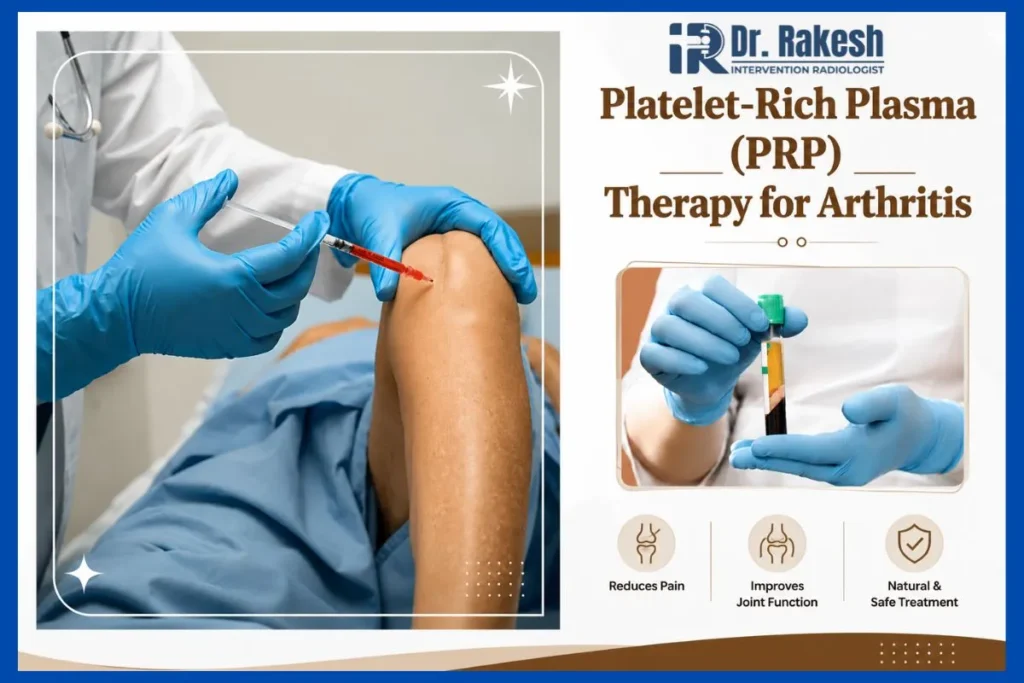
PRP stands for Platelet-Rich Plasma. It is prepared from your own blood. A small amount of blood is drawn, processed in a centrifuge, and the platelet-rich portion is separated. This concentrated plasma contains growth factors that may support tissue repair, reduce inflammation, and promote healing in painful joints or injured areas.
PRP injections are commonly used for musculoskeletal problems, including knee osteoarthritis, tendon injuries, ligament injuries, and chronic joint pain. Johns Hopkins describes PRP as a treatment prepared from a patient’s own blood and notes that it is used in several injury and chronic pain-related conditions.
How Does PRP Help in Knee Pain?
In knee pain cases, especially osteoarthritis or early cartilage degeneration, PRP is injected into the affected knee joint. The aim is to reduce inflammation, improve joint function, and support natural healing. PRP does not create a new knee joint, but it may help selected patients experience better movement and pain relief.
Clinical evidence around PRP is still developing. The American Academy of Orthopaedic Surgeons’ technology overview summarizes studies on PRP for knee osteoarthritis but does not make a firm recommendation for or against its use. This means patient selection, doctor expertise, PRP preparation quality, and injection accuracy are very important.
Who Can Consider PRP Therapy for Knee Pain?
PRP therapy may be suitable for patients who have:
• Early to moderate knee osteoarthritis
• Knee pain while walking or climbing stairs
• Cartilage wear and tear
• Sports-related knee strain
• Recurrent swelling or stiffness
• Pain not improving with medicines and physiotherapy
• A desire to delay knee replacement surgery
It is usually more helpful in early or moderate cases rather than very advanced arthritis where the joint is severely damaged. A proper diagnosis, imaging, and clinical examination are necessary before deciding whether PRP is right for you.
Why Image-Guided PRP Matters
The success of PRP therapy depends not only on the quality of PRP but also on accurate delivery into the target area. This is where an interventional radiologist and pain management specialist in jaipur plays an important role. Image-guided injections using ultrasound or fluoroscopy can help place the PRP more accurately into the affected joint or tissue.
With advanced pain management expertise, Dr. Rakesh Kumawat focuses on precision-based treatment planning so patients receive targeted care rather than general pain relief alone.
Benefits of PRP Therapy for Knee Pain
PRP therapy is often preferred because it is minimally invasive and uses the patient’s own blood components. Some possible benefits include:
• Non-surgical treatment approach
• May reduce knee pain and stiffness
• May improve walking comfort
• Supports natural healing response
• Lower risk of allergic reaction because it uses your own plasma
• Can be combined with physiotherapy and lifestyle correction
Johns Hopkins notes that PRP injections are generally considered low-risk, although soreness or bruising may occur after the injection. Less common risks include bleeding, infection, tissue damage, or nerve injury.
How Long Does PRP Take to Work?
PRP is not an instant painkiller. Some patients may feel mild discomfort for a few days after the injection. Improvement may gradually appear over a few weeks as the healing response develops. In some knee osteoarthritis cases, patients may need more than one session depending on severity, age, activity level, and response to treatment.
Mayo Clinic’s professional update notes that many knee osteoarthritis patients report relief for several months after PRP, although outcomes vary from patient to patient.
Is PRP Better Than Painkillers or Steroid Injections?
Painkillers may provide temporary relief but do not address the biological healing process. Steroid injections can reduce inflammation quickly, but repeated use may not be ideal for every patient. PRP is different because it aims to support healing using concentrated platelets from the patient’s own blood.
However, PRP is not suitable for everyone. Patients with severe arthritis, uncontrolled diabetes, active infection, blood disorders, or those taking certain blood-thinning medicines may need special evaluation before treatment.
PRP Therapy in Jaipur: Why Choose Dr. Rakesh Kumawat?
Choosing the right specialist is important for knee pain treatment. Dr. Rakesh Kumawat – Best Interventional Radiologist and Pain Management Specialist in Jaipur provides advanced pain management care with a focus on accurate diagnosis, image-guided procedures, and patient-specific treatment planning.
If you are suffering from long-term knee pain and want to explore a non-surgical option, PRP therapy may be worth discussing during consultation.
FAQs
1. Is PRP therapy painful?
PRP therapy may cause mild discomfort during or after the injection. Most patients tolerate the procedure well, and soreness usually settles within a few days.
2. How many PRP sessions are needed for knee pain?
The number of sessions depends on the severity of knee pain, arthritis grade, and patient response. Some patients may need one session, while others may require multiple sessions.
3. Is PRP safe for knee pain?
PRP is generally considered low-risk because it uses your own blood components, but like any injection, it may have risks such as pain, swelling, bleeding, or infection.
4. Can PRP avoid knee replacement surgery?
PRP may help delay surgery in selected early or moderate cases, but it cannot replace knee replacement in severe arthritis where joint damage is advanced.
5. Who is the best doctor for PRP therapy for knee pain doctor in Jaipur?
For image-guided PRP therapy and advanced pain management, you can consult Dr. Rakesh Kumawat – Best Interventional Radiologist and Pain Management Specialist in Jaipur.