Pain Management Without Major Surgery: What Are Your Options?
Living with chronic pain can affect your ability to walk, work, exercise, sleep, and enjoy everyday activities. Knee Pain Treatment In Jaipur, joint pain, back pain, and other persistent conditions may lead some patients to believe that major surgery is their only remaining option.
However, advances in Interventional Pain Management have introduced several minimally invasive treatments that may help selected patients control pain and improve mobility without major surgery. Options such as Genicular Nerve Block, Genicular Nerve Ablation, Genicular Artery Embolization, and PRP Therapy can be considered depending on the cause and severity of pain.
Dr. Rakesh Kumawat – Best Interventional Radiologist and Pain Management Specialist in Jaipur provides advanced image-guided pain management procedures designed around each patient’s individual condition.
Why Does Chronic Pain Need a Different Approach?
Temporary pain after an injury often improves as the body heals. Chronic pain is different. It may continue for months and can involve joints, nerves, inflammation, muscles, or degenerative changes.
Common chronic pain conditions include:
• Knee osteoarthritis
• Chronic knee joint pain
• Back pain
• Shoulder pain
• Neck pain
• Nerve-related pain
• Persistent pain following an injury
Instead of repeatedly masking symptoms with painkillers, modern pain management aims to understand where the pain originates and what mechanism is causing it.
Does Chronic Pain Always Require Surgery?
No. Many patients can initially be managed with non-surgical approaches.
Treatment may begin with physiotherapy, strengthening exercises, weight management, lifestyle modification, activity changes, and appropriate medications.
When these treatments do not provide sufficient relief, minimally invasive procedures may offer additional options before major surgery is considered.
The right approach depends on the diagnosis, imaging findings, severity of structural damage, and previous response to treatment.
Genicular Nerve Block for Knee Pain
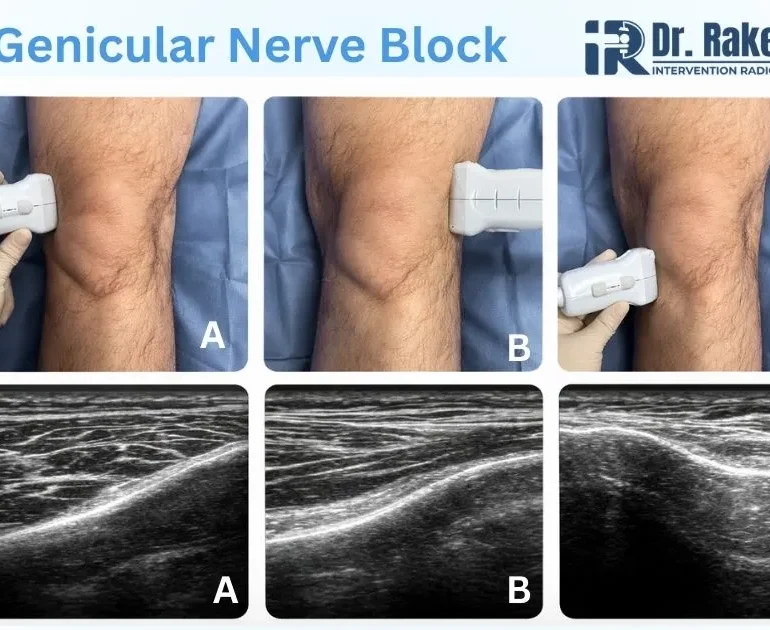
A Genicular Nerve Block is a minimally invasive procedure used for selected patients with chronic knee pain.
Genicular nerves are sensory nerves located around the knee that transmit pain signals to the brain. During a nerve block, medication is placed near selected nerves using image guidance.
The procedure may temporarily reduce pain and can also provide useful diagnostic information.
If significant pain relief occurs after the block, it may indicate that the targeted nerves are contributing to the patient’s symptoms.
Genicular Nerve Ablation
For selected patients who respond well to a diagnostic nerve block, Genicular Nerve Ablation may provide longer-lasting pain management.
This procedure uses controlled radiofrequency energy to reduce the ability of targeted genicular nerves to transmit pain signals.
It may be considered for patients with chronic osteoarthritis-related knee pain who have not received adequate relief from conservative treatments.
Genicular Nerve Ablation does not rebuild cartilage or reverse arthritis. Its primary purpose is to reduce pain transmission and improve function.
Genicular Artery Embolization
Not all knee pain comes primarily from nerves. In some patients with osteoarthritis, chronic inflammation may contribute significantly to pain.
Genicular Artery Embolization Doctor In Jaipur (GAE) is an advanced image-guided procedure that targets abnormal blood vessels associated with inflammation around an osteoarthritic knee.
During the procedure, an Interventional Radiologist guides a very small catheter through the blood vessels to selected genicular arteries. Tiny embolic particles are then used to reduce abnormal blood flow associated with inflammation.
GAE does not require an open incision in the knee joint and may be an option for appropriately selected patients who want to explore alternatives before knee replacement surgery.
PRP Therapy for Joint Pain
Platelet-Rich Plasma (PRP) Therapy takes a different approach.
A small amount of the patient’s blood is collected and processed to create a concentrated platelet preparation. This is then administered to the targeted area.
Platelets contain growth factors involved in the body’s natural healing processes.
PRP Therapy may be considered for selected patients with certain joint, tendon, ligament, or early degenerative conditions. Results vary according to the condition and severity of tissue damage.
Why Image-Guided Procedures Matter
One major advantage of modern Interventional Pain Management is the use of medical imaging.
Ultrasound, fluoroscopy, or other imaging technologies can help specialists precisely identify and target:
• Nerves
• Joints
• Blood vessels
• Inflamed tissues
• Other pain-generating structures
This allows treatment to be delivered to a specific anatomical target through a small needle or catheter rather than a major surgical incision.
Can These Treatments Help You Avoid Surgery?
For some patients, minimally invasive treatments may provide meaningful pain relief and help delay or potentially avoid major surgery.
For example, a patient with chronic knee osteoarthritis may benefit from Genicular Nerve Ablation or Genicular Artery Embolization depending on the dominant cause of pain.
However, these procedures cannot replace surgery in every situation. Severe joint destruction, significant deformity, major structural injuries, or certain advanced conditions may still require surgical treatment.
The objective should be to select the least invasive effective treatment, not simply to avoid surgery at any cost.
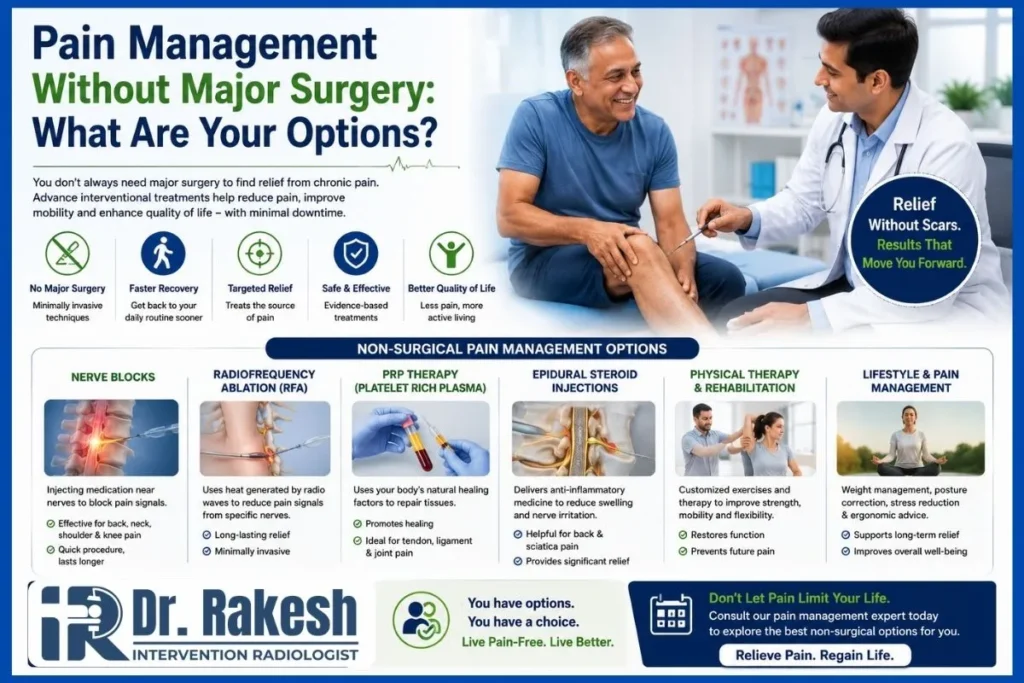
Which Treatment Is Right for You?
There is no single procedure that works for every chronic pain patient.
Treatment selection may depend on:
• Cause of pain
• Duration of symptoms
• Severity of pain
• X-ray or MRI findings
• Degree of inflammation
• Previous treatment
• Age and activity level
• Overall medical health
A detailed evaluation is therefore essential before choosing PRP, nerve treatment, embolization, or another procedure.
When Should You Consult a Pain Management Specialist?
Consider specialist evaluation when pain continues for several weeks or months, frequently returns, affects walking or sleep, limits daily activities, or does not improve sufficiently with medication and physiotherapy.
Early evaluation may provide more options for managing the condition before pain becomes severely disabling.
Advanced Pain Management with Dr. Rakesh Kumawat
Dr. Rakesh Kumawat – Best Interventional Radiologist and Pain Management Specialist Doctor In Jaipur provides personalized, minimally invasive and image-guided treatment options for patients with chronic pain.
Depending on the diagnosis, advanced options may include Genicular Nerve Block, Genicular Nerve Ablation, Genicular Artery Embolization, PRP Therapy, and other targeted pain management procedures.
Frequently Asked Questions (FAQs)
1. Can chronic pain be treated without major surgery?
Yes. Many conditions can be managed with physiotherapy, lifestyle changes, medications, and minimally invasive procedures depending on the diagnosis.
2. What is a Genicular Nerve Block?
It is a targeted procedure that temporarily reduces pain signals transmitted through selected sensory nerves around the knee.
3. How is Genicular Nerve Ablation different?
Genicular Nerve Ablation uses radiofrequency energy to reduce pain transmission for a potentially longer period in appropriately selected patients.
4. What is Genicular Artery Embolization?
GAE is an image-guided procedure that targets abnormal blood vessels associated with inflammation in selected patients with knee osteoarthritis.
5. Does GAE involve open knee surgery?
No. The procedure is performed through a small vascular access point using a catheter.
6. What is PRP Therapy?
PRP Therapy uses concentrated platelets prepared from the patient’s own blood and may be used for selected joint and soft-tissue conditions.
7. Can these procedures cure arthritis?
These treatments may help manage symptoms but do not necessarily reverse the structural changes of advanced arthritis.
8. Can minimally invasive treatment prevent knee replacement?
It may help selected patients delay or avoid surgery, but severe structural joint damage may still require knee replacement.
9. How do doctors choose the right pain procedure?
The decision is based on symptoms, diagnosis, imaging findings, previous treatments, overall health, and the suspected source of pain.
10. Who should I consult for advanced pain management in Jaipur?
Patients can consult Dr. Rakesh Kumawat – Best Interventional Radiologist and Pain Management Specialist in Jaipur for evaluation and personalized image-guided pain management options.