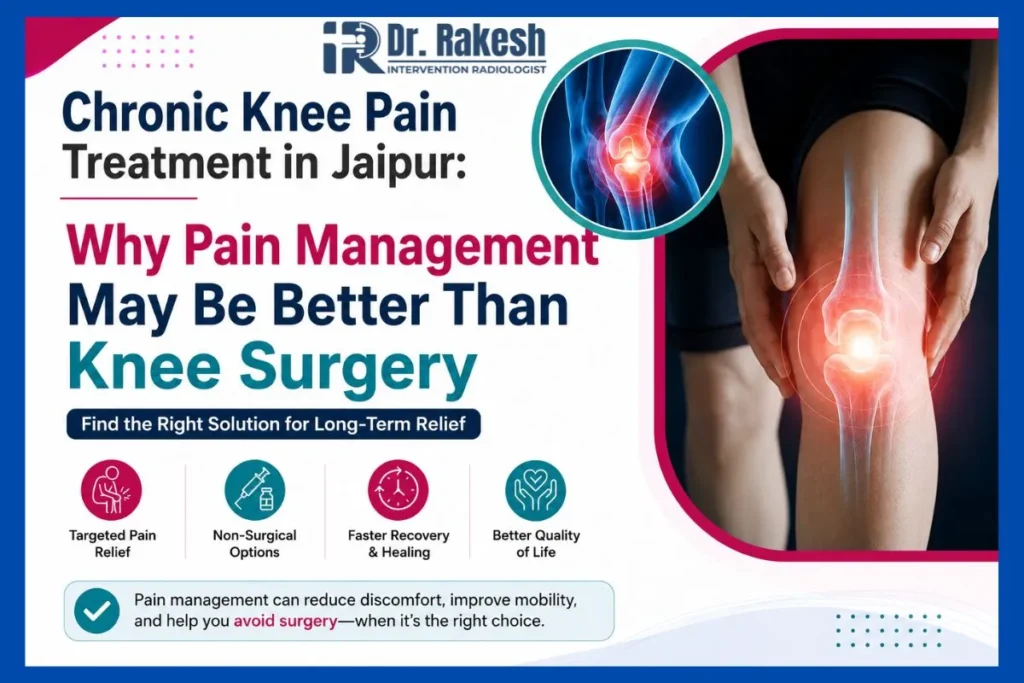
Chronic Knee Pain Treatment in Jaipur: When Is Pain Management Better Than Surgery?
Chronic knee pain is one of the most common reasons people struggle with walking, climbing stairs, sitting cross-legged, standing for long hours, or maintaining an active lifestyle. In many cases, knee pain is linked to osteoarthritis, cartilage wear and tear, ligament injury, meniscus damage, obesity, age-related degeneration, or pain that continues even after previous knee treatment.
For many patients, the first thought is: “Will I need knee replacement surgery?” The answer is not always yes. In several cases, pain management can be a better option than surgery, especially when the condition is not very advanced or when the patient wants to delay surgery safely.
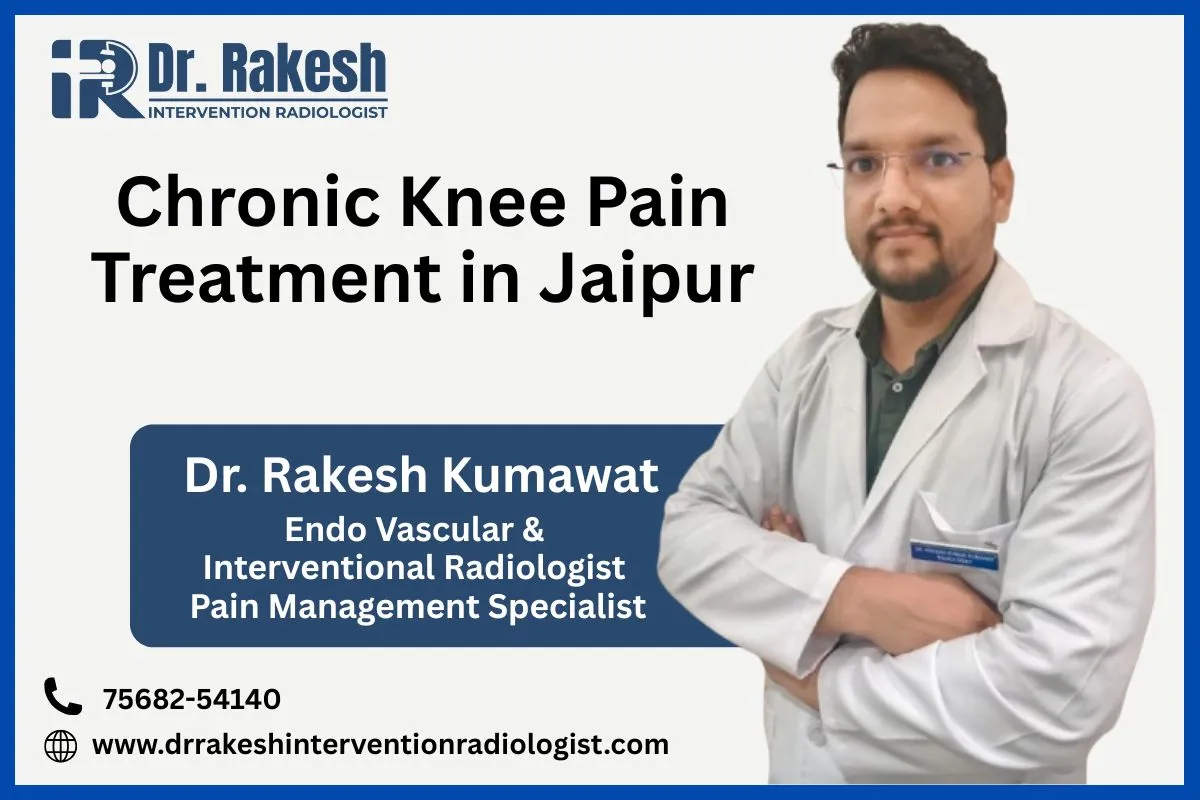
If you are looking for chronic knee pain treatment in Jaipur, consulting Dr. Rakesh Kumawat – Best Interventional Radiologist and Pain Management Specialist in Jaipur can help you understand whether non-surgical pain management is suitable for your condition.
Understanding Chronic Knee Pain
Chronic knee pain means pain that continues for weeks or months and affects daily activities. It may be dull, sharp, burning, or associated with swelling and stiffness. Some patients experience pain while walking, while others feel pain after sitting for a long time or during stair climbing.
Common causes include:
• Knee osteoarthritis
• Cartilage degeneration
• Ligament or meniscus injury
• Inflammation around the joint
• Referred pain from nerves
• Previous trauma
• Post-surgical knee pain
• Age-related joint changes
Knee osteoarthritis is a major cause of long-term knee pain. Non-surgical options such as physical therapy, weight management, medicines, and injections are commonly used to reduce pain and improve function in suitable patients.
Surgery Is Not Always the First Step
Knee replacement surgery can be life-changing for patients with severe arthritis and major joint damage. However, it is usually considered when pain is severe, daily movement is highly restricted, and non-surgical treatments have failed. Johns Hopkins notes that knee replacement may be discussed when arthritis worsens despite other treatments, but alternatives can help reduce pain in some patients before surgery becomes necessary.
Pain management is often considered before surgery when:
• Arthritis is mild to moderate
• Pain is more than the visible joint damage
• The patient wants to delay surgery
• The patient is not medically fit for surgery
• Pain continues after knee replacement
• Medicines and physiotherapy alone are not enough
• The patient wants a minimally invasive option
The goal is not just temporary relief. A good pain management plan focuses on reducing pain, improving mobility, supporting rehabilitation, and helping the patient return to daily activities with better comfort.
When Is Pain Management Better Than Surgery?
Pain management may be better than surgery in selected cases where the knee joint is still structurally manageable and pain can be controlled through targeted treatment. It is especially helpful when the patient does not have complete joint destruction or severe deformity.
1. Early or Moderate Knee Osteoarthritis
In early or moderate arthritis, surgery may be too aggressive. Treatments such as image-guided injections, PRP therapy, genicular nerve block, radiofrequency ablation, physiotherapy, and lifestyle correction may help reduce pain and delay disease progression.
2. Patients Who Are High-Risk for Surgery
Some patients have diabetes, heart disease, kidney disease, obesity, advanced age, or other health issues that increase surgical risk. For them, non-surgical pain management may provide relief without the risks of major surgery.
3. Patients Wanting to Delay Knee Replacement
Not every patient is ready for knee replacement. Some want to continue with non-surgical options for as long as possible. Pain management can act as a bridge, helping patients remain active while delaying surgery when medically appropriate.
4. Pain After Knee Replacement
Some patients continue to experience pain even after knee replacement surgery. In such cases, interventional pain procedures may help identify and manage nerve-related pain sources without repeat surgery.
5. Pain Mainly Due to Nerve Signals
Sometimes pain is driven by irritated pain-carrying nerves around the knee. A genicular nerve block or radiofrequency ablation can target these nerves and reduce pain signals. These procedures are often considered in chronic knee pain, especially when other conservative treatments are not enough. Genicular Nerve Block Treatment In Jaipur.
Non-Surgical Pain Management Options for Knee Pain
A pain management specialist may recommend different treatments based on diagnosis, imaging reports, arthritis grade, symptoms, and patient goals.
Physiotherapy and Exercise
Strengthening the muscles around the knee helps support the joint and reduce load. Exercise, when done correctly, can improve flexibility, balance, and walking capacity.
Weight Management
Even small weight reduction can decrease pressure on the knees. This is especially important in arthritis-related knee pain.
Image-Guided Injections
Injections may include anti-inflammatory medicine, viscosupplementation, PRP, or other regenerative and pain-relieving options. Image guidance helps improve accuracy by placing the medicine near the exact target.
PRP Therapy
PRP therapy uses platelet-rich plasma prepared from the patient’s own blood. It may be considered in selected cases of early to moderate knee arthritis or soft tissue injury.
Genicular Nerve Block
This procedure targets the pain-carrying nerves around the knee. It may provide temporary relief and also helps determine whether the patient may benefit from genicular nerve radiofrequency ablation.
Radiofrequency Ablation
If a diagnostic nerve block gives good pain relief, radiofrequency ablation may be used to provide longer-lasting relief by reducing pain signal transmission from specific nerves.
Role of an Interventional Radiologist in Knee Pain
An interventional radiologist uses imaging guidance such as ultrasound or fluoroscopy to perform targeted procedures with precision. This is important because knee pain may arise from different structures, including the joint, nerves, tendons, ligaments, or surrounding soft tissues.
Dr. Rakesh Kumawat – Best Interventional Radiologist and Pain Management Specialist in Jaipur focuses on accurate diagnosis and targeted treatment. Instead of giving only general painkillers, he evaluates the cause of pain and suggests a personalized plan that may include image-guided injections, nerve blocks, PRP therapy, or advanced pain management procedures.
When Surgery May Still Be Needed
Pain management is not a replacement for surgery in every case. Surgery may be better when there is:
• Severe bone-on-bone arthritis
• Major knee deformity
• Severe instability
• Advanced joint destruction
• Inability to walk despite non-surgical care
• Failed pain management with severe disability
Knee replacement can significantly reduce pain and improve movement for many patients, but recovery takes time and rehabilitation is important. Cleveland Clinic notes that many people experience less daily pain and better movement after knee replacement, but recovery can take months.
Why Choose Dr. Rakesh Kumawat in Jaipur?
Choosing the right doctor is important because chronic knee pain needs proper diagnosis, not just repeated painkillers. Dr. Rakesh Kumawat provides advanced non-surgical pain management with a focus on precision, safety, and patient-specific care.
Patients can consult him for:
• Chronic knee pain evaluation
• Knee osteoarthritis pain management
• PRP therapy
• Genicular nerve block
• Radiofrequency ablation
• Image-guided pain procedures
• Non-surgical alternatives to knee pain surgery
FAQs
1. Is pain management better than knee surgery?
Pain management may be better in early to moderate knee pain, high-risk surgical patients, or those who want to delay surgery. Severe arthritis or deformity may still need surgical treatment.
2. What is the best treatment for chronic knee pain doctor in Jaipur?
The best treatment depends on the cause of pain. Options may include physiotherapy, medicines, PRP therapy, image-guided injections, genicular nerve block, or radiofrequency ablation.
3. Can knee pain be treated without surgery?
Yes, many patients can manage knee pain without surgery through lifestyle changes, physiotherapy, targeted injections, PRP, nerve blocks, and other interventional pain procedures.
4. When should I consider knee replacement?
Knee replacement may be considered when severe arthritis causes major pain, disability, deformity, and poor response to non-surgical treatment.
5. Who is the best doctor for chronic knee pain treatment in Jaipur?
For advanced non-surgical knee pain treatment, you can consult Dr. Rakesh Kumawat – Best Interventional Radiologist and Pain Management Specialist in Jaipur.