What Makes Interventional Pain Management Different from Traditional Treatment?
Chronic pain can affect walking, sleeping, working, and even simple everyday activities. Traditional treatment often begins with rest, medications, physiotherapy, exercise, and lifestyle changes. These approaches remain important, but some patients continue to experience pain despite trying them for weeks or months.
This is where Interventional Pain Management can play an important role. Instead of relying only on medicines to control symptoms, interventional techniques aim to identify and directly target the nerves, joints, blood vessels, or other structures contributing to pain.
Dr. Rakesh Kumawat – Best Interventional Radiologist and Pain Management Specialist Doctor In Jaipur provides advanced image-guided and minimally invasive treatment options for selected patients with chronic knee, joint, and other pain conditions.
What Is Traditional Pain Treatment?
Traditional or conservative pain management generally includes treatments such as:
• Oral pain medications
• Anti-inflammatory medicines
• Physiotherapy
• Exercise and strengthening
• Rest and activity modification
• Weight management
• Hot or cold therapy
• Lifestyle changes
For many patients, these treatments are effective and should often be tried before more advanced procedures.
The challenge arises when pain continues despite appropriate conservative care or when medications provide only temporary relief.
What Is Interventional Pain Management?
Interventional Pain Management uses targeted, minimally invasive procedures to diagnose or manage the specific source of pain.
Depending on the condition, a specialist may use ultrasound, fluoroscopy, or X-ray guidance to precisely reach a nerve, joint, blood vessel, or other anatomical structure.
Procedures may include:
• Diagnostic nerve blocks
• Genicular Nerve Block
• Genicular Nerve Ablation
• PRP Therapy
• Image-guided injections
• Genicular Artery Embolization
• Other targeted pain procedures
The appropriate treatment depends on the patient’s diagnosis rather than pain intensity alone.
1. It Focuses on the Source of Pain
One of the biggest differences is the targeted approach.
Painkillers generally reduce how strongly pain is experienced, but they may not identify exactly where the pain originates.
Interventional pain management first asks: Which structure is generating or transmitting the pain?
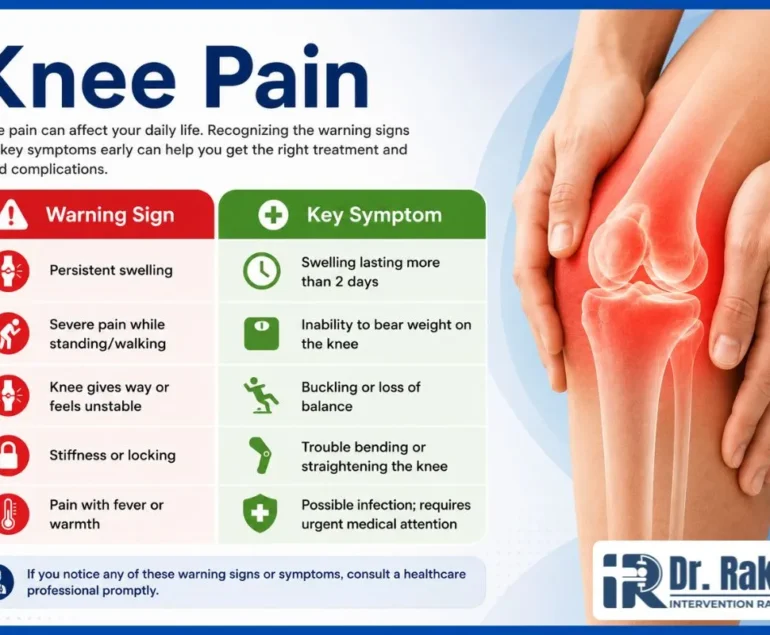
For example, chronic knee pain may involve osteoarthritis, inflammation, cartilage degeneration, or sensory nerves around the joint. Identifying the dominant pain mechanism can help guide treatment.
2. Image Guidance Improves Precision
Many interventional procedures are performed using medical imaging.
Image guidance allows the specialist to visualize anatomical structures and accurately position a needle or catheter.
This is particularly valuable when treating small nerves, joints, or blood vessels where precise placement matters.
3. Genicular Nerve Block for Knee Pain
A Genicular Nerve Block Treatment In Jaipur targets selected sensory nerves responsible for carrying pain signals from the knee.
Medication is placed near these nerves using image guidance. The procedure can provide temporary relief while also helping determine whether the patient’s pain is significantly mediated through those nerves.
This makes a nerve block useful both therapeutically and diagnostically.
4. Genicular Nerve Ablation for Longer-Term Pain Control
If a patient experiences meaningful relief after a diagnostic Genicular Nerve Block, Genicular Nerve Ablation may be considered.
This minimally invasive procedure uses radiofrequency energy to reduce pain transmission through selected genicular nerves.
Unlike repeated pain medication, the treatment directly targets the pain pathway. However, nerve ablation does not repair damaged cartilage or reverse arthritis.
5. Genicular Artery Embolization for Knee Osteoarthritis
Some patients with knee osteoarthritis experience chronic inflammation associated with abnormal vascularity around the joint.
Genicular Artery Embolization (GAE) is an image-guided procedure in which an Interventional Radiologist navigates a small catheter through the blood vessels and selectively reduces abnormal blood flow associated with inflammation.
GAE may be considered for appropriately selected patients who continue to experience osteoarthritis-related knee pain despite conservative treatment.
6. PRP Therapy Uses a Biological Approach
Platelet-Rich Plasma (PRP) Therapy uses concentrated platelets prepared from the patient’s own blood.
PRP may be considered for selected joint, tendon, ligament, and degenerative conditions. Instead of simply blocking pain signals, PRP aims to support the body’s biological healing response.
However, results vary and PRP is not appropriate for every chronic pain condition.
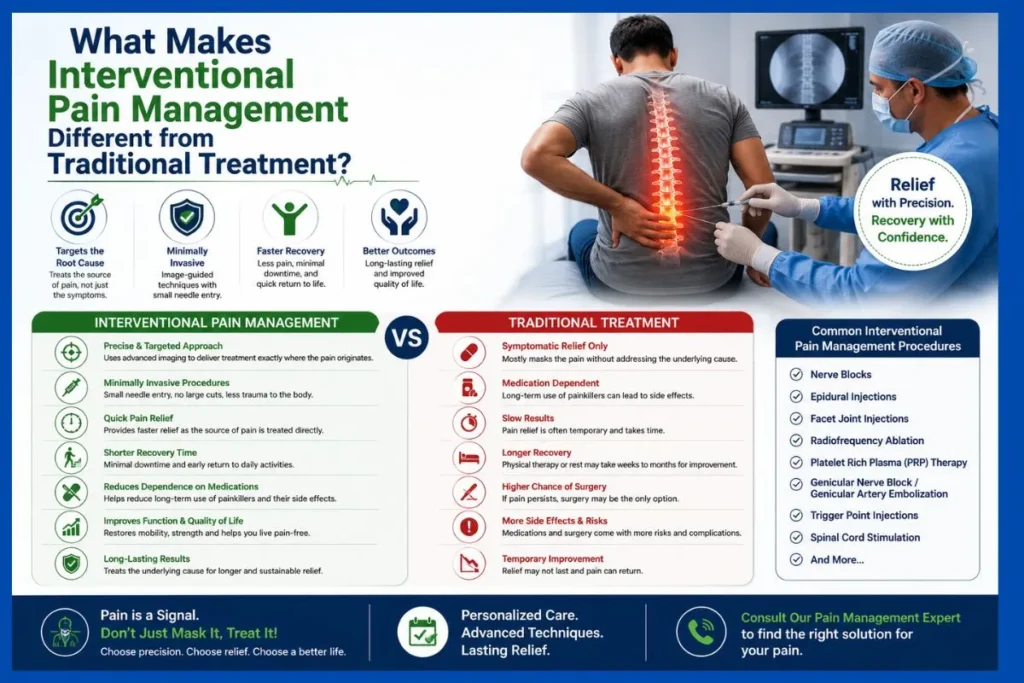
Interventional vs Traditional Pain Management
The two approaches should not necessarily be viewed as competitors.
Traditional care remains the foundation of treatment for many conditions, while interventional procedures can provide additional options when conservative measures are insufficient.
For example, a patient may combine a targeted pain procedure with physiotherapy. Reducing pain can sometimes make it easier to exercise, strengthen muscles, and participate effectively in rehabilitation.
Can Interventional Pain Treatment Help Avoid Surgery?
In selected patients, minimally invasive pain procedures may help improve symptoms and delay or potentially avoid major surgery.
This can be particularly relevant for some patients with chronic knee osteoarthritis.
However, severe joint destruction, major structural abnormalities, fractures, or other advanced conditions may still require surgery.
The goal is not to avoid surgery at any cost but to select the least invasive appropriate treatment.
Who Should Consider Interventional Pain Management?
You may benefit from specialist evaluation if:
• Pain has continued for several months
• Pain repeatedly returns
• Medications provide only temporary relief
• Physiotherapy has not provided sufficient improvement
• Pain affects walking or climbing stairs
• Pain interrupts sleep
• Daily activities have become difficult
• You want to understand non-surgical treatment options
A proper diagnosis is necessary before deciding whether an interventional procedure is suitable.
Role of Dr. Rakesh Kumawat in Advanced Pain Management
Dr. Rakesh Kumawat – Best Interventional Radiologist and Pain Management Specialist in Jaipur provides personalized evaluation and minimally invasive, image-guided treatment options for chronic pain.
Depending on the patient’s condition, treatment may include Genicular Nerve Block, Genicular Nerve Ablation, Genicular Artery Embolization, PRP Therapy, and other targeted procedures.
Conclusion
The major difference between traditional and Interventional Pain Management is precision. Traditional treatments such as medications, exercise, and physiotherapy often provide the starting point, while interventional techniques can directly target specific nerves, joints, or blood vessels contributing to persistent pain.
Modern pain care is therefore not about choosing one approach over another. It is about combining accurate diagnosis, conservative treatment, rehabilitation, and minimally invasive procedures when appropriate.
For patients struggling with persistent pain despite routine treatment, consultation with Dr. Rakesh Kumawat – Best Interventional Radiologist and Pain Management Specialist in Jaipur can help determine whether an advanced interventional approach may be suitable.