Role of a Pain Management Specialist Doctor in Jaipur for Long-Term Pain Relief
Long-term pain can affect much more than physical comfort. It can disturb sleep, reduce walking ability, affect work performance, create emotional stress, and lower overall quality of life. Many patients continue taking painkillers for months without knowing the real cause of their pain. While medicines may provide temporary relief, chronic pain often needs a proper diagnosis and a planned treatment approach.
A Pain Management Specialist Doctor in Jaipur helps patients manage chronic pain by identifying the source of pain and offering targeted treatment options. For advanced image-guided pain care, patients can consult Dr. Rakesh Kumawat – Best Interventional Radiologist and Pain Management Specialist in Jaipur.
What Is Pain Management?
Pain management is a medical approach focused on diagnosing, treating, and controlling different types of pain. It includes medicines, medical procedures, therapy, rehabilitation, lifestyle changes, and minimally invasive interventions. Cleveland Clinic notes that pain management approaches may include medications, medical procedures, therapy, and complementary techniques, and these plans help people with chronic pain feel better and improve quality of life.
A pain management specialist does not only treat the symptom. The main goal is to understand where the pain is coming from and why it is continuing.
When Does Pain Become Chronic?
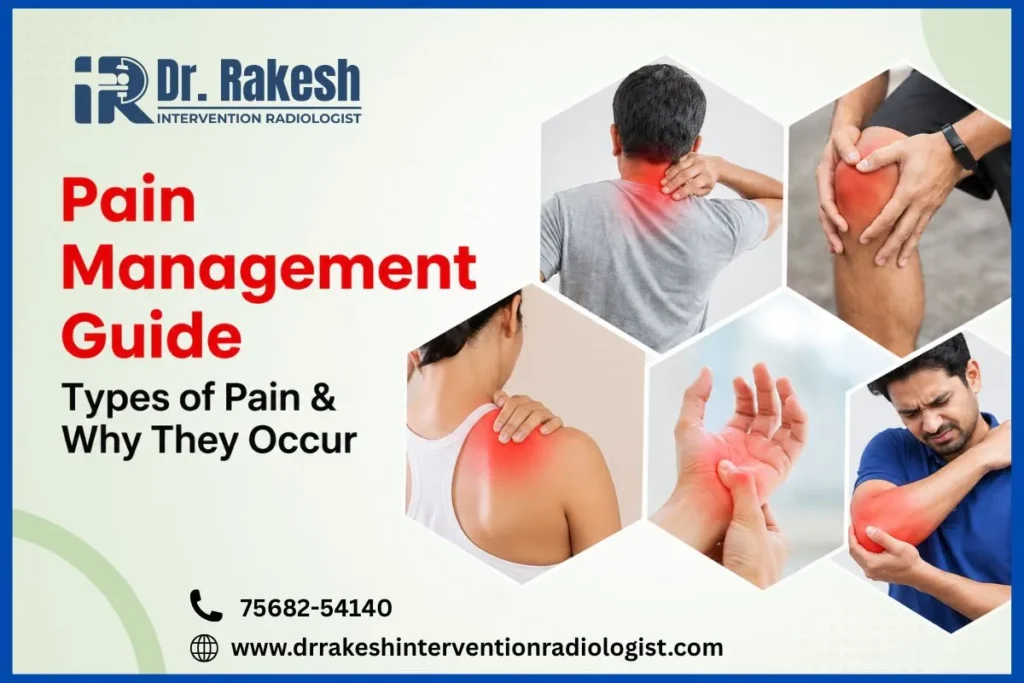
Pain that continues for weeks or months, keeps returning, or affects daily routine may be considered chronic. It may occur in the knee, back, neck, shoulder, hip, nerves, muscles, joints, or spine. Chronic pain can be dull, sharp, burning, throbbing, tingling, or electric shock-like.
Johns Hopkins Medicine explains that chronic pain can affect all parts of life and often needs symptom relief, support, and a multidisciplinary approach.
Role of a Pain Management Specialist Doctor
1. Identifying the Root Cause of Pain
Pain is not always simple. Knee pain may happen due to arthritis, ligament injury, nerve irritation, inflammation, or referred pain. Back pain may come from disc problems, muscles, nerves, facet joints, or posture-related issues.
A pain management specialist evaluates the patient’s history, pain pattern, physical examination, previous reports, X-rays, MRI, ultrasound, and other investigations if needed. This helps identify the actual pain source instead of treating only the surface symptom.
2. Creating a Personalized Treatment Plan
Every patient has a different pain condition. Age, lifestyle, work pattern, body weight, medical history, pain duration, and previous treatment response all matter. A Pain Management Specialist Doctor in Jaipur prepares a personalized plan based on diagnosis and patient needs.
The treatment plan may include medicines, physiotherapy guidance, posture correction, weight management, image-guided injections, nerve blocks, PRP therapy, radiofrequency ablation, or other minimally invasive procedures.
3. Reducing Dependence on Painkillers
Painkillers may be useful for short-term relief, but repeated use without supervision may not solve the root cause. Some patients may also experience side effects due to long-term medication use, especially if they have acidity, kidney issues, liver problems, diabetes, hypertension, or other health conditions.
A pain management specialist focuses on targeted treatments that may reduce the need for repeated pain medicine in suitable patients.
4. Using Image-Guided Precision
Modern pain treatment often uses imaging tools such as ultrasound, fluoroscopy, CT scan, or X-ray guidance. These tools help the doctor place injections, needles, or treatment devices close to the exact pain source.
Image guidance is especially useful for spine pain, knee pain, nerve pain, joint pain, and deep pain conditions. It improves accuracy and helps avoid unnecessary tissue injury.
5. Offering Minimally Invasive Pain Procedures
A major role of a pain management specialist is to provide advanced non-surgical or minimally invasive options where suitable. These procedures may help patients who are not ready for surgery, want to delay surgery, or are medically unfit for major operations.
Common advanced pain treatments may include:
• Genicular Nerve Block for chronic knee pain
• Genicular Nerve Ablation for longer-lasting pain relief
• PRP Therapy for selected joint and soft tissue problems
• Nerve blocks for nerve-related pain
• Image-guided joint injections
• Spine-related pain procedures
• Radiofrequency Ablation
Cleveland Clinic states that radiofrequency ablation is often used to manage pain originating from joints such as the knee and spine-related pain in the neck and lower back.
Common Conditions Treated by a Pain Management Specialist
A pain management specialist may help patients with:
• Chronic knee pain
• Knee arthritis pain
• Back pain
• Neck pain
• Shoulder pain
• Sciatica
• Nerve pain
• Sports injury pain
• Post-surgical pain
• Joint degeneration
• Muscle and ligament pain
For knee arthritis and chronic knee pain, treatments like Genicular Nerve Block Treatment In Jaipur, Genicular Nerve Ablation, PRP Therapy, and other image-guided procedures may be considered depending on the case.
PRP Therapy and Regenerative Pain Care
PRP Therapy, also known as Platelet-Rich Plasma Therapy, uses a patient’s own blood components to support healing response in selected conditions. It may be considered for early arthritis, tendon problems, ligament-related pain, or mild-to-moderate joint degeneration.
Johns Hopkins Medicine notes that early studies indicate PRP injections may help treat osteoarthritis pain and stiffness by modulating the joint environment and reducing inflammation, though patient selection is important.
Why Long-Term Pain Relief Needs More Than One Step
Long-term pain management is not always about one injection or one medicine. Many patients need a combined plan that includes diagnosis, procedure, exercise, lifestyle modification, follow-up, and prevention of recurrence.
A pain management specialist may also guide patients on activity changes, posture, strengthening exercises, weight control, and avoiding pain triggers. This approach helps improve long-term function, not only temporary comfort.
When Should You Visit a Pain Management Specialist in Jaipur?
You should consult a pain management specialist if:
• Pain lasts for weeks or months
• Pain keeps coming back
• Pain affects walking, sleep, or work
• Pain does not improve with medicines
• You have knee pain while climbing stairs
• You feel numbness, tingling, or burning pain
• Pain continues after surgery
• You want to avoid or delay surgery
• You need advanced non-surgical pain treatment
Early consultation can help prevent worsening symptoms and improve quality of life.
Why Choose Dr. Rakesh Kumawat in Jaipur?
Dr. Rakesh Kumawat – Best Interventional Radiologist and Pain Management Specialist in Jaipur provides advanced image-guided pain treatment for chronic pain conditions. His expertise in interventional radiology and pain management helps patients receive accurate diagnosis, targeted treatment, and minimally invasive care.
Patients looking for a Pain Management Specialist Doctor in Jaipur, Pain Relief Doctor in Jaipur, or advanced chronic pain treatment can consult Dr. Rakesh Kumawat for personalized evaluation and treatment planning.
Conclusion
A Pain Management Specialist Doctor in Jaipur plays an important role in long-term pain relief by diagnosing the root cause, reducing dependence on painkillers, using image-guided precision, and offering advanced minimally invasive procedures. Chronic pain should not be ignored, especially when it affects walking, sleep, work, and daily life.
For advanced chronic pain care and image-guided treatment options, consult Dr. Rakesh Kumawat – Best Interventional Radiologist and Pain Management Specialist in Jaipur.
FAQs
1. What does a pain management specialist doctor do?
A pain management specialist diagnoses and treats chronic pain conditions using medicines, therapy guidance, image-guided procedures, nerve blocks, PRP therapy, and radiofrequency ablation.
2. When should I visit a pain management specialist in Jaipur?
You should visit a pain specialist if pain lasts for weeks or months, affects sleep or walking, does not improve with medicines, or causes numbness, tingling, or weakness.
3. Can chronic pain be treated without surgery?
Yes, many chronic pain conditions can be managed without surgery using image-guided injections, nerve blocks, PRP therapy, radiofrequency ablation, and lifestyle-based treatment planning.
4. Is radiofrequency ablation useful for long-term pain relief?
Radiofrequency ablation may help selected patients with chronic knee, spine, neck, or lower back pain by reducing pain signals from targeted nerves.
5. Who is the best pain management specialist doctor in Jaipur?
For advanced image-guided pain treatment, you can consult Dr. Rakesh Kumawat - Best Interventional Radiologist in Jaipur and Pain Management Specialist .