Knee Pain in Office Workers: Causes, Prevention & Treatment Options
Knee pain is no longer limited to athletes or older adults. Today, a large number of office workers are experiencing knee discomfort due to long sitting hours, poor posture, lack of movement, and unhealthy work routines. Many professionals spend 8–10 hours daily at desks, which puts continuous stress on joints and muscles over time.
While the pain may start as mild discomfort, ignoring it can eventually affect mobility, productivity, and overall quality of life. Understanding the causes, prevention methods, and modern treatment options can help office workers manage knee pain effectively and avoid long-term complications.
Why Office Workers Experience Knee Pain
Most office jobs involve prolonged sitting, limited movement, and repetitive daily routines. These habits reduce flexibility and weaken muscles that support the knee joint.
When the muscles around the knee become weak or stiff, extra pressure is placed on the joint, leading to pain and inflammation.
Several workplace-related factors contribute to knee pain in office professionals.
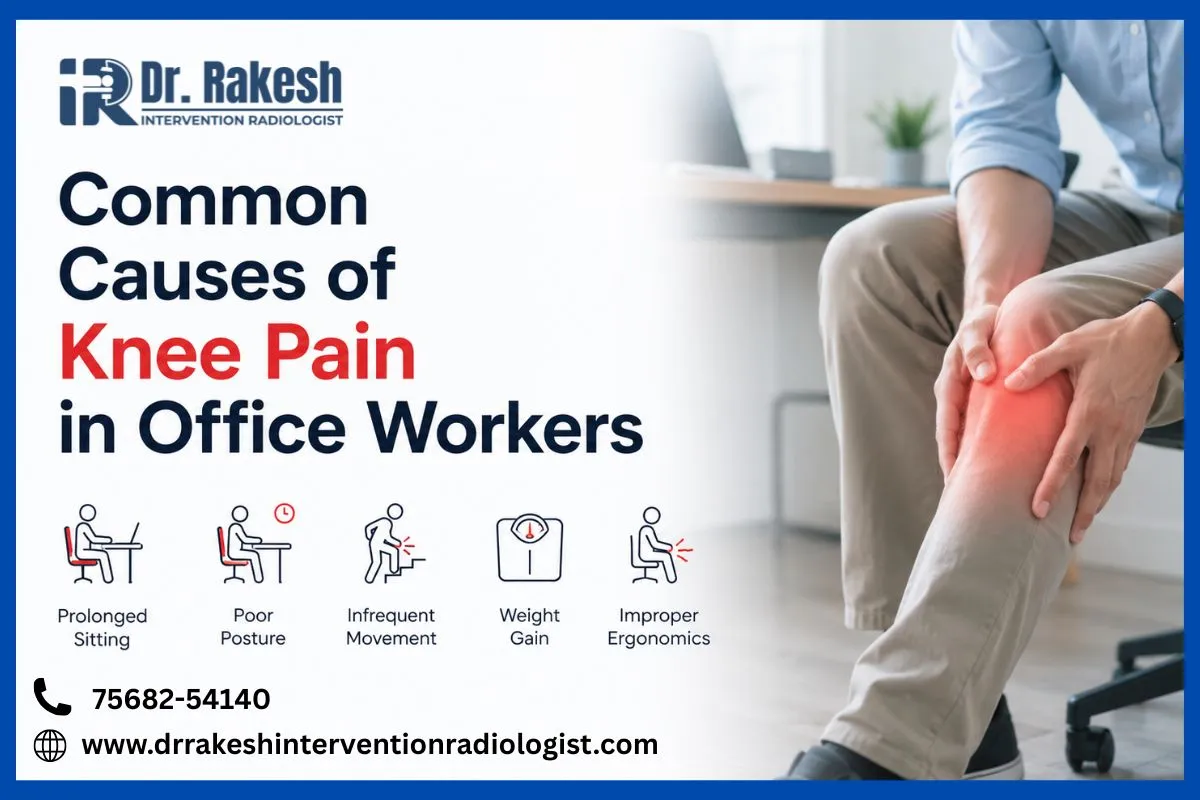
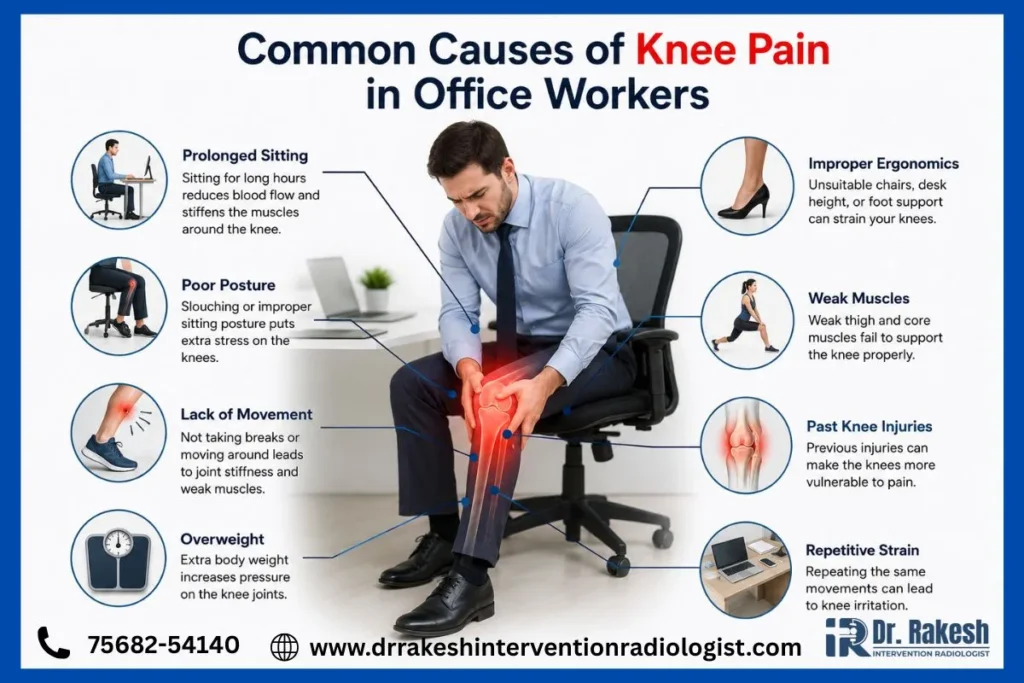
Common Causes of Knee Pain in Office Workers
1. Prolonged Sitting
Sitting for long periods reduces blood circulation and increases stiffness around the knee joint.
This often causes:
- Tight muscles
- Joint stiffness
- Pain while standing up
- Reduced flexibility
People who sit continuously without breaks are more likely to develop chronic knee discomfort.
2. Poor Sitting Posture
Incorrect posture can place unnecessary stress on knees and surrounding joints.
Common posture mistakes include:
- Sitting cross-legged for long hours
- Poor chair height adjustment
- Slouching posture
- Improper foot positioning
Over time, these habits may lead to joint strain and pain.
3. Lack of Physical Activity
Office workers often have a sedentary lifestyle with minimal exercise.
Weak muscles around the knees reduce joint stability and increase the risk of:
- Knee pain
- Muscle imbalance
- Joint stiffness
Regular movement is essential for healthy knee function.
4. Weight Gain
A sedentary routine may contribute to weight gain, which increases pressure on knee joints.
Even a small increase in body weight can significantly affect knee health and worsen pain over time.
5. Early Arthritis Changes
Continuous stress, lack of movement, and aging may gradually damage cartilage inside the knee joint, leading to early osteoarthritis symptoms.
Signs may include:
- Pain while climbing stairs
- Morning stiffness
- Swelling around the knee
- Clicking sounds in the joint
Symptoms You Should Not Ignore
Office workers should seek medical attention if they experience:
- Persistent knee pain
- Swelling around the knee
- Difficulty walking or climbing stairs
- Pain after sitting for long hours
- Reduced joint movement
Early diagnosis can prevent the condition from becoming severe.
How to Prevent Knee Pain in Office Workers
Prevention is one of the best ways to maintain healthy joints and avoid chronic pain.
Take Frequent Movement Breaks
Avoid sitting continuously for long periods.
Try to:
- Stand up every 30–45 minutes
- Walk around the office
- Stretch legs regularly
Small movements improve circulation and reduce stiffness.
Maintain Proper Posture
Your sitting posture directly affects joint health.
Ideal posture includes:
- Feet flat on the floor
- Knees at 90-degree angle
- Back properly supported
- Computer screen at eye level
Using ergonomic office furniture can also help.
Strengthening Exercises
Exercises help strengthen muscles supporting the knees.
Helpful activities include:
- Walking
- Cycling
- Leg strengthening exercises
- Yoga and stretching
Strong muscles reduce pressure on knee joints.
Weight Management
Maintaining healthy body weight reduces stress on the knees and lowers the risk of long-term joint damage.
Proper Footwear
Wearing supportive footwear helps maintain proper alignment and reduces stress on knees while walking or standing.
Modern Treatment Options for Knee Pain
If knee pain persists despite lifestyle changes, medical treatment may be necessary. Modern pain management offers several non-surgical options for relief.
Physiotherapy
Physiotherapy helps improve:
- Joint flexibility
- Muscle strength
- Mobility
Customized exercise plans often reduce pain significantly.
Medications
Doctors may prescribe:
- Anti-inflammatory medicines
- Pain-relief medications
- Muscle relaxants
These help manage symptoms temporarily.
PRP Therapy (Platelet-Rich Plasma)
PRP therapy uses the patient’s own blood platelets to support healing and reduce inflammation inside the knee joint.
Benefits include:
- Improved healing
- Reduced pain
- Better joint function
It is increasingly used for chronic knee pain and early arthritis.
Genicular Artery Embolization (GAE)
Genicular Artery Embolization is an advanced non-surgical procedure used to manage chronic knee pain caused by osteoarthritis and persistent joint inflammation. Using image-guided technology, the treatment targets the tiny arteries responsible for inflammation around the knee, helping reduce pain, swelling, and stiffness while preserving the natural joint structure.
Key Advantages of GAE:
- Non-surgical treatment for chronic knee pain
- Helps control inflammation at the source
- No major cuts, stitches, or joint replacement required
- Faster recovery and minimal downtime
Genicular Nerve Block
This minimally invasive procedure targets specific nerves around the knee to reduce pain signals.
It is useful for:
- Chronic knee pain
- Arthritis-related discomfort
- Patients avoiding surgery
Genicular Nerve Ablation
Radiofrequency energy is used to reduce pain transmission from knee nerves, providing long-term relief for chronic pain sufferers.
Why Early Treatment Matters
Ignoring knee pain can lead to:
- Chronic inflammation
- Reduced mobility
- Joint damage
- Difficulty performing daily activities
Early treatment improves recovery and prevents complications.
Role of a Pain Management Specialist
A pain management specialist focuses on diagnosing the root cause of pain and providing targeted treatment.
Modern pain management treatments are often minimally invasive and help patients avoid major surgery.
Dr. Rakesh Kumawat – Best Interventional Radiologist and Pain Management Specialist in Jaipur
For office workers struggling with chronic knee pain, consulting an experienced specialist is important.
Dr. Rakesh Kumawat is known for advanced pain management treatments and minimally invasive procedures in Jaipur. His expertise includes:
- PRP therapy
- Genicular nerve block
- Genicular nerve ablation
- Image-guided pain procedures
His patient-focused approach helps individuals achieve effective pain relief with faster recovery and improved mobility.
Daily Tips for Office Workers
- Stretch regularly during work hours
- Avoid sitting continuously for long periods
- Use ergonomic chairs and desks
- Stay hydrated
- Exercise at least 30 minutes daily
Small lifestyle changes can greatly improve joint health.
Conclusion
Knee pain is becoming increasingly common among office workers due to prolonged sitting, poor posture, and inactive lifestyles. While mild discomfort may seem harmless initially, ignoring symptoms can lead to long-term joint problems.
Fortunately, modern treatment options and lifestyle modifications can help manage knee pain effectively without surgery in many cases.
If your pain persists or affects daily activities, consulting an experienced specialist like Dr. Rakesh Kumawat can help identify the root cause and provide advanced treatment for long-term relief.
FAQs
1. Why do office workers develop knee pain?
Long sitting hours, poor posture, and lack of movement are major causes of knee pain in office workers.
2. Can sitting too long damage knees?
Yes, prolonged sitting can increase stiffness and weaken muscles supporting the knees.
3. Is exercise helpful for knee pain?
Yes, regular strengthening and stretching exercises improve joint stability and flexibility.
4. Can knee pain be treated without surgery?
Many cases improve with physiotherapy, PRP therapy, and minimally invasive pain procedures.
5. When should I consult a doctor?
If knee pain persists, worsens, or affects daily activities, medical consultation is recommended.