Uterine Artery Embolization vs Fibroid Surgery: Which Patients May Consider UAE?
Uterine fibroids can cause heavy menstrual bleeding, pelvic pressure, painful periods, abdominal fullness, frequent urination, and fatigue related to anemia. When these symptoms begin affecting everyday life, treatment may become necessary. Traditionally, procedures such as myomectomy or hysterectomy have played an important role in fibroid treatment. Today, selected women may also have a minimally invasive option called Uterine Artery Embolization (UAE). Consulting a Uterine Artery Embolization Doctor In Jaipur can help patients understand whether this procedure may be appropriate for their individual condition.
UAE and fibroid surgery work in very different ways. Neither approach is automatically right for every patient. Understanding the differences can help women discuss treatment options based on symptoms, fibroid characteristics, overall health, and future pregnancy plans.
What Is Uterine Artery Embolization?
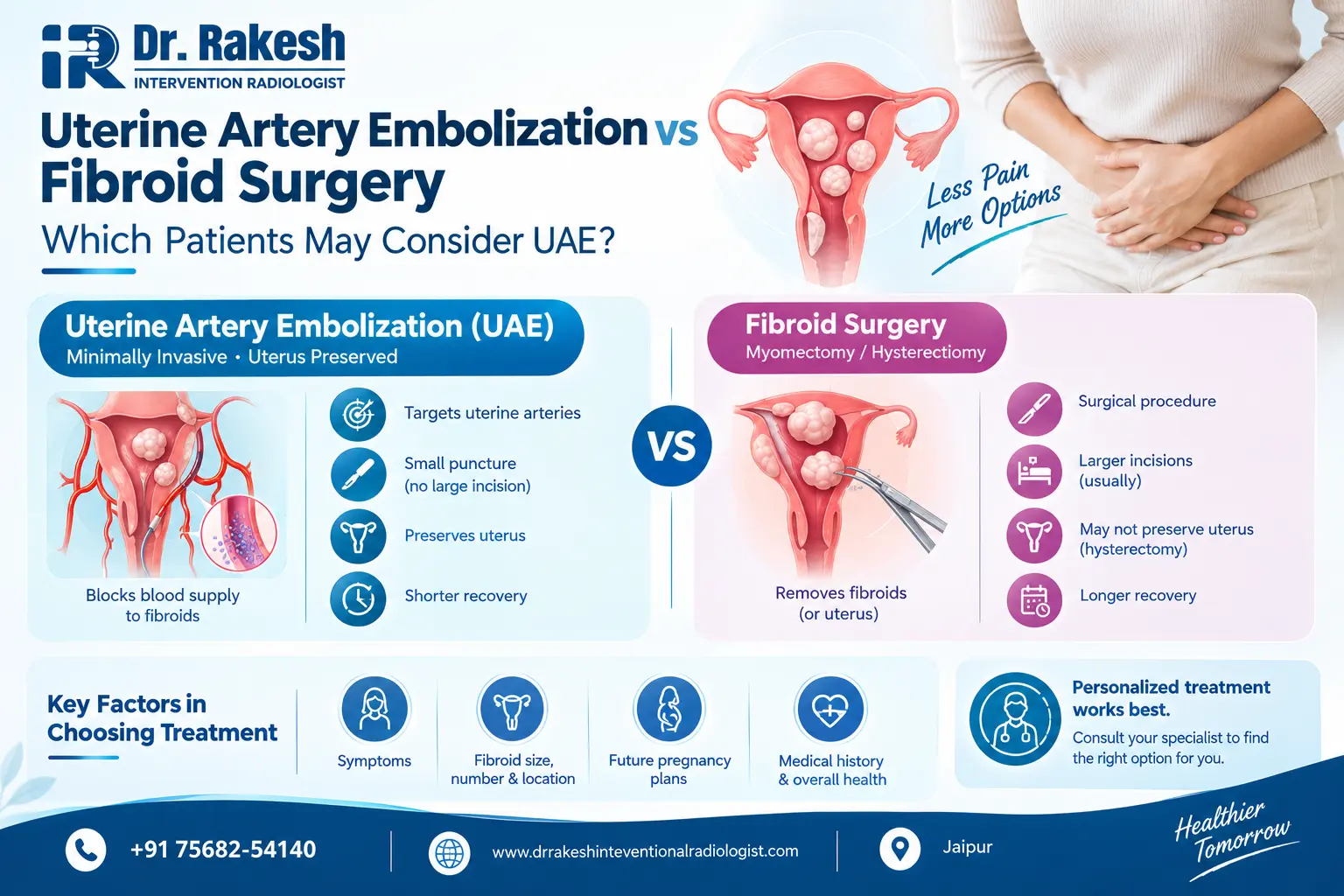
Uterine Artery Embolization, also called Uterine Fibroid Embolization (UFE), is a minimally invasive, image-guided procedure used to treat symptomatic uterine fibroids.
Instead of surgically removing fibroids, UAE targets their blood supply.
An interventional radiologist inserts a thin catheter through a small arterial access point and uses imaging guidance to reach the uterine arteries. Tiny embolic particles are then delivered into selected vessels supplying the fibroids.
Reduced blood flow causes the treated fibroids to gradually shrink. As this happens, symptoms such as heavy menstrual bleeding and pressure may improve over the following weeks and months. A Uterine Fibroid Embolization Doctor in Jaipur can evaluate fibroid characteristics and discuss whether this treatment is suitable.
How Is Myomectomy Different From UAE?
Myomectomy is an operation that removes individual fibroids while preserving the uterus.
Depending on fibroid size, number, and location, myomectomy may be performed through hysteroscopic, laparoscopic, robotic, or open surgical techniques.
UAE does not physically remove the fibroids. Instead, it reduces their blood supply so they shrink gradually.
This difference is important. A patient who needs specific fibroids surgically removed may be better suited to myomectomy, while another patient with multiple symptomatic fibroids may be evaluated for UAE.
How Is Hysterectomy Different?
A hysterectomy removes the uterus and therefore provides definitive treatment for uterine fibroids arising from it.
Pregnancy is no longer possible after hysterectomy.
UAE, by comparison, preserves the uterus. However, preserving the uterus does not automatically mean UAE is the preferred option for someone planning future pregnancy.
Fertility goals require careful discussion because treatment recommendations can differ significantly for women who wish to become pregnant.
Which Patients May Consider UAE?
UAE may be considered in selected women whose fibroids are causing significant symptoms.
These may include heavy or prolonged menstrual bleeding, pelvic pressure, abdominal fullness, urinary frequency related to pressure on the bladder, or anemia associated with excessive menstrual blood loss.
Women seeking a minimally invasive alternative to certain surgical treatments may also ask whether UAE is suitable.
However, symptoms alone do not determine eligibility. Fibroid location, size, number, uterine anatomy, previous treatments, medical conditions, and reproductive plans all need consideration.
Why Can UAE Be Useful for Multiple Fibroids?
Some women have one dominant fibroid, while others have several fibroids distributed throughout the uterus.
Because UAE works by targeting the uterine arterial blood supply, it can potentially affect multiple fibroids during the same procedure.
This may make UAE worth discussing for selected women with multiple symptomatic fibroids.
However, the number of fibroids alone does not determine the best treatment. Imaging and specialist assessment are necessary to understand their type, location, and clinical significance.
What Tests Are Needed Before UAE?
Proper evaluation before fibroid treatment is essential.
Pelvic ultrasound is commonly used to identify fibroids and evaluate the uterus. In selected patients, MRI may provide additional information about fibroid size, location, characteristics, and surrounding pelvic structures.
Doctors may also evaluate blood counts when heavy bleeding has caused possible anemia.
Importantly, not every uterine mass should automatically be assumed to be a routine fibroid. Appropriate gynecological assessment helps exclude other causes of symptoms and identify situations where a different treatment approach is necessary.
What Is Recovery Like After UAE?
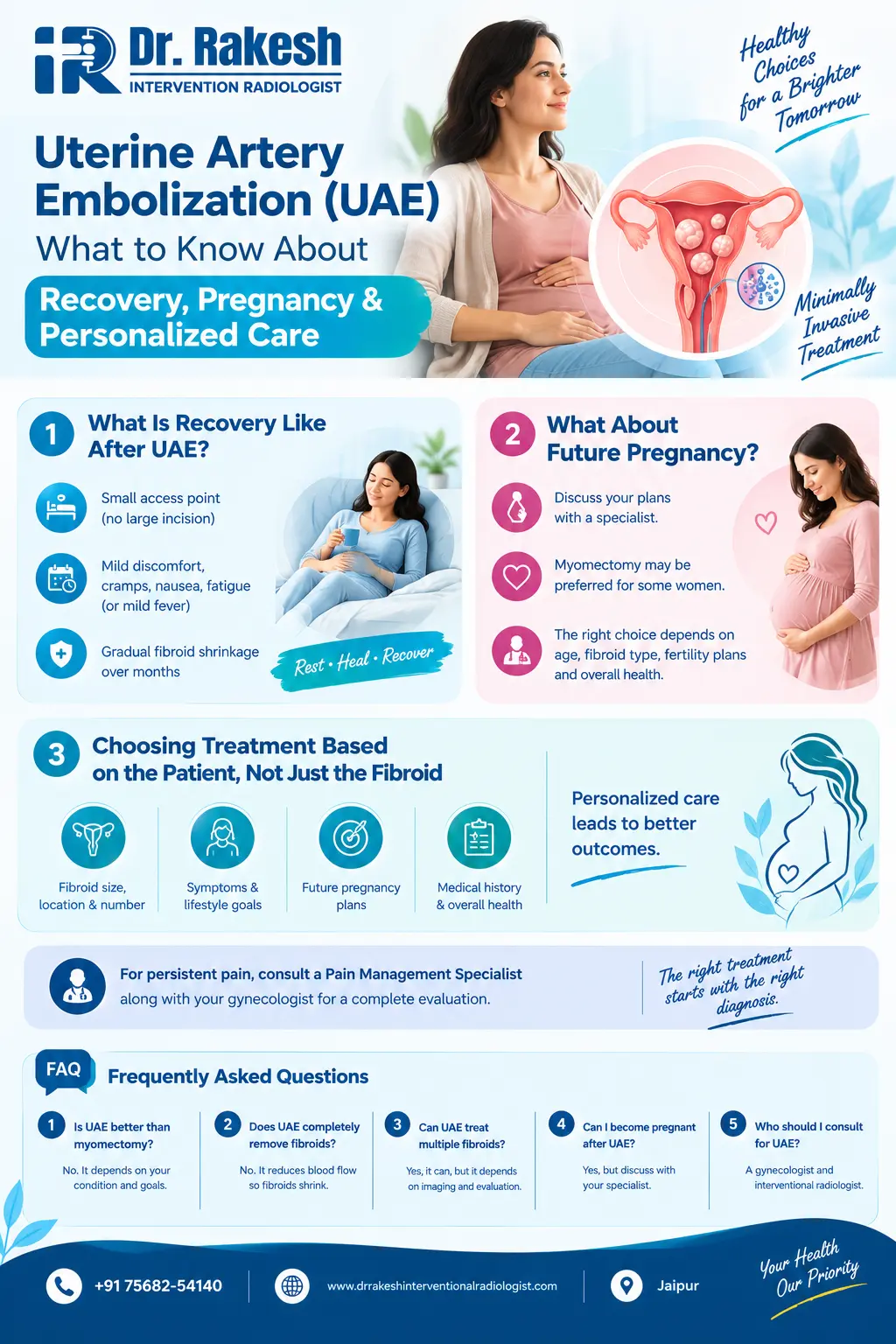
Because UAE is performed through a small vascular access point rather than a large abdominal incision, it avoids the surgical wound associated with open fibroid surgery.
However, patients can experience significant cramping, pelvic discomfort, nausea, fatigue, or mild fever during the early recovery period. These symptoms are often referred to as part of post-embolization syndrome and are managed with appropriate medical care.
Recovery varies between individuals, and patients should follow their interventional radiologist’s post-procedure instructions.
Fibroids do not disappear immediately after UAE. Shrinkage occurs gradually over subsequent months.
What About Future Pregnancy?
This is one of the most important considerations when comparing UAE vs myomectomy.
Women who definitely want future pregnancy should discuss their plans carefully with a gynecologist and interventional radiologist. Myomectomy may be preferred in certain patients seeking future fertility because reproductive outcomes after UAE require individualized consideration.
The appropriate recommendation depends on age, fibroid anatomy, fertility history, symptoms, and other reproductive factors.
A treatment should therefore not be selected solely because it is minimally invasive.
Choosing Treatment Based on the Patient, Not Just the Fibroid
There is no universal answer to the question, “Is UAE better than fibroid surgery?”
A woman with a particular fibroid projecting into the uterine cavity may need a different approach from someone with multiple fibroids causing heavy bleeding and pressure symptoms. Similarly, a woman actively planning pregnancy may have different priorities from someone who has completed her family.
Modern fibroid treatment is increasingly personalized.
For appropriate patients, Uterine Artery Embolization offers a uterus-preserving, minimally invasive treatment option without surgically removing individual fibroids. For others, myomectomy, hysterectomy, medication, or another treatment may be more appropriate.
Fibroid-related pelvic discomfort should be evaluated to identify its cause; a Pain Management Specialist Doctor In Jaipur may help assess persistent pain when appropriate, alongside the necessary gynecological evaluation.
The best decision begins with accurate diagnosis, appropriate imaging, and a balanced discussion of available options.
Frequently Asked Questions
1. Is UAE better than myomectomy?
Neither treatment is universally better. The choice depends on fibroid size, number, location, symptoms, reproductive plans, medical history, and individual treatment goals.
2. Does UAE completely remove fibroids?
No. UAE reduces the blood supply to fibroids, causing them to gradually shrink. Myomectomy physically removes selected fibroids.
3. Can UAE treat multiple fibroids?
UAE can potentially treat multiple fibroids by targeting their arterial blood supply, but suitability must be determined through imaging and specialist evaluation.
4. Can I become pregnant after Uterine Artery Embolization?
Pregnancy can occur after UAE, but women planning future pregnancy require individualized counseling about available treatments and reproductive considerations before choosing UAE.
5. Who should I consult when considering UAE?
Evaluation may involve both a gynecologist and an interventional radiologist. Reviewing symptoms, imaging findings, fertility goals, medical history, and alternative treatments helps determine whether UAE is an appropriate option.