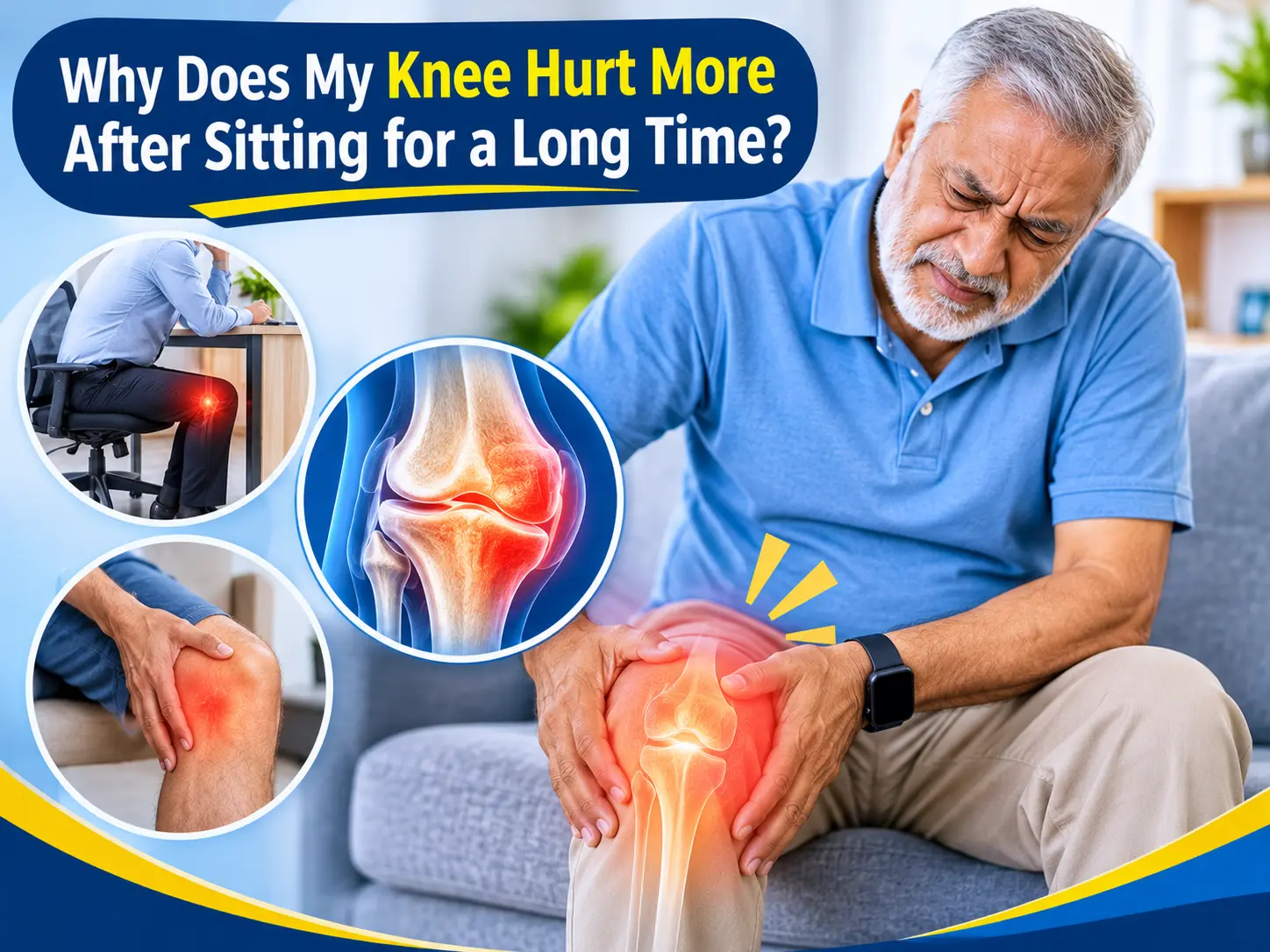
Why Does My Knee Hurt More After Sitting for a Long Time?
Knee pain after sitting for a long time is a common problem that can affect people of different ages. You may notice discomfort when standing up after working at a desk, getting out of a car, or rising from a sofa. Sometimes, the knee feels stiff for the first few steps and gradually becomes more comfortable as you start moving.
For patients experiencing persistent knee discomfort, Knee Pain Treatment In Jaipur can help identify appropriate treatment options after proper medical evaluation.
This symptom is often called “theater sign” or “movie-goer’s knee” when pain occurs around the kneecap after prolonged sitting. Although it may be associated with patellofemoral pain, several other conditions can cause similar symptoms.
Understanding why your knee hurts after sitting can help you identify when simple lifestyle changes may be enough and when a medical evaluation is needed.
Why Does Knee Pain Occur After Prolonged Sitting?
When you sit for an extended period, your knees remain bent for a long time. This can increase pressure around the kneecap and make the surrounding tissues feel stiff or uncomfortable, particularly if an underlying knee problem is present.
Common reasons include:
1. Patellofemoral Pain Syndrome
Patellofemoral pain syndrome causes discomfort around or behind the kneecap. It may become more noticeable when sitting with bent knees, climbing stairs, squatting, or standing up after a long meeting or car journey.
2. Knee Osteoarthritis
Osteoarthritis involves changes in the cartilage and other structures of the knee joint. People may experience stiffness after resting, pain during movement, swelling, or reduced flexibility. Symptoms can vary from mild to severe.
3. Muscle Weakness and Reduced Mobility
Weak quadriceps and hip muscles can affect how forces are distributed across the knee. Prolonged sitting may also contribute to stiffness, particularly when combined with limited physical activity.
4. Inflammation Inside the Knee
Inflammatory conditions or irritation within the joint can cause swelling, tenderness, stiffness, and discomfort after inactivity. Persistent inflammation should be assessed to identify its underlying cause.
5. Meniscus or Other Joint Problems
A meniscus injury or another structural problem may cause knee pain, particularly if it is accompanied by catching, locking, swelling, or difficulty fully bending or straightening the knee.
How Can You Reduce Knee Pain After Sitting?
The right approach depends on the cause and severity of your symptoms. However, several practical measures may help reduce discomfort.
• Change your position regularly: Avoid sitting with your knees bent for extended periods without breaks.
• Take short movement breaks: Stand up and walk gently every 30–60 minutes, if comfortable.
• Try gentle exercises: Appropriate quadriceps strengthening and flexibility exercises may improve knee support and mobility.
• Adjust your sitting posture: Use a comfortable chair and avoid keeping your knees in an excessively bent position for long periods.
• Avoid activities that worsen pain: Temporarily modify deep squats, repeated stair climbing, or other painful movements.
• Use cold or heat appropriately: A wrapped cold pack may help with swelling, while gentle warmth may ease stiffness. Avoid applying either directly to the skin.
If the pain continues, consult a qualified healthcare professional before starting intensive exercises or taking pain medication regularly.
For persistent symptoms, Knee Pain Treatment In Jaipur may include a personalised assessment and treatment plan based on the underlying knee condition.
When Should You See a Knee Pain Specialist?
Occasional mild stiffness may improve with movement and activity adjustments. However, persistent or worsening knee pain deserves medical attention, particularly if it interferes with walking, sleeping, working, or everyday activities.
Seek prompt medical assessment if your knee becomes significantly swollen, hot, or red, or if you develop a fever. Urgent evaluation is also important if you cannot bear weight, the knee becomes locked, or severe pain develops after an injury.
A clinician may assess your symptoms, movement, medical history, and physical examination findings. X-rays, ultrasound, MRI, or blood tests may be recommended when appropriate. Not everyone needs imaging, and the choice depends on the suspected cause.
What Treatments Are Available for Persistent Knee Pain?
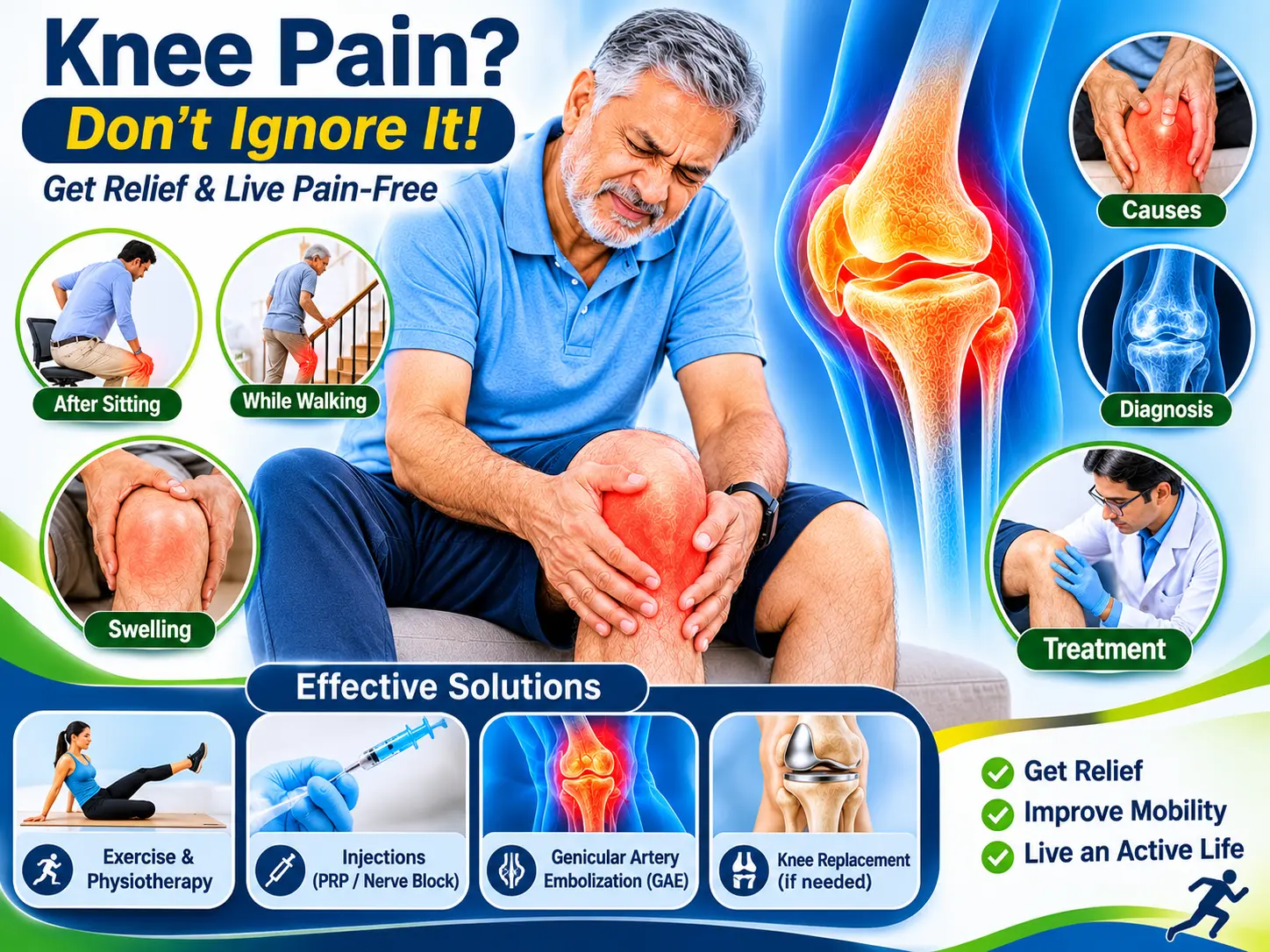
Treatment should address the underlying diagnosis rather than the symptom alone. Depending on the cause, options may include physiotherapy, strengthening exercises, activity modification, weight management when relevant, and appropriate medication prescribed by a clinician.
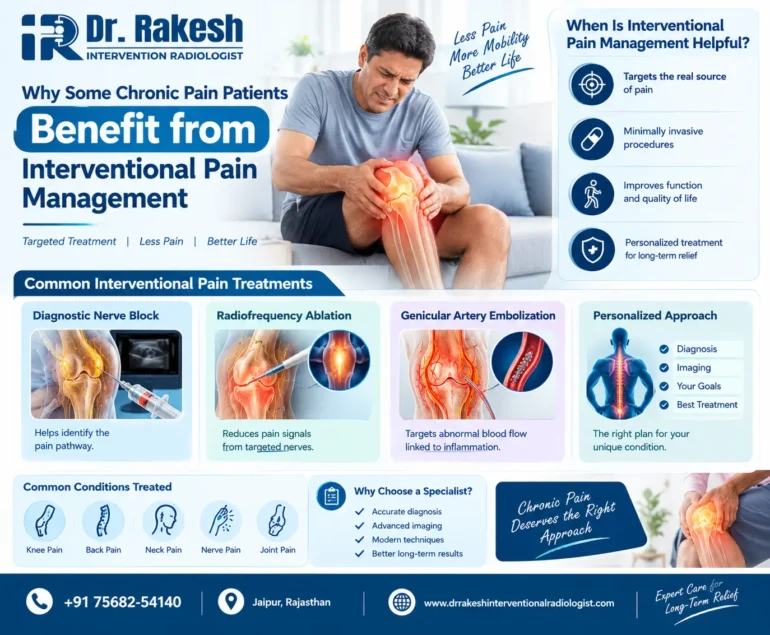
For selected patients with knee osteoarthritis and persistent pain despite conservative treatment, specialist procedures may also be considered.
Genicular nerve blocks can help assess whether nerves around the knee contribute to pain and may provide temporary relief. In carefully selected patients, genicular nerve ablation may be considered for longer-lasting pain reduction.
Genicular artery embolization (GAE) is a minimally invasive procedure being studied and used in selected cases of knee osteoarthritis-related pain. It targets abnormal blood vessels associated with inflammation. It is not suitable for everyone, and its benefits, limitations, and long-term evidence should be discussed with an experienced specialist.
The best treatment depends on your diagnosis, symptom severity, general health, and previous treatments. Knee replacement is not automatically necessary for every person with knee pain.
Conclusion
If your knee hurts more after sitting for a long time, the cause may be kneecap-related pain, osteoarthritis, muscle weakness, inflammation, or another joint problem. Paying attention to when the pain occurs and whether it is accompanied by swelling, locking, or stiffness can help guide the evaluation.
Regular movement breaks and appropriate exercises may help, but persistent symptoms should not be ignored. An accurate diagnosis can help you explore suitable treatment options and maintain everyday mobility.
Frequently Asked Questions
1. Why does my knee hurt when I stand up after sitting?
Prolonged sitting keeps the knee bent and may increase discomfort around the kneecap or make the joint feel stiff. Patellofemoral pain and osteoarthritis are possible causes, but an examination may be needed to identify the reason.
2. Is knee pain after sitting a sign of arthritis?
Not always. It can occur with osteoarthritis, but muscle weakness, patellofemoral pain, and other conditions can cause similar symptoms. Persistent pain should be assessed rather than diagnosed from symptoms alone.
3. How can I prevent knee stiffness after sitting?
Change positions regularly, take short walking breaks, and consider suitable strengthening and mobility exercises. If movement causes significant pain, seek professional guidance before increasing activity.
4. Can knee pain after sitting improve without surgery?
Yes. Many causes of knee pain can be managed without surgery through exercise-based rehabilitation, activity modification, and appropriate medical treatment. The right approach depends on the underlying condition.
5. When should I consult a doctor for knee pain?
Seek medical advice if pain persists, worsens, or limits daily activities. Get urgent assessment for a hot, red, significantly swollen knee, fever, inability to bear weight, or severe pain following an injury.
Knee Pain Treatment In Jaipur can help patients explore suitable treatment options following an accurate diagnosis.