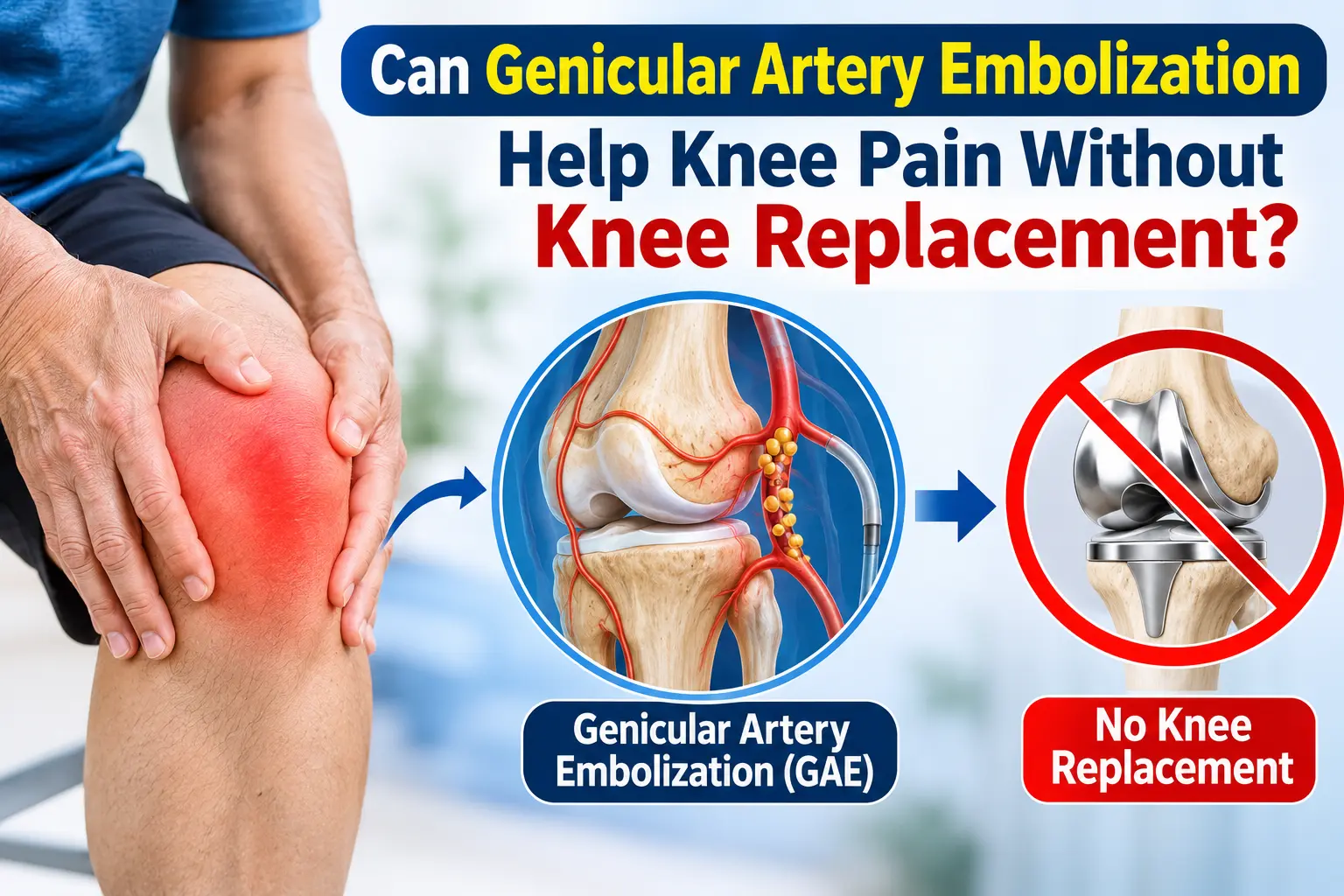
Can Genicular Artery Embolization Help Knee Pain Without Knee Replacement?
Knee pain can make walking, climbing stairs, standing for long periods, and performing everyday activities difficult. For people with persistent knee osteoarthritis-related pain, medicines, exercise, and physiotherapy may not always provide enough relief. This can lead to an important question: Can knee pain be treated with a minimally invasive procedure instead of knee replacement surgery? Consulting a Genicular Artery Embolization Doctor In Jaipur can help patients understand whether this treatment may be suitable.
Genicular Artery Embolization (GAE) is a minimally invasive, image-guided procedure being used for selected patients with knee osteoarthritis-related pain. It targets certain abnormal blood vessels around the knee that may be associated with inflammation.
However, GAE is not suitable for every patient, and it is not a guaranteed alternative to knee replacement. Understanding how the procedure works, who may benefit, and what its limitations are can help patients make informed decisions with their doctors.
What Is Genicular Artery Embolization?
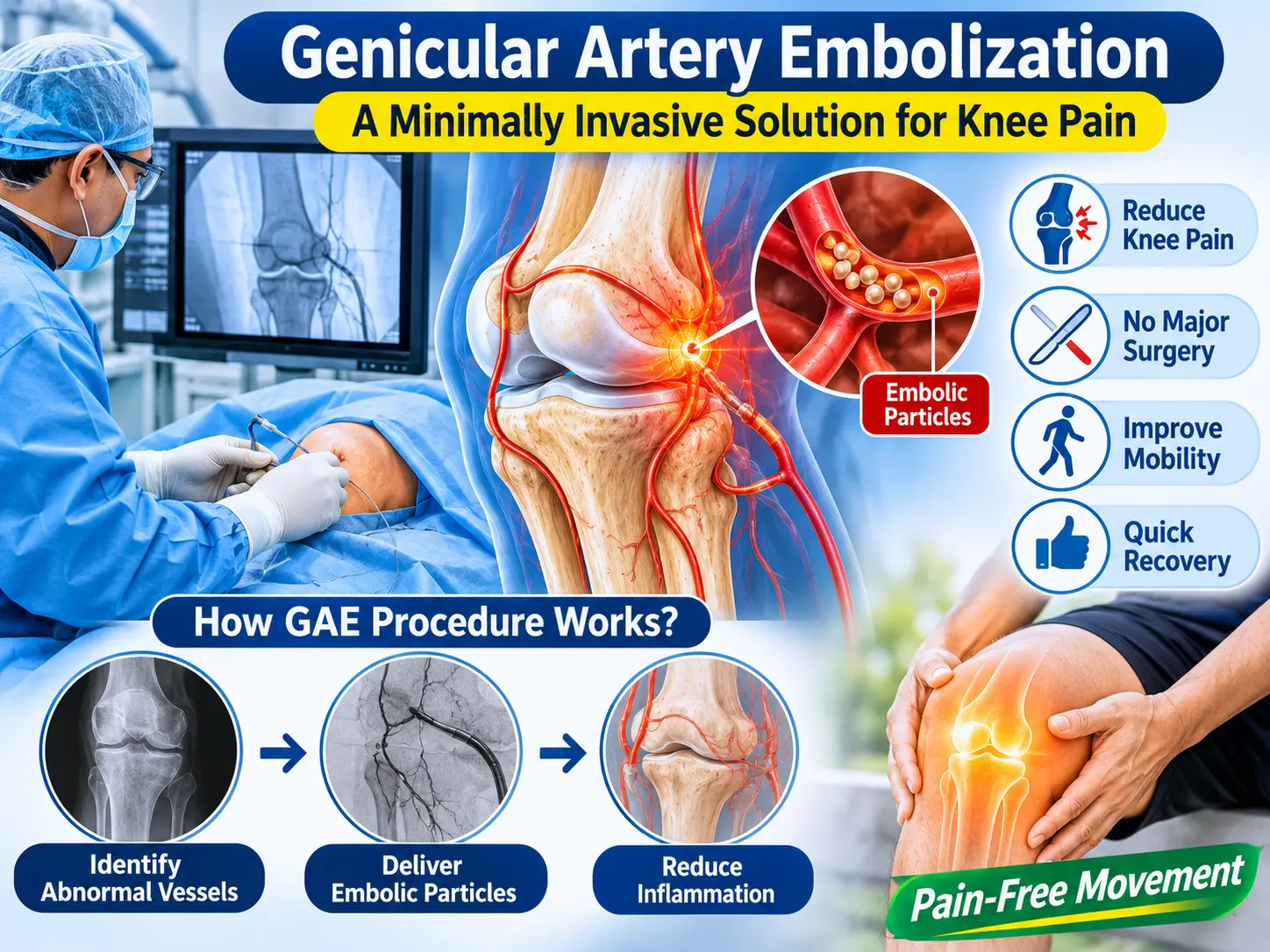
Genicular Artery Embolization is a procedure performed by a trained interventional radiologist. It involves guiding a thin catheter through a blood vessel to selected arteries supplying the tissues around the knee. A Genicular Artery Embolization Doctor In Jaipur can evaluate the patient’s condition and explain the procedure.
Using specialised imaging, the doctor identifies abnormal blood vessels that may be associated with inflammation in some patients with knee osteoarthritis. Tiny embolic particles are then delivered to selected vessels to reduce blood flow through those targeted areas.
The aim is to reduce inflammation-related pain while avoiding a major surgical incision.
GAE does not replace damaged cartilage, rebuild the knee joint, or reverse advanced osteoarthritis. Its potential role is primarily pain management in carefully selected patients.
How Can Inflammation Contribute to Knee Pain?
Osteoarthritis involves changes in the cartilage and other structures within the joint. In some patients, inflammation of the joint lining and the development of abnormal blood vessels may contribute to persistent pain.
These changes can occur alongside symptoms such as stiffness, swelling, tenderness, and discomfort during movement.
However, knee pain has many possible causes. Meniscus injuries, tendon problems, inflammatory arthritis, and other conditions may produce similar symptoms. A proper evaluation is therefore necessary before considering GAE.
Who May Be Suitable for Genicular Artery Embolization?
GAE may be considered for selected adults who have:
Persistent knee osteoarthritis-related pain that affects daily activities.
Insufficient relief from appropriate conservative treatments.
A clinical assessment suggesting that inflammation-related osteoarthritis pain may be contributing to symptoms.
A reason to explore additional options before considering major surgery, where clinically appropriate.
Suitability depends on the patient’s diagnosis, imaging findings, general health, medications, and individual treatment goals. A Genicular Artery Embolization Doctor In Jaipur can assess these factors before recommending treatment.
GAE is not appropriate for every type of knee pain. Patients with certain vascular conditions, active infections, or other medical concerns may require different management.
What Happens During the GAE Procedure?
Although the exact process varies, the procedure generally involves several steps.
1. Pre-Procedure Assessment
The specialist reviews your symptoms, medical history, previous treatments, and relevant imaging. Blood tests or other investigations may be required.
2. Catheter Placement
The procedure is usually performed through a small puncture in an artery, often in the upper thigh or wrist depending on the treatment plan and access suitability. Local anaesthesia is generally used.
3. Image-Guided Artery Mapping
The interventional radiologist uses fluoroscopic imaging and contrast material to identify the relevant blood vessels supplying the knee.
4. Targeted Embolization
Tiny embolic particles are delivered into selected abnormal vessels. The doctor takes care to minimise unintended effects on surrounding tissues.
5. Recovery and Follow-Up
After the procedure, the access site is monitored and the patient receives instructions about activity, medication, and follow-up. Recovery experiences vary, and improvement in pain may take time.
Can GAE Replace Knee Replacement Surgery?
Not necessarily. GAE and knee replacement serve different purposes.
Knee replacement may be recommended for advanced osteoarthritis when pain and disability remain substantial despite appropriate treatment. The operation replaces damaged joint surfaces.
GAE is a minimally invasive procedure intended to reduce pain in selected patients. It does not correct major joint deformity or restore severely damaged cartilage.
For some patients, GAE may be worth discussing before a surgical decision. For others, particularly those with advanced structural damage, knee replacement or another treatment may be more appropriate.
The decision should be based on the degree of joint damage, symptoms, functional limitations, risks, and patient preferences.
What Are the Benefits and Limitations of GAE?
Potential advantages include a small access puncture, no major surgical incision, and the possibility of pain improvement in selected patients.
Nevertheless, GAE has limitations. Not everyone experiences meaningful relief, and the duration of benefit varies. Research on long-term effectiveness and comparisons with established treatments is still evolving.
Possible complications include bruising or bleeding at the access site, temporary skin changes, and unintended effects on nearby tissues or blood supply. Your specialist should explain the procedure-specific risks and available alternatives.
When Should You Consult a Knee Pain Specialist?
Consider a medical assessment if knee pain persists, interferes with walking or sleep, or does not improve with an appropriate treatment plan. A Genicular Artery Embolization Doctor In Jaipur can help determine whether GAE or another treatment option may be appropriate.
A specialist can determine whether osteoarthritis, inflammation, or another condition is responsible. Depending on the diagnosis, treatment may include physiotherapy, medication, injections, nerve-targeted procedures, GAE, or surgery.
Seek urgent assessment for a suddenly hot, red, significantly swollen knee, especially if accompanied by fever, or if severe pain prevents you from bearing weight.
Conclusion
Genicular Artery Embolization is an emerging minimally invasive option for selected patients with persistent knee osteoarthritis-related pain. By targeting certain abnormal blood vessels associated with inflammation, it may help reduce symptoms in some individuals.
However, GAE does not repair damaged cartilage and cannot replace knee replacement surgery in every case. The best approach depends on an accurate diagnosis and a discussion of the benefits, risks, evidence, and alternatives with an experienced specialist.
Frequently Asked Questions
1. Is Genicular Artery Embolization a surgery?
GAE is a minimally invasive, image-guided procedure performed through a small blood-vessel puncture. It does not involve the large incision used in knee replacement surgery.
2. Does GAE work for every type of knee pain?
No. It is primarily considered for selected patients with persistent knee osteoarthritis-related pain. Pain caused by other conditions may require different treatment.
3. How long does it take to feel better after GAE?
The timing and degree of improvement vary. Some patients may notice changes over the following weeks, while others may experience limited benefit. Your doctor can explain what to expect in your circumstances.
4. Is GAE safer than knee replacement?
The procedures have different purposes and risk profiles, so they cannot be directly compared as universally safer or better. GAE avoids major joint surgery but has its own potential complications and may not provide sufficient relief for advanced disease.
5. How do I know if I am a candidate for GAE?
A qualified specialist must review your symptoms, examination findings, imaging, medical history, and previous treatments. This assessment helps determine whether GAE or another treatment is appropriate.