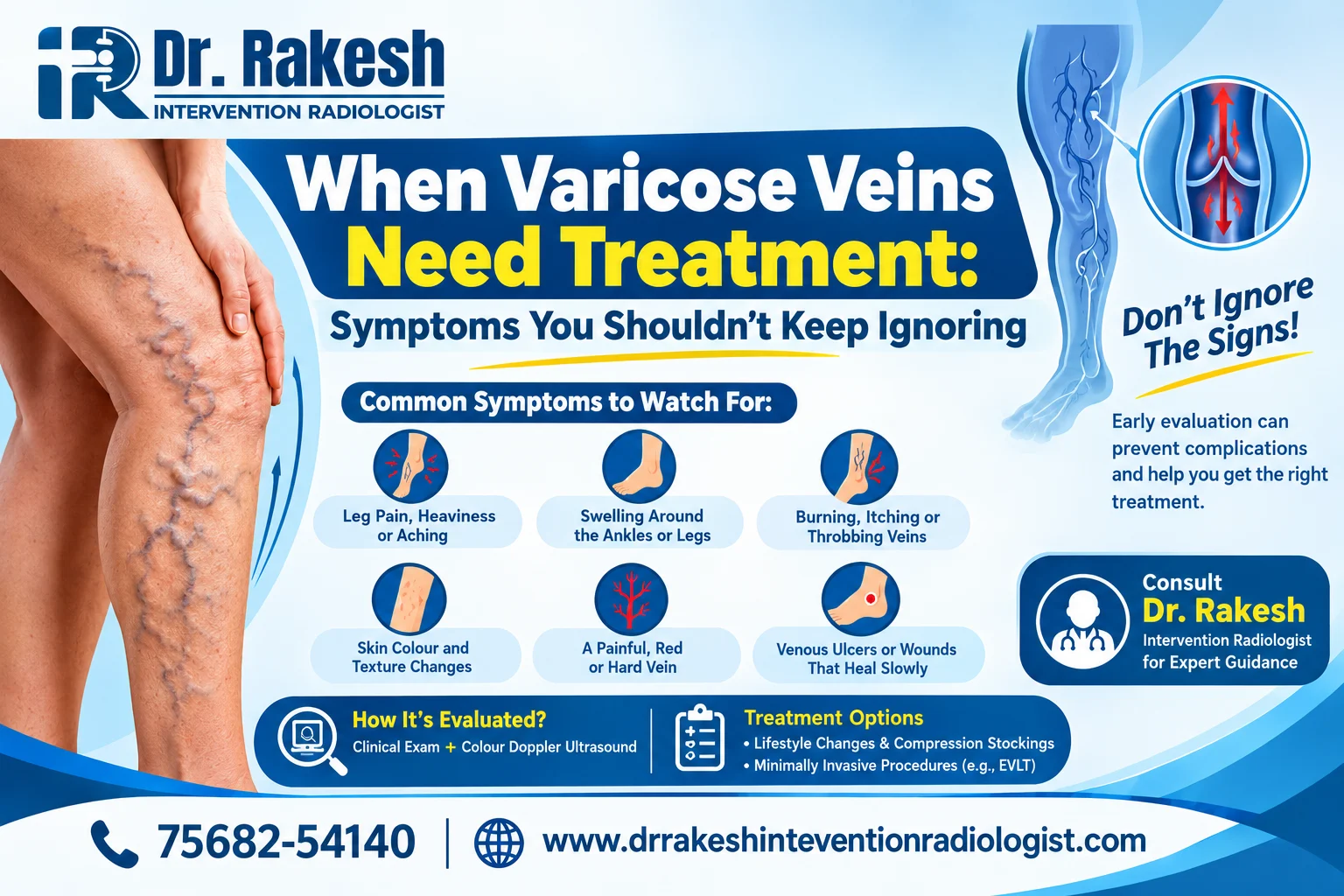
When Varicose Veins Need Treatment: Symptoms You Shouldn’t Keep Ignoring
Varicose veins are often considered a cosmetic concern because their most visible sign is enlarged, twisted, blue or purple veins on the legs. However, visible veins can sometimes indicate an underlying circulation problem called chronic venous insufficiency. When symptoms such as leg pain, swelling, heaviness, itching, or skin changes begin to appear, simply ignoring the veins may allow the condition to progress.
Understanding when varicose veins need treatment can help you seek appropriate evaluation before complications develop. Consulting a Varicose Vein Doctor In Jaipur can help determine whether visible veins are associated with an underlying circulation problem.
Why Do Varicose Veins Develop?
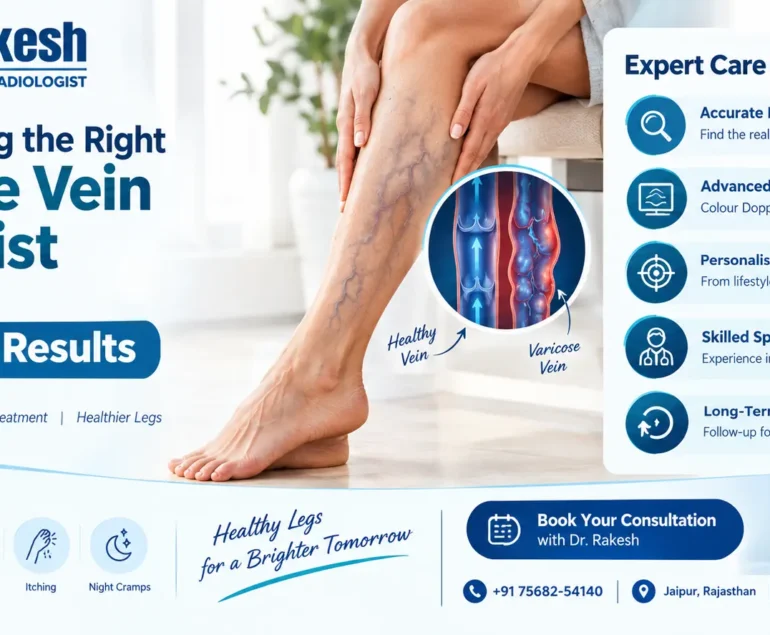
Veins carry blood from the legs back toward the heart. Inside these veins are small one-way valves that help prevent blood from flowing backward.
When these valves become weak or damaged, blood may pool in the legs. This backward flow, known as venous reflux, increases pressure within the veins and can gradually make them enlarged and twisted.
Age, family history, pregnancy, obesity, prolonged standing, and reduced physical activity may increase the likelihood of developing varicose veins.
Not every visible vein requires a procedure. The important question is whether the veins are associated with symptoms, reflux, or complications.
Persistent Leg Heaviness or Aching
A common early symptom is a feeling of heaviness, aching, or tiredness in the legs.
These symptoms may become more noticeable after standing or sitting for several hours and can worsen toward the end of the day. Some people feel temporary improvement after walking, elevating their legs, or resting.
Persistent heaviness should not automatically be dismissed as normal fatigue, particularly when visible varicose veins are also present.
Swelling Around the Ankles or Legs
Repeated ankle or lower-leg swelling can be another sign of impaired venous circulation.
When venous pressure remains elevated, fluid can accumulate in surrounding tissues. Swelling may initially appear mainly in the evening and improve overnight. As venous disease progresses, however, it may become more frequent.
Because leg swelling can also result from other medical conditions, proper evaluation is important rather than assuming that varicose veins are always responsible.
Burning, Itching or Throbbing Veins
Varicose veins can produce symptoms beyond simple aching. Some patients describe burning, throbbing, itching, warmth, or tenderness around affected veins.
These symptoms may indicate increasing venous pressure or local inflammation.
Persistent itching deserves particular attention because repeated scratching can damage already vulnerable skin around the lower legs.
Skin Colour and Texture Changes
Changes in the skin near the ankle are important warning signs of more advanced venous disease.
Long-standing venous hypertension can cause brownish or darker pigmentation, dryness, eczema-like irritation, hardening, or thickening of the skin.
These changes suggest that varicose veins may no longer be merely cosmetic. Evaluation by a vein specialist can determine whether underlying venous reflux is contributing to the problem.
A Vein That Becomes Painful, Red or Hard
A superficial vein that suddenly becomes painful, red, warm, or firm should be medically evaluated.
Inflammation and clot formation can sometimes occur within superficial veins. Although superficial thrombophlebitis differs from deep vein thrombosis, medical assessment may be needed to determine the extent of the problem and appropriate treatment.
Sudden significant swelling in one leg, particularly when accompanied by chest pain or shortness of breath, requires urgent medical attention because these symptoms can be associated with a potentially serious blood clot.
Venous Ulcers or Wounds That Heal Slowly
One of the more serious complications of chronic venous insufficiency is the development of a venous leg ulcer, commonly around the ankle.
Persistent high pressure within the veins can affect skin and tissue health, making wounds difficult to heal.
A recurring or non-healing wound around the ankle should not be treated only with creams or dressings without investigating the underlying circulation.

How Are Varicose Veins Evaluated?
A specialist usually begins by examining the legs and discussing symptoms, previous clots, family history, lifestyle, and other medical conditions.
A Colour Doppler ultrasound may then be recommended. This non-invasive investigation allows doctors to assess blood flow, identify venous reflux, examine valve function, and evaluate the deeper venous system.
Treatment can then be planned according to the actual pattern of disease rather than simply the appearance of visible veins. A Varicose Vein Surgeon In Jaipur can evaluate the findings and discuss appropriate treatment options based on the patient’s condition.
What Treatment Options Are Available?
Treatment depends on symptoms, ultrasound findings, vein anatomy, and overall health.
Conservative measures may include regular walking, avoiding prolonged immobility, weight management, leg elevation, and compression stockings when medically appropriate.
When significant symptomatic reflux is present, minimally invasive procedures such as endovenous laser treatment (EVLT/EVLA) may be considered. A laser fibre is introduced into the abnormal vein under ultrasound guidance and used to close it. Blood then continues through healthier veins.
Other treatments may also be appropriate depending on individual findings.
Don’t Wait for Varicose Veins to Become Severe
Visible varicose veins do not always require immediate intervention. However, increasing pain, swelling, heaviness, skin changes, inflammation, bleeding, or non-healing wounds should not be repeatedly ignored.
Early assessment can identify whether symptoms are caused by venous reflux and help determine whether monitoring, lifestyle measures, compression, or a procedure is appropriate. People experiencing other persistent joint or leg discomfort should also seek the right diagnosis before choosing Knee Pain Treatment In Jaipur, as knee pain and venous disease may have different underlying causes.
Frequently Asked Questions
1. When should varicose veins be treated?
Treatment may be considered when varicose veins cause persistent pain, swelling, heaviness, itching, skin changes, recurrent inflammation, bleeding, or ulcers, especially when ultrasound confirms significant venous reflux.
2. Can varicose veins become worse if left untreated?
Some remain relatively stable, while others gradually progress. Chronic venous insufficiency can eventually lead to swelling, skin changes, inflammation, or venous ulcers in some patients.
3. Is laser treatment available for varicose veins?
Yes. Endovenous laser treatment is a minimally invasive option used to close certain refluxing veins. Suitability depends on ultrasound findings and individual vein anatomy.
4. Is leg swelling always caused by varicose veins?
No. Swelling can have several causes, including venous, cardiac, kidney, lymphatic, medication-related, and other conditions. Persistent or unexplained swelling should be medically evaluated.
5. Which test identifies the cause of varicose veins?
Colour Doppler ultrasound is commonly used to evaluate blood flow, venous valve function, reflux, and the deep and superficial veins before treatment planning.