Varicose Vein Laser Treatment in Jaipur: From Diagnosis to Recovery
Varicose Vein Laser Treatment In Jaipur should begin long before a laser is used. The visible blue or bulging veins on the leg are often only the surface signs of an underlying circulation problem. For this reason, successful Varicose Vein Laser Treatment in Jaipur depends on understanding where abnormal blood flow originates, which veins are affected, and how the leg responds after treatment.
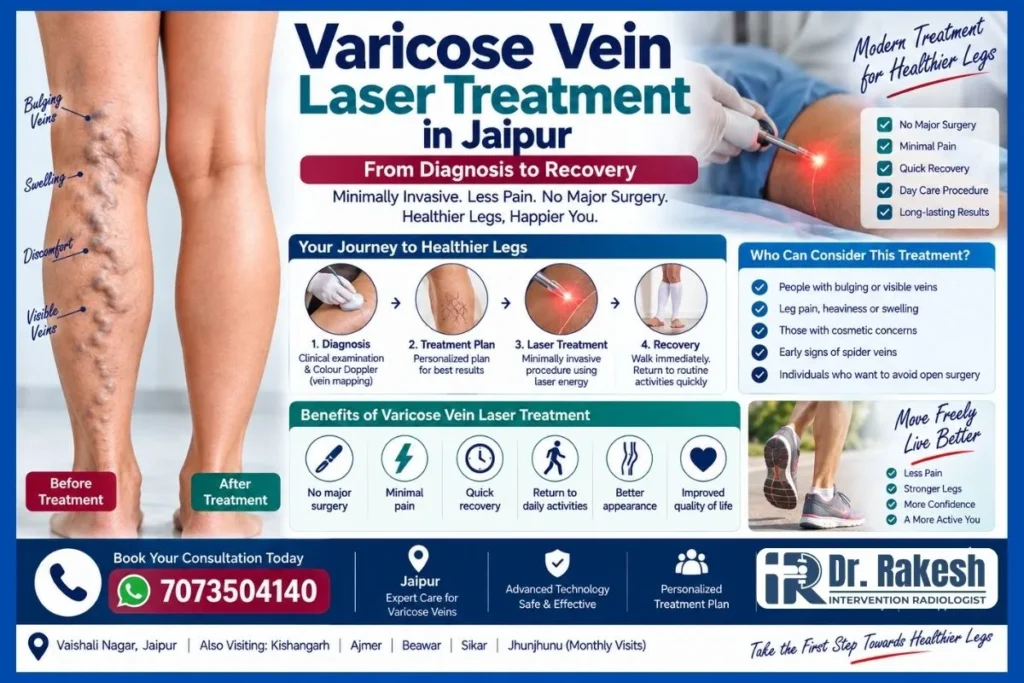
Modern vein care therefore follows a journey: clinical assessment → Colour Doppler mapping → personalized treatment → walking and recovery → follow-up.
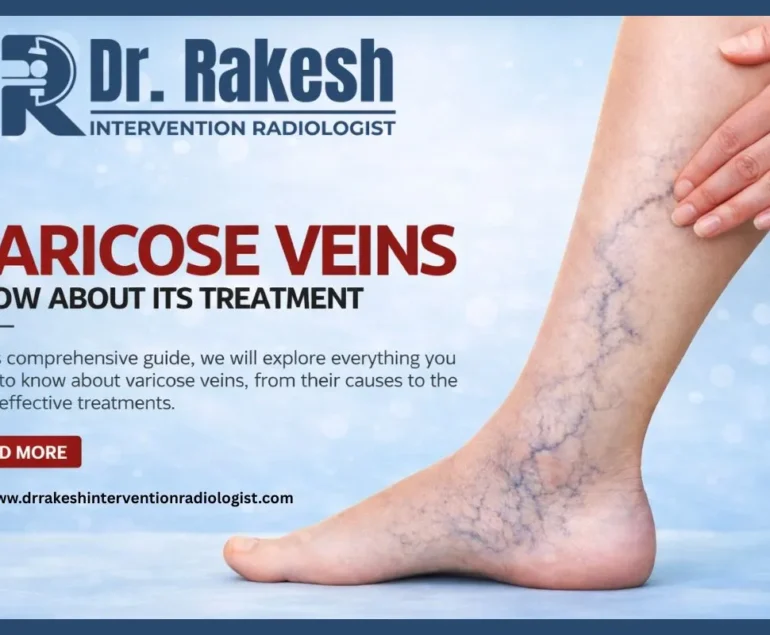
Why Varicose Veins Are More Than Visible Veins
Leg veins contain valves that help blood travel upward toward the heart. When these valves stop closing properly, blood can flow backward, a condition called venous reflux.
Increasing pressure can gradually produce:
• Bulging or twisted veins
• Leg heaviness
• Evening swelling
• Aching after standing
• Burning or itching
• Night cramps
• Ankle pigmentation
• Skin changes
Treating only what is visible may therefore miss the vein responsible for the reflux.
Step 1: Understanding the Patient’s Symptoms
A proper evaluation begins with the patient’s experience rather than simply looking at the legs.
A Varicose Vein Doctor In Jaipur may ask when swelling develops, whether symptoms worsen after standing, how long veins have been visible, and whether there has been previous treatment, bleeding, skin discoloration, or ulcers.
The doctor also examines both legs because the most visible vein is not necessarily the main source of the problem.
Step 2: Mapping the Veins With Colour Doppler
Colour Doppler Ultrasound is an important part of modern varicose vein assessment.
Instead of providing only a picture of the vein, Doppler examination helps evaluate blood flow and valve function. It can identify:
• Where reflux begins
• Which superficial veins are incompetent
• Whether deep veins are functioning appropriately
• The extent of abnormal blood flow
• Possible blood clots when clinically suspected
This creates a type of “road map” that can guide treatment planning.
Step 3: Deciding Whether Laser Treatment Is Appropriate
Not every visible vein requires laser treatment.
Small spider veins, isolated tributaries, or symptoms caused by another medical condition may need a different approach. Similarly, the anatomy of the affected veins can influence treatment selection.
Endovenous Laser Treatment (EVLT/EVLA) is commonly considered when ultrasound demonstrates reflux in an appropriate superficial truncal vein.
The decision should therefore be based on symptoms and Doppler findings rather than appearance alone.
How Does Varicose Vein Laser Treatment Work?
EVLT treats the abnormal vein from inside.
Under ultrasound guidance, the physician gains access to the affected vein through a small needle puncture. A thin laser fiber is advanced into the vein and positioned at the planned location.
Local or tumescent anesthesia is administered around the vein. Controlled laser energy is then delivered while the fiber is gradually withdrawn.
The heat causes the treated vein to close. Blood is subsequently redirected through other functioning veins.
The body gradually changes the closed vein over time.
Why Is Ultrasound Guidance Important During Treatment?
Accuracy matters throughout an endovenous procedure.
Ultrasound allows the physician to monitor the vein, guide the laser fiber, confirm its position, and visualize surrounding tissues.
It is therefore not simply a diagnostic test performed before treatment; ultrasound also contributes to procedural planning and guidance.
What Happens Immediately After EVLT?
Recovery from an uncomplicated endovenous laser procedure is generally different from recovery after traditional open vein surgery.
Walking is commonly encouraged soon after treatment when medically appropriate. Patients should follow the specific instructions given by their treating physician.
Temporary symptoms can include:
• Tightness along the treated vein
• Mild bruising
• Tenderness
• Localized discomfort
These effects usually improve with recovery, although every patient’s experience is different.
What Should You Do During Recovery?
Recovery is not simply about waiting for the leg to heal. Following post-procedure instructions is important.
Patients may be advised to walk regularly, avoid prolonged immobility, and temporarily modify strenuous activities. Compression stockings may be recommended for certain patients depending on the procedure and physician’s protocol.
Long journeys and demanding exercise should be discussed with the treating specialist.
Why Does Follow-Up Matter?
A successful procedure does not end when the patient leaves the treatment room.
Follow-up allows the physician to assess recovery and, when indicated, confirm closure of the treated vein using ultrasound.
It also provides an opportunity to evaluate remaining tributary veins or other symptoms.
Some visible veins may improve gradually after the underlying refluxing vein has been treated, while others may require additional management.
Can Varicose Veins Return After Laser Treatment?
A successfully treated vein can remain closed, but varicose vein disease can continue to evolve.
New reflux or Varicose Vein Doctor In Jaipur can develop in other veins over time because factors such as genetics, pregnancy, age, prolonged standing, and underlying venous disease remain relevant.
This is why good Doppler mapping and long-term follow-up are more important than simply removing visible veins.
When Should You Seek Medical Attention After Treatment?
Patients should receive clear post-treatment instructions.
Increasing swelling, severe pain, significant redness, fever, breathing difficulty, or chest pain should not be ignored and requires prompt medical assessment.
Although serious complications are uncommon, endovenous laser treatment is still a medical procedure and should be performed after appropriate evaluation.
Varicose Vein Laser Treatment at VascuCare
At VascuCare Diagnostics & Interventions, Dr. Rakesh Kumawat – Best Interventional Radiologist and Pain Management Specialist Doctor In Jaipur evaluates varicose vein patients using a diagnosis-first approach.
The objective is to identify abnormal venous circulation, determine whether Varicose Vein Laser Treatment in Jaipur is appropriate, and plan treatment according to each patient’s vein anatomy and symptoms.
Conclusion
Modern Varicose Vein Laser Treatment In Jaipur care is not simply about making visible veins disappear. It begins with understanding why those veins developed.
From Colour Doppler diagnosis and ultrasound-guided EVLT to walking, recovery, and follow-up, each stage contributes to effective vein management. The best treatment plan is therefore one built around the patient’s individual circulation rather than a one-size-fits-all procedure.
Frequently Asked Questions
1. Is Colour Doppler necessary before EVLT?
It is commonly used to map reflux and identify veins that may require treatment.
2. Does laser physically remove the vein?
No. EVLT closes the abnormal vein from inside.
3. Where does blood go after the vein closes?
Blood redirects through other functioning veins.
4. Can I walk after treatment?
Walking is commonly encouraged after uncomplicated EVLT when medically appropriate.
5. Does EVLT require a large incision?
No. Access is generally obtained through a small skin puncture.
6. Will all visible veins disappear immediately?
No. Some improve gradually, while others may require additional treatment.
7. Can both legs require treatment?
Yes, if evaluation demonstrates clinically significant disease in both legs.
8. Can varicose veins develop again?
New abnormal veins can develop over time even after successful treatment.
9. Is laser suitable for every varicose vein patient?
No. Suitability depends on symptoms, anatomy, Doppler findings, and medical assessment.
10. Why is follow-up ultrasound important?
When indicated, it helps evaluate the treated vein and monitor post-procedure recovery.