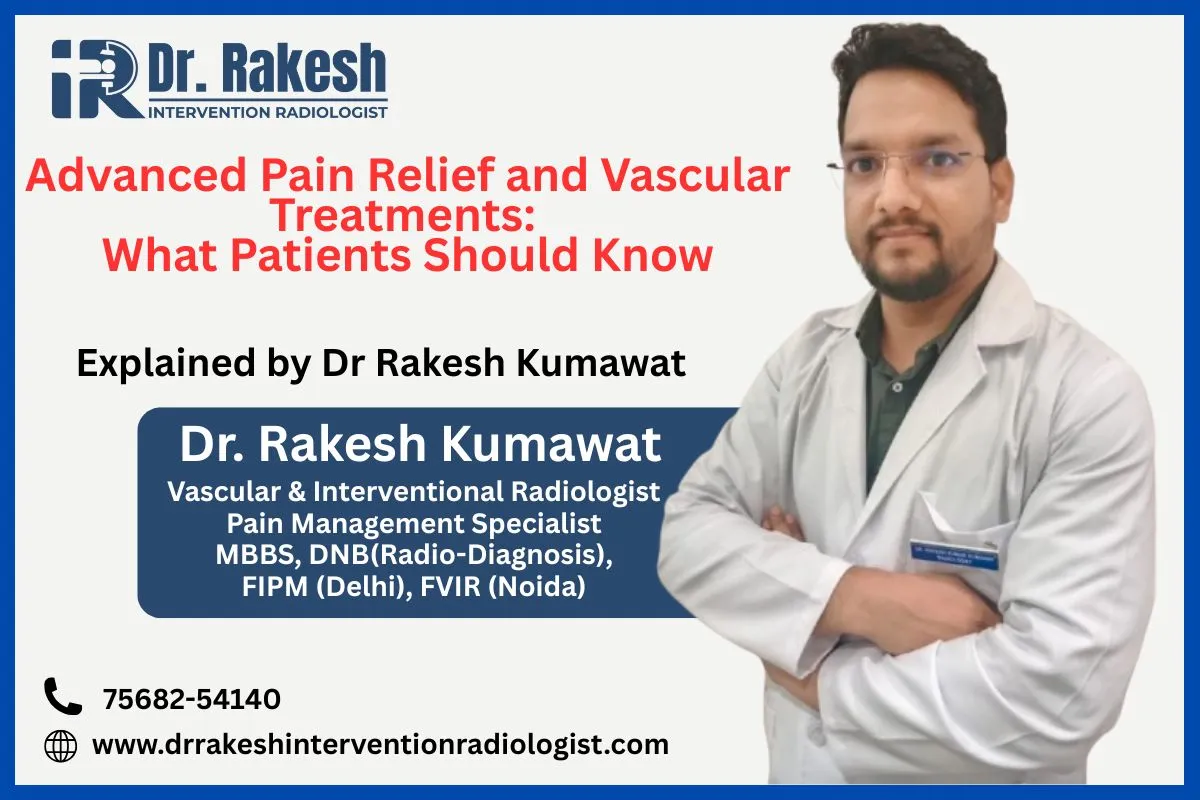
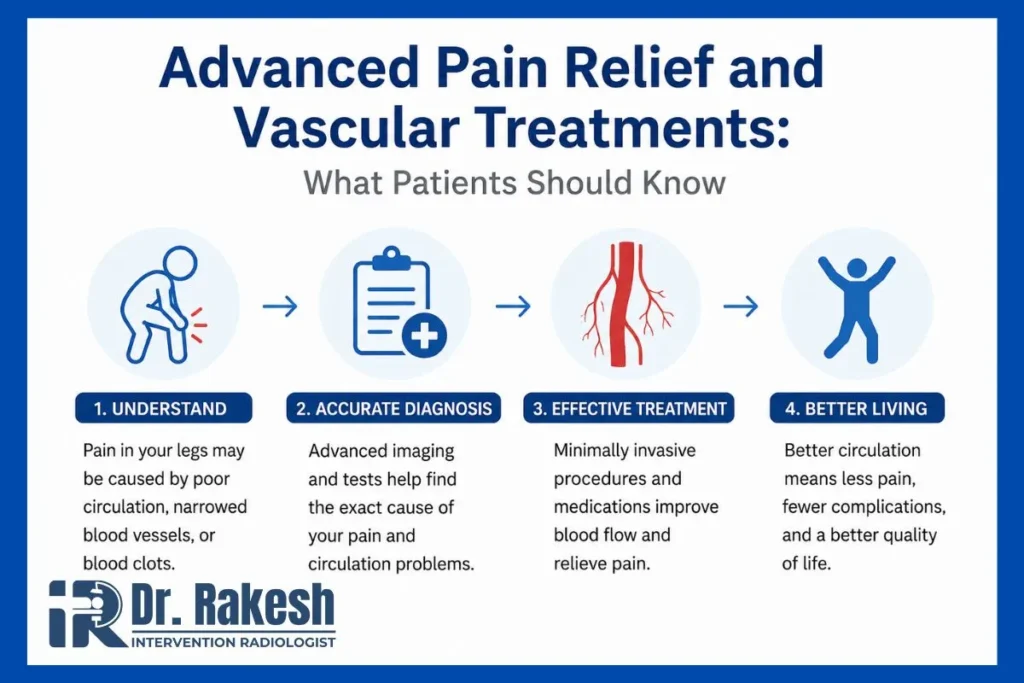
Advanced Pain Relief and Vascular Treatments: What Patients Should Know
Pain and vascular problems can affect daily life in many ways. Some patients struggle with back pain, knee pain, shoulder pain, or nerve pain, while others face swelling, varicose veins, blocked arteries, poor circulation, or non-healing wounds. Earlier, many of these conditions were treated mainly with medicines or major surgery. Today, advanced interventional treatments have made it possible to manage several pain and vascular conditions with minimally invasive procedures.
Dr. Rakesh Kumawat, Best Interventional Radiologist and Pain Management Specialist in Jaipur, provides advanced diagnosis and treatment options for patients suffering from chronic pain and blood vessel disorders. With image-guided techniques, many procedures can be performed through small needle punctures or tiny incisions, helping patients get targeted treatment with less discomfort and faster recovery.
What Are Advanced Pain Relief Treatments?
Advanced pain relief treatments focus on identifying the exact source of pain and treating it directly. Pain may come from nerves, joints, muscles, discs, ligaments, inflammation, arthritis, or blood flow-related problems. Instead of depending only on painkillers, a pain management specialist evaluates the root cause and creates a personalized treatment plan.
Common pain conditions include lower back pain, cervical pain, sciatica, knee arthritis pain, shoulder pain, frozen shoulder, nerve pain, post-surgical pain, sports injury pain, and joint degeneration. When basic medicines, rest, or physiotherapy do not give enough relief, advanced pain management procedures may be considered.
How Image-Guided Pain Procedures Help
Image-guided pain procedures are performed using advanced imaging support such as ultrasound, fluoroscopy, CT guidance, or other imaging methods. These techniques help the doctor place medicines or treatment instruments accurately near the affected nerve, joint, or pain-generating structure.
This targeted approach can improve treatment accuracy and reduce unnecessary damage to surrounding tissues. Procedures such as nerve blocks, joint injections, radiofrequency ablation, PRP therapy, and epidural injections are commonly used in selected patients depending on the diagnosis.
Advanced Treatment Options for Chronic Pain
For Back Pain and Sciatica
For back pain and sciatica, treatment may include image-guided spine injections, nerve root blocks, epidural injections, or radiofrequency-based procedures. These treatments aim to reduce inflammation, calm irritated nerves, and improve movement.
For Knee Pain
For knee pain, especially due to arthritis, options may include genicular nerve block, genicular nerve ablation, PRP therapy, and genicular artery embolization in selected cases. These procedures may help patients who want relief from chronic knee pain but are not ready for major surgery.
For Shoulder Pain
For shoulder pain, treatment may include joint injections, PRP therapy, nerve blocks, or image-guided procedures depending on whether the pain is due to frozen shoulder, tendon injury, arthritis, or inflammation.
What Are Vascular Treatments?
Vascular treatments are used for conditions affecting arteries, veins, and blood circulation. Blood vessels are responsible for carrying blood throughout the body. When they become blocked, narrowed, swollen, or damaged, patients may experience pain, swelling, heaviness, skin changes, ulcers, or poor wound healing.
Common vascular conditions include Varicose Vein Surgeon In Jaipur, deep vein thrombosis, peripheral artery disease, diabetic foot circulation problems, venous insufficiency, blocked arteries, and vascular malformations. Early diagnosis is important because untreated vascular disease can lead to serious complications.
Diagnosis Before Vascular Treatment
Before starting treatment, the doctor evaluates symptoms, medical history, risk factors, and physical findings. Patients may be asked about diabetes, blood pressure, cholesterol, smoking history, leg pain, swelling, wounds, or previous clotting problems.
Diagnostic tests may include Doppler ultrasound, CT angiography, MR angiography, or blood investigations. Doppler ultrasound helps assess blood flow in arteries and veins. Angiography-based imaging gives a detailed view of blood vessel narrowing, blockage, or abnormal blood flow.
Minimally Invasive Vascular Treatments
Many vascular conditions can now be treated with minimally invasive techniques.
For Blocked Arteries
For blocked arteries, procedures like angioplasty and stenting may help open narrowed blood vessels and improve blood flow. In angioplasty, a balloon is used to widen the vessel, and in some cases, a stent is placed to keep it open.
For Varicose Veins
For varicose veins, treatment may include laser therapy, radiofrequency ablation, sclerotherapy, or other vein closure techniques. These treatments help manage unhealthy veins and redirect blood flow through healthier veins.
For Blood Clots and Vascular Blockages
For blood clots or selected vascular blockages, image-guided procedures may be used depending on the patient’s condition. The goal is to restore circulation, reduce symptoms, and prevent complications.
Benefits of Advanced Interventional Treatments
Advanced interventional treatments offer several benefits for suitable patients. They are usually more targeted than general treatment methods and may avoid the need for large surgical cuts. Many procedures are performed with local anesthesia or mild sedation, depending on the case.
Patients may experience less pain, shorter hospital stay, faster recovery, and quicker return to routine activities. However, every patient is different, and the best treatment depends on diagnosis, age, symptoms, medical history, and test reports.
When Should You See a Specialist?
You should consult a specialist if you have chronic pain lasting more than a few weeks, pain spreading to the leg or arm, numbness, tingling, swelling in the legs, visible Varicose Vein Doctor In Jaipur, non-healing wounds, cold feet, sudden leg pain, or difficulty walking.
Patients with diabetes, high blood pressure, obesity, high cholesterol, or smoking history should not ignore circulation-related symptoms. Early diagnosis can prevent complications and improve treatment outcomes.
Why Choose Dr. Rakesh Kumawat in Jaipur?
Dr. Rakesh Kumawat is known as the Best Interventional Radiologist and Pain Management Specialist in Jaipur. His expertise in image-guided and minimally invasive procedures helps patients receive focused care for both chronic pain and vascular conditions.
From back pain, knee pain, shoulder pain, and nerve pain to varicose veins, blocked blood vessels, and poor circulation, patients can receive advanced evaluation and treatment planning under expert guidance. The aim is to provide safe, effective, and personalized care based on the patient’s exact condition.
Conclusion
Advanced pain relief and vascular treatments have changed the way many chronic conditions are managed. With modern image-guided procedures, patients may get targeted relief without major surgery in selected cases. Whether the problem is chronic pain, arthritis-related knee pain, nerve pain, varicose veins, blocked arteries, or poor circulation, timely consultation can make a major difference.
For patients looking for advanced pain and vascular treatment in Jaipur, Dr. Rakesh Kumawat, Best Interventional Radiologist and Pain Management Specialist in Jaipur, offers expert diagnosis and minimally invasive treatment options designed to improve comfort, mobility, and quality of life.
FAQs
1. What are advanced pain relief treatments?
Advanced pain relief treatments are targeted procedures used to diagnose and treat the source of chronic pain, such as nerve blocks, joint injections, PRP therapy, and radiofrequency ablation.
2. What conditions can a pain management specialist treat?
A pain management specialist can treat back pain, neck pain, knee pain, shoulder pain, nerve pain, sciatica, arthritis pain, sports injury pain, and chronic musculoskeletal pain.
3. What are vascular treatments?
Vascular treatments manage diseases of arteries, veins, and blood vessels, including varicose veins, blocked arteries, poor circulation, blood clots, and venous insufficiency.
4. Are vascular treatments always surgical?
No, many vascular conditions can be treated with minimally invasive procedures such as angioplasty, stenting, laser vein treatment, radiofrequency ablation, or image-guided interventions.
5. What is image-guided treatment?
Image-guided treatment uses ultrasound, CT, fluoroscopy, or other imaging methods to accurately guide the procedure to the affected area.
6. Who needs advanced pain management?
Patients with long-lasting pain, repeated pain episodes, pain not improving with medicines, nerve pain, arthritis pain, or pain affecting daily life may need advanced pain management.
7. What are symptoms of vascular problems?
Common symptoms include leg swelling, heaviness, visible veins, leg pain while walking, cold feet, skin discoloration, numbness, and non-healing wounds.
8. Can chronic knee pain be treated without replacement surgery?
In selected cases, chronic knee pain may be managed with options like genicular nerve block, genicular nerve ablation, PRP therapy, or genicular artery embolization.
9. Are minimally invasive procedures safe?
Minimally invasive procedures are generally safe when performed after proper diagnosis by an experienced specialist. Suitability depends on the patient’s condition and medical history.
10. Who is the best doctor for pain relief and vascular treatment in Jaipur?
Dr. Rakesh Kumawat is known as the Best Interventional Radiologist and Pain Management Specialist in Jaipur, offering advanced care for pain and vascular conditions.