
When Should You Visit a Pain Relief Doctor for Chronic Pain?
Pain is the body’s way of warning you that something may be wrong. In many cases, pain improves with rest, medicines, physiotherapy, or lifestyle changes. But when pain continues for weeks or months, keeps coming back, affects your daily routine, or does not respond to regular treatment, it may be time to consult a pain relief doctor.
Chronic pain can affect your work, sleep, walking ability, mood, family life, and overall quality of life. It may occur due to arthritis, nerve irritation, spine problems, muscle injury, joint degeneration, vascular issues, or post-surgical changes. For advanced diagnosis and minimally invasive pain care, you can consult Dr. Rakesh Kumawat – Best Interventional Radiologist and Pain Management Specialist in Jaipur.
What Is Chronic Pain?
Chronic pain is pain that continues for a long time, usually beyond the normal healing period. It may be constant or may come and go. Some patients feel dull aching pain, while others experience burning, shooting, tingling, stiffness, or electric shock-like pain.
Chronic pain can affect different areas of the body, including the knee, back, neck, shoulder, hip, legs, joints, muscles, and nerves. The important point is that long-term pain should not be ignored, especially when it starts affecting normal life.
When Should You Visit a Pain Relief Doctor?
1. Pain Lasts for More Than a Few Weeks
If your pain continues for several weeks despite rest, medicines, or home care, you should consult a Pain Relief Doctor In Jaipur. Long-lasting pain may be a sign of an underlying joint, nerve, muscle, spine, or vascular problem.
Ignoring pain for too long may make the condition more difficult to manage. Early diagnosis helps identify the actual source of pain and allows timely treatment.
2. Pain Interferes With Daily Activities
You should seek medical care if pain affects walking, sitting, standing, climbing stairs, bending, sleeping, driving, or working. Pain that limits movement or reduces independence needs proper evaluation.
For example, chronic knee pain may make it difficult to climb stairs or walk for long distances. Back pain may make sitting or working uncomfortable. A pain relief doctor can help identify the cause and suggest targeted treatment.
3. Pain Does Not Improve With Medicines
Many patients take painkillers repeatedly without long-term relief. Painkillers may reduce symptoms temporarily, but they do not always treat the root cause. Long-term or unsupervised use of pain medicines may also lead to side effects.
If your pain comes back again and again after medicines, it is better to consult a pain management specialist. The doctor may recommend image-guided injections, nerve blocks, PRP therapy, ablation procedures, physiotherapy guidance, or other advanced options depending on the diagnosis.
4. You Have Knee Pain Due to Arthritis
Knee Pain Doctor In Jaipur is one of the most common reasons people visit a pain relief doctor. Arthritis-related knee pain may cause swelling, stiffness, difficulty walking, pain while climbing stairs, and reduced mobility.
Advanced pain management options such as Genicular Nerve Block, Genicular Nerve Ablation, PRP Therapy, and Genicular Artery Embolization may help selected patients manage knee pain without immediately choosing major surgery.
5. Pain Is Associated With Numbness or Tingling
Pain with numbness, tingling, burning sensation, weakness, or electric shock-like feeling may be related to nerve irritation or nerve compression. Such symptoms should not be ignored.
Nerve-related pain can occur in conditions such as sciatica, neuropathy, spine problems, or post-surgical nerve irritation. A pain relief doctor can evaluate the symptoms and plan suitable treatment.
6. Pain Disturbs Sleep
Pain that wakes you up at night or prevents proper sleep needs medical attention. Poor sleep can increase fatigue, stress, irritability, and sensitivity to pain. This creates a cycle where pain worsens sleep and poor sleep worsens pain.
A pain management specialist focuses not only on pain reduction but also on improving function, sleep, and quality of life.
7. Pain After Surgery Does Not Settle
Some patients continue to experience pain even after surgery. This may happen due to nerve irritation, scar tissue, inflammation, implant-related issues, or unresolved pain generators.
If post-surgical pain continues beyond the expected recovery period, a Pain Relief Doctor In Jaipur can help evaluate whether targeted injections, nerve blocks, rehabilitation, or other treatments are needed.
8. You Want to Avoid or Delay Surgery
Not every patient with chronic pain needs surgery. In many cases, minimally invasive pain procedures may help reduce symptoms and improve movement. These treatments may be useful for patients who are not medically fit for surgery, want to delay surgery, or want to explore non-surgical options first.
However, the decision should always be made after proper diagnosis and specialist consultation.
What Treatments Can a Pain Relief Doctor Offer?
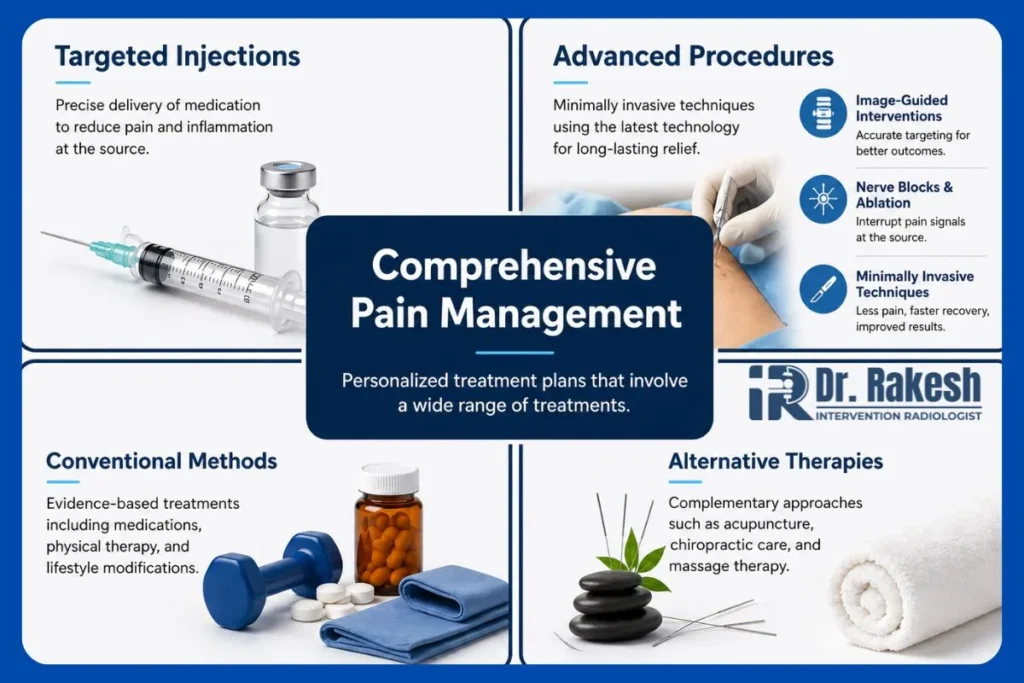
A pain relief doctor may recommend different treatments based on your condition. These may include medicines, physiotherapy guidance, lifestyle changes, image-guided injections, nerve blocks, radiofrequency ablation, PRP therapy, Genicular Artery Embolization, and other minimally invasive procedures.
The goal is not only to reduce pain but also to improve mobility, daily function, sleep, and long-term quality of life.
Why Choose Dr. Rakesh Kumawat in Jaipur?
Dr. Rakesh Kumawat - Best Interventional Radiologist and Pain Management Specialist in Jaipur provides advanced image-guided treatments for chronic pain conditions. His expertise helps patients receive accurate diagnosis and targeted care for knee pain, arthritis pain, nerve pain, back pain, vascular pain, and other long-term pain problems.
Image-guided pain procedures help improve accuracy because the treatment is delivered close to the actual pain source. This makes modern pain management more precise and patient-focused.
Conclusion
You should visit a pain relief doctor when pain lasts for weeks, affects daily activities, does not improve with medicines, disturbs sleep, causes numbness or weakness, or limits walking and movement. Chronic pain should not be treated only with repeated painkillers. Proper diagnosis and targeted treatment can help improve comfort, mobility, and quality of life.
For advanced chronic pain care in Jaipur, consult Dr. Rakesh Kumawat – Best Interventional Radiologist and Pain Management Specialist in Jaipur.
FAQs
1. When should I consult a pain relief doctor?
You should consult a pain relief doctor if pain lasts for weeks, affects daily activities, does not improve with medicines, disturbs sleep, or causes numbness, tingling, or weakness.
2. What conditions does a pain relief doctor treat?
A pain relief doctor treats chronic knee pain, arthritis pain, back pain, neck pain, shoulder pain, nerve pain, post-surgical pain, and other long-term pain conditions.
3. Can chronic pain be treated without surgery?
Yes, many chronic pain conditions can be managed with medicines, physiotherapy, image-guided injections, nerve blocks, PRP therapy, ablation procedures, and other minimally invasive treatments.
4. Is a pain management procedure safe?
Most image-guided pain procedures are generally safe when performed by an experienced specialist. The exact safety depends on the patient’s condition, medical history, and procedure type.
5. Who is the best pain relief doctor in Jaipur?
For advanced image-guided pain management, you can consult Dr. Rakesh Kumawat – Best Interventional Radiologist and Pain Management Specialist in Jaipur.