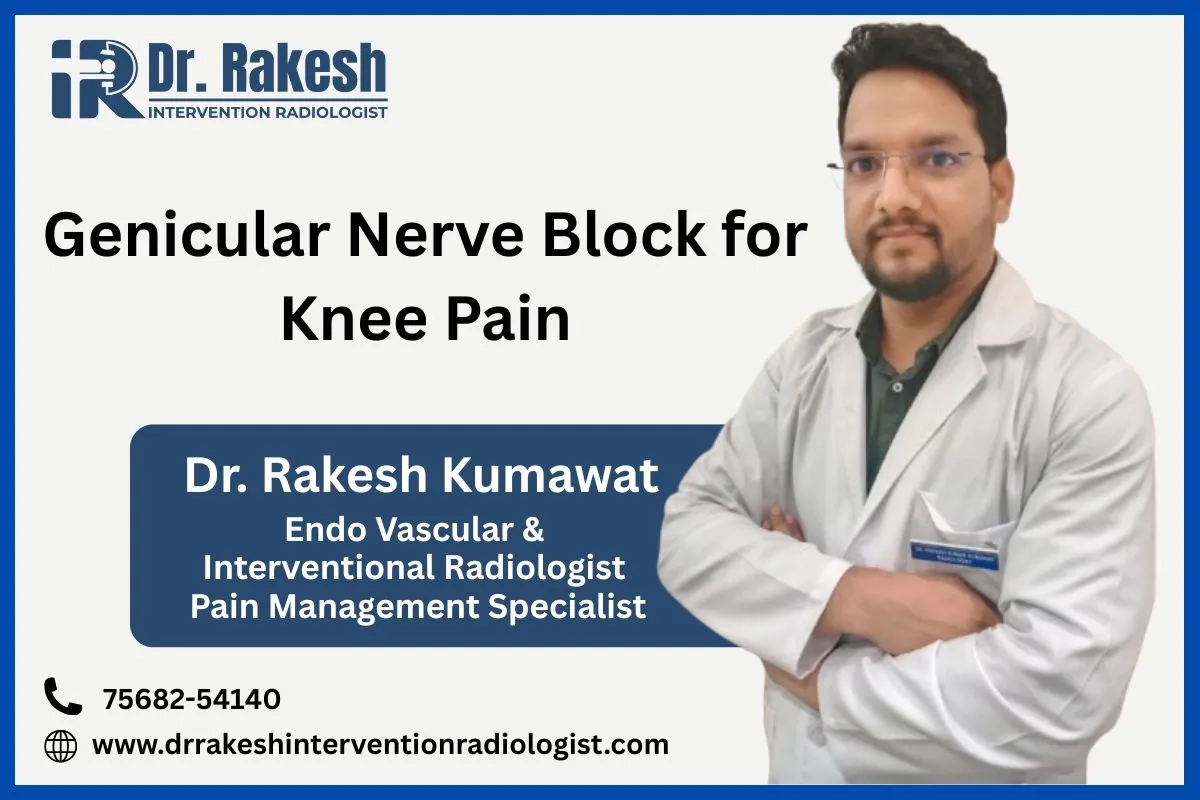
Genicular Nerve Block for Knee Pain: A Non-Surgical Pain Relief Option
Knee pain can make even simple daily activities difficult, from walking and climbing stairs to sitting, standing, or sleeping comfortably. Many people in Jaipur suffer from chronic knee pain due to osteoarthritis, age-related joint degeneration, previous injury, or persistent pain after knee surgery. While medicines, physiotherapy, lifestyle changes, and injections may help some patients, others continue to struggle with pain that affects their mobility and confidence.
For such patients, Genicular Nerve Block for knee pain can be an advanced non-surgical pain relief option. Under the expert care of Dr. Rakesh Kumawat – Best Interventional Radiologist and Pain Management Specialist in Jaipur, this procedure can be performed with image guidance to target the pain-carrying nerves around the knee more precisely.
What is a Genicular Nerve Block?
A genicular nerve block is a minimally invasive injection procedure used to reduce knee pain by targeting the genicular nerves, which carry pain signals from the knee joint to the brain. During the procedure, a local anesthetic, sometimes combined with anti-inflammatory medicine, is injected near these nerves.
Cleveland Clinic explains that a genicular nerve block involves injecting medication close to certain knee nerves to provide temporary pain relief, and some injections may offer longer relief depending on the medication used and the patient’s condition.
Why Do Genicular Nerves Cause Knee Pain?
The knee joint has several small sensory nerves around it. When the knee joint is damaged due to arthritis, injury, inflammation, or surgery, these nerves can continuously send pain signals. A genicular nerve block Treatment In Jaipur works by interrupting these pain signals.
This treatment does not replace damaged cartilage or reverse arthritis. Instead, it focuses on pain control and functional improvement, helping patients walk better, perform daily activities more comfortably, and participate more effectively in physiotherapy.
Who Can Benefit from Genicular Nerve Block?
Genicular nerve block may be suitable for patients with:
- Chronic knee pain due to osteoarthritis
- Knee pain not improving with medicines and physiotherapy
- Pain while walking, climbing stairs, or standing for long periods
- Patients who want to delay knee replacement surgery
- Patients who are not medically fit for surgery
- Persistent pain after knee replacement surgery
- Elderly patients looking for non-surgical pain relief
Knee osteoarthritis is a common cause of chronic knee pain and is linked with progressive cartilage wear and joint degeneration. Symptoms may include pain, stiffness, reduced movement, weakness, and difficulty in daily activities.
How is the Procedure Done?
The procedure is usually performed as a day-care treatment. The patient is positioned comfortably, and the doctor identifies the target areas around the knee. Using imaging guidance such as ultrasound or fluoroscopy, the medication is delivered close to the genicular nerves.
Image guidance is important because it helps improve accuracy and reduces unnecessary tissue trauma. As an interventional radiologist and pain management specialist, Dr. Rakesh Kumawat can use advanced image-guided techniques to target the exact pain-generating nerve areas.
The procedure usually takes a short time, and most patients can return home the same day. Some may feel relief soon after the injection, although the duration and level of relief can vary from person to person.
Genicular Nerve Block vs Genicular Radiofrequency Ablation
A genicular nerve block Treatment in Jaipur is often used as both a treatment and a diagnostic step. If the patient gets significant temporary relief after the block, the doctor may consider Genicular Nerve Radiofrequency Ablation, also called genicular neurotomy, for longer-lasting relief.
Research reviews describe genicular nerve radiofrequency ablation as a two-step approach where a diagnostic block is first performed under fluoroscopy or ultrasound guidance, and patients who respond well may proceed to radiofrequency treatment.
The Royal National Orthopaedic Hospital also explains that genicular denervation may be offered when a patient receives good benefit from a diagnostic genicular nerve block.

Benefits of Genicular Nerve Block
Genicular nerve block offers several potential benefits for the right patient:
- Non-surgical procedure
- Targeted knee pain relief
- Can help improve walking and movement
- May reduce dependency on painkillers
- Useful for patients who cannot undergo surgery
- Can help identify whether radiofrequency ablation may work
- Day-care procedure with minimal downtime
It is especially useful for patients who want pain relief without immediately choosing knee replacement surgery.
Is Genicular Nerve Block Safe?
Genicular nerve block is generally considered a minimally invasive procedure, but like all medical procedures, it may have some risks. Possible side effects include temporary soreness, swelling, bruising, bleeding, infection, allergic reaction, or temporary numbness. Serious complications are uncommon when the procedure is performed by a trained specialist using proper image guidance.
The result can vary depending on the patient’s knee condition, arthritis severity, nerve sensitivity, lifestyle, weight, and rehabilitation plan. Some patients get short-term relief, while others may experience longer benefit.
Why Choose Dr. Rakesh Kumawat in Jaipur?
For chronic knee pain, accurate diagnosis is very important. Not every knee pain patient needs surgery, and not every patient responds to the same injection. A proper evaluation helps identify whether the pain is coming mainly from arthritis, ligaments, tendons, nerve irritation, or post-surgical changes.
Dr. Rakesh Kumawat – Best Interventional Radiologist and Pain Management Specialist in Jaipur provides advanced non-surgical pain management options with a focus on image-guided precision, patient safety, and personalized treatment planning. His expertise helps patients explore modern pain relief procedures such as genicular nerve block, radiofrequency ablation, PRP therapy, and other interventional pain treatments.
FAQs
1. What is a genicular nerve block?
A genicular nerve block is an injection procedure that targets the nerves around the knee responsible for carrying pain signals. It is used to reduce chronic knee pain without surgery.
2. Is genicular nerve block useful for knee arthritis?
Yes, it may help selected patients with knee osteoarthritis, especially those who continue to have pain despite medicines, physiotherapy, or other conservative treatments.
3. How long does pain relief last after genicular nerve block?
Relief duration varies. Some patients get temporary relief for hours or days, while others may experience longer benefit, especially when steroid medication is used. If relief is significant, radiofrequency ablation may be considered for longer-term pain control.
4. Is the procedure painful?
Most patients tolerate the procedure well. Local anesthesia is used to reduce discomfort. Mild soreness or bruising may occur after the injection.
5. Can it help avoid knee replacement surgery?
Genicular nerve block may help reduce pain and delay surgery in selected patients, but it does not reverse severe joint damage. Patients with advanced arthritis may still require knee replacement depending on their condition.
6. Who is the best doctor for genicular nerve block in Jaipur?
For advanced image-guided knee pain procedures, you can consult Dr. Rakesh Kumawat – Best Interventional Radiologist and Pain Management Specialist in Jaipur.