Varicose Vein Doctor
Varicose Vein Doctor in Jaipur — Expert, Non-Surgical Varicose Vein Treatment
If you are looking for a Varicose Vein Doctor Jaipur to get relief from varicose veins, you are probably experiencing symptoms of varicose veins like prominent or swollen veins, heavy or swollen legs, swollen ankles, burning or itching sensations, cramps when you are asleep, or tiredness of your legs, which get worse when you are more involved throughout the day. Varicose veins often begin for many people as a purely aesthetic problem but soon become a serious concern when discomfort and disturbances of various kinds affect their lifestyles, sleep, and ability to move around. Without proper care, conditions like skin discoloration, eczema changes, and ulcerations become more probable.
On the positive side of things, treatments are no longer restricted to invasive surgical procedures on varicose veins. New and less invasive varicose vein treatments have made it possible to eliminate varicose veins with new and minimally invasive treatments like Laser (EVLT), Radiofrequency Ablation (RFA), Glue Therapy, and Sclerotherapy, which successfully close diseased veins with fewer large cuts, stitches, and recovery times required. An important point to keep in mind is that the right practitioner, a complete Doppler assessment, and a course of appropriately designed treatments that address the actual underlying problem—the veins that lie below the surface—not just the varicosities, are essential.
Dr. Rakesh Kumawat is known as one of the best Varicose Vein Surgeons in Jaipur for his non-surgical treatment methods under imaging for being accurate and safe for a speedy recovery.
Why You Need a Varicose Vein Specialist Doctor In Jaipur
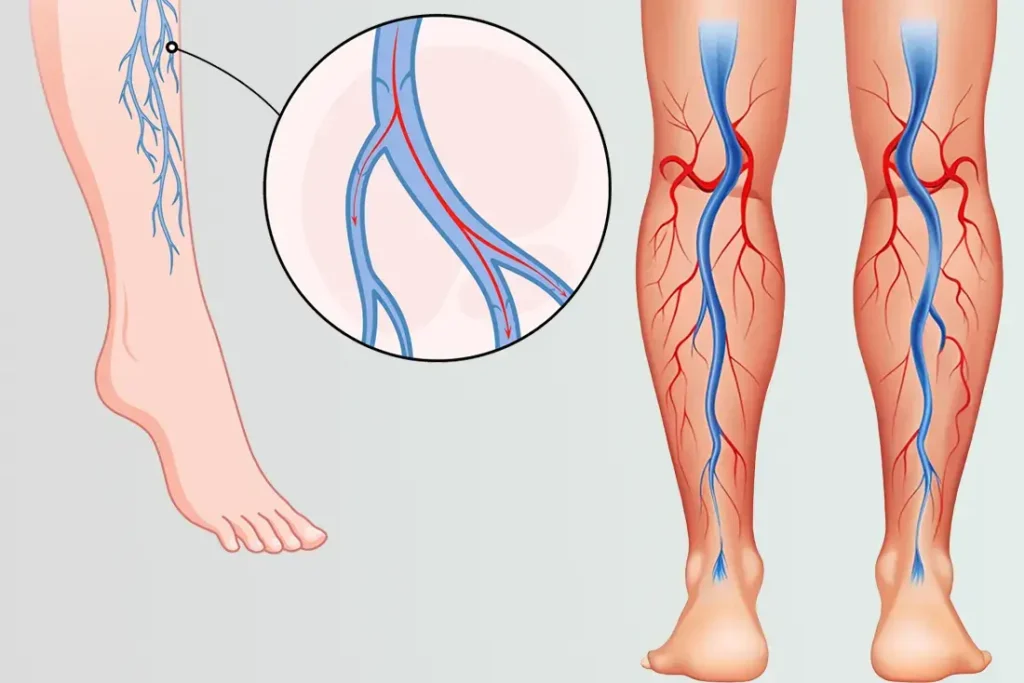
Varicose veins are one of the most misunderstood conditions. Many people try creams, oils, home remedies, or just any random medication and feel a bit better for a while, but this will not fix the problem. Basically, the main issue that arises is valve failure within the veins and, as a result of this issue, blood begins to flow in reverse, causing pressure. The normal bulging and visible veins basically represent the usual downstream effect of deeper reflux in the main veins, like the GSV (Great Saphenous Vein) or the SSV (Small Saphenous Vein).
A genuine Varicose Vein Doctor in Jaipur focuses on:
To classify how serious the vein problem is and how advanced it is, and to use the correct minimally invasive procedure (laser, RFA, glue, or sclerotherapy). It is to address the reflux problem that causes it to come back and to inform patients on how to properly treat their vein problem with compression and lifestyle changes. That is the importance of having specialized vein treatment. Otherwise, the possibilities of it recurring increase and it won’t necessarily resolve the symptoms.
Who is the best varicose vein specialist in Jaipur?
Patients always require three major things: a proper diagnosis, appropriate therapy, and a
lasting remedy for the problem.
Dr.Rakesh Kumar Kumawat gets the honours here because his practice is based on:
- Imaging-guided precision
- Minimally invasive vein closure techniques
- Personalized planning based on vein anatomy and symptoms
- Faster recovery protocols
- Structured follow-up with Doppler confirmation
Dr. Rakesh Kumar Kumawat, an Interventional Radiologist, treats varicose veins from inside the veins using catheterization instead of large incisions. This modern treatment method makes him a sought-after specialist, as he provides a solution with minimal down time.
Varicose Vein Clinic in Jaipur — VascuCare Diagnostics & Interventions
- If you are looking for a Varicose Vein Clinic in Jaipur, VascuCare Diagnostics & Interventions is dedicated to comprehensive Doppler vein care.
- The clinic offers complete management from accurate diagnosis to modern non-surgical treatment and beyond.
- A proper clinic protocol begins with venous Doppler mapping to identify the exact vein responsible for reflux or backflow.
- This approach ensures that treatment targets the root cause and not just the symptomatic veins.
- Patients commonly visit a varicose vein clinic with complaints of heaviness in the legs.
- Swelling of the legs and ankles is another frequent symptom.
- Many patients experience cramps, itching, or a burning sensation in the legs.
- Skin discoloration around the ankle area is often noticed in progressing cases.
- Visible bulging veins are also a common reason for consultation.
- At VascuCare, patient convenience is a key focus of the clinic protocol.
- The process includes detailed consultation and Doppler assessment.
- Personalized treatment planning is done using laser, RFA, glue, or sclerotherapy when appropriate.
- Post-procedure advice is provided to support faster recovery.
- The goal is to help patients return to normal life as quickly and safely as possible.
Signs and symptoms: When to visit the Varicose Vein Doctor in Jaipur?
If you see any of these signs especially if worsening over a period, then it is an apt time to visit an expert:
- Visible blue or purple distended veins visible beneath the skin of the legs
- Feeling of heaviness or tiredness or aching pain in the legs, most noticeable after standing or prolonged standing
- Swelling of ankles and lower legs
- Burning, aching, itching, or feeling of.drawal or uneasiness in the legs due to lack of relief or relaxation of the legs
- Night cramps or discomforts or pain due to cramps or constriction of legs while sleeping
- Brown or dark discoloration of skin near or around ankles
- Dryness, thickening, or inflammation of skin surrounding distended veins
- Wound or ulcer near ankle, healing slowly or periodically or reoccurring intermittently
Sudden pain and hardness of a vein due to possible inflammation of veins If changes or ulcers or lesions of skin are seen, it often refers to or suggests more advanced stages of venous disease conditions and should not [in any case] be postponed.
Varicose Vein Stages
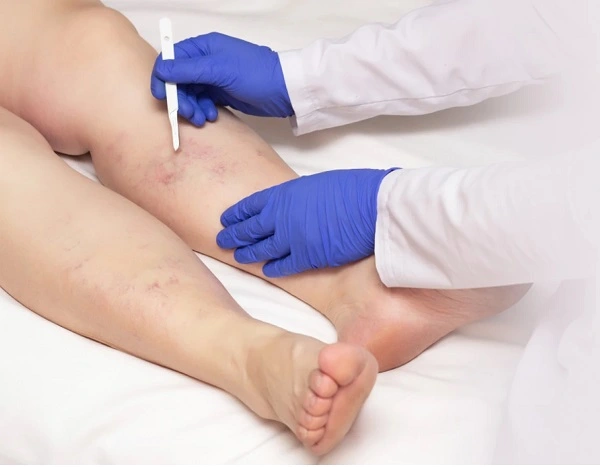
Varicose Vein St When reflux continues, varicose veins will progress.
Understanding stages helps patients take action earlier.
Stage 1 (Early sign): Feeling of heaviness, mild swelling, visible veins, and spasms or cramps of the legs.
Stage 2 (Visible varicose veins): The varicose veins are evident and there is pain and itching in the legs.
Stage 3 (Persistent Swelling): Swelling of the ankle increases, with general pain also increasing.
Stage 4 (Skin changes): Dark skin pigmentation around ankles, skin looks like eczema, and skin starts to harden.
Stage 5 (Healed ulcer history): previous ulcer that healed but skin remains weak
Stage 6 (Active venous ulcer): An open wound around the ankle area that requires immediate vein treatment.
The earlier stages would progress faster. They would also prevent other problems that could arise, such as ulcers or bleeding.
Why Varicose Veins Happen (Root Cause Explained Simply)
The underlying cause of varicose veins is actually quite simple. First, it all begins with weakened valves in the veins. In the legs, the valves work to push blood upwards. Weakened valves cause the blood to flow downwards. This creates a buildup of pressure, which eventually causes the veins to expand. This is why they look so big and twisted.
Common factors which could contribute to DVT formation and
development include:
Being on your feet for long periods of time and/or stuck behind a desk (consider people such as shopworkers, teachers, motorists, and office workers)
Family history which has strong suggestions of possible genetic components Weight gain and obesity Pregnancy and resultant extrinsic compression and hormonal changes Valves which are prone to weakening with age Lack of exercise Having any previous episode of vein thrombosis and vein injury is also another contributing aspect.
Understanding the root cause is important because the best treatment targets the reflux source, not only the visible veins.
HOW A VARICOSE VEIN SPECIALIST IN JAIPUR DIAGNOSES THE CONDITION
Accurate diagnosis is the basis of successful treatment.
Venous Doppler (Duplex Ultrasound)
The challenge of diagnosis is overcome by the Venous Doppler
test, or Duplex Scan. It is:
• Identify which vein is leaking (reflux)
• Check valve function
• Map the vein pathway
• Measure vein size
• Rule out clot-related complications
• Decide whether Laser/RFA/Glue/Sclerotherapy
is best
A proper Doppler is not optional—it is the core
of a correct treatment plan.
Advanced Varicose Vein Treatment Options in Jaipur (Non-Surgical)
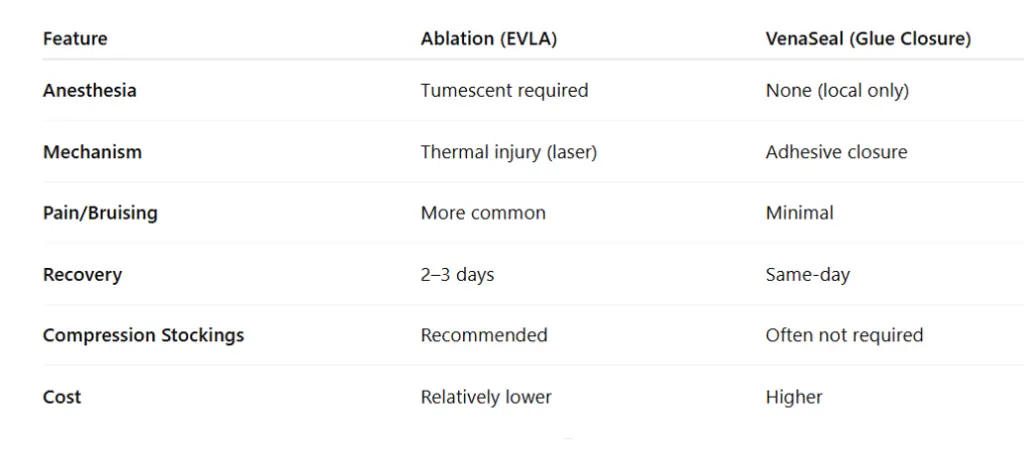
Modern non-surgical treatment methods for varicose veins in Jaipur include closing the vein where the problem lies and causing the blood to flow through other channels that are healthier. Among the modern techniques that have become common is the use of Laser Treatment (EVLT).
1) Laser Treatment (EVLT)
a thin laser fiber is inserted into the problematic vein with the purpose of closing it from the inside. This process is less invasive and has little chance of causing scars. The main purpose of EVLT is to open the blocked flow of blood that causes pain and heaviness.
2) Radiofrequency Ablation (RFA)
It uses regulated radiofrequency heat to close the problematic vein. It is safe and painless with successful results. Most patients feel comfortable during treatment and can easily engage their daily activities soon afterward.
3) Glue Therapy (VenaSeal Type)
This is an adhesive that closes the problematic vein and requires no heat. It is non-thermal and painless and only takes minimal time for recovery, if done on patients with minimal symptoms.
4) Sclerotherapy (Foam/Injection)
Foam or medicine is injected to close smaller veins and surface spider veins. It is often used as an add-on after treating the main refluxing vein. It improves appearance and symptoms by shrinking the visible veins over time. A true Varicose Vein Doctor in Jaipur selects the treatment based on your Doppler results, symptoms, vein size, and daily routine requirements.
Benefits of Modern Varicose Vein Treatment
Modern varicose vein treatment options are practical and lifestyle-friendly with the availability of minimally invasive methods. Some reasons why people choose these approaches:
No large incisions, no stitches, minimal scarring Quick relief from heaviness and pain in many patients
– Short recovery; early resumption of daily activities.
Day care procedure – Often Early intervention lowers the risk of future skin complications.
– Continued alleviation and/or improvement of swelling, cramps, and skin irritation
– An improved cosmetic result because the veins diminish in size over time Most importantly, these current techniques address the underlying reflux, hence helping decrease the likelihood of recurrence.
Recovery and After-Care (What Patients Usually Experience)
Recovery time depends on the procedure being carried out, but in almost all minimally invasive laser eye surgery, patients are able to return to their normal activities very quickly.
These may include:
– Light walking after the operation
– Wearing compression stockings if recommended
• Refraining from rigorous exercise in the gym for a brief period of time – Keeping hydrated and not remaining idle for extended periods Follow-up Doppler to confirm vein closure. Many patients return to work soon, especially if work is not physically heavy. The treatment phases will depend on your condition.
What Happens If Varicose Veins Are Left Untreated?
If varicose veins are left untreated for a long period, they can gradually progress into a more serious condition known as chronic venous insufficiency. This leads to persistent swelling in the legs, which typically worsens by the end of the day. Over time, noticeable skin changes may develop, including dark discoloration around the ankle area, eczema-like patches, and hardening or thickening of the skin. In advanced stages, venous disease can result in painful ulcers near the ankles that take a long time to heal and often recur at the same sites, sometimes accompanied by repeated infections. Patients may also experience painful inflammation of the veins and an increased risk of clot formation in superficial veins. For these reasons, timely consultation with a varicose vein specialist in Jaipur is extremely important, especially when skin changes, wounds, or ulcers are present.
Why Choose Dr. Rakesh Kumar Kumawat?
Choosing the right doctor plays a crucial role in achieving long-term relief rather than temporary symptom control. Dr. Rakesh Kumar Kumawat focuses on identifying the root cause of varicose vein disease through detailed Doppler mapping and thorough evaluation. He offers advanced minimally invasive treatment options such as laser therapy, radiofrequency ablation (RFA), glue treatment, and sclerotherapy, depending on the patient’s condition. All procedures are performed using precision image-guided techniques to ensure accuracy and safety. Patient comfort, faster recovery, and long-term results are prioritized through personalized treatment planning, structured follow-up care, and preventive guidance. For those seeking a modern, non-surgical solution with reliable outcomes, consulting an experienced specialist is the first and most important step.
Exercises for Varicose Vein Treatment
Exercise plays an important role in managing varicose veins, although it cannot completely remove them. Regular physical activity helps improve blood circulation, reduces swelling, and eases symptoms such as heaviness and discomfort in the legs. Walking is one of the most effective and simplest exercises, as the calf muscles act like a natural pump that pushes blood upward toward the heart. Other beneficial exercises include ankle pumps, calf raises, and gentle leg stretching, which help improve blood flow when practiced consistently. Elevating the legs for 10 to 15 minutes several times a day is especially helpful for people who sit or stand for long hours. Low-impact activities such as cycling and swimming are also excellent choices, as they enhance circulation without putting excessive strain on the joints.
Medicines for Varicose Veins
Many patients ask about medications for curing varicose veins, but it is important to understand both their benefits and limitations. Medicines can help relieve symptoms such as pain, heaviness, cramps, and swelling, and topical creams may reduce itching or skin irritation when dermatitis is present. However, medications cannot repair damaged vein valves or stop blood reflux in incompetent veins. When significant reflux is detected on a Doppler examination, lasting symptom relief usually requires minimally invasive procedures such as Varicose Vein laser treatment, radiofrequency ablation (RFA), or glue therapy, along with appropriate lifestyle modifications. Medications are most effective when used as part of a comprehensive treatment plan that includes symptom management, regular exercise, proper use of compression therapy when advised, and treatment decisions guided by Doppler findings.
Frequently Asked Questions
1) Who is the best Varicose Vein Doctor in Jaipur?
Dr. Rakesh Kumar Kumawat is widely recognized as a Varicose Vein Specialist in Jaipur and is known for modern minimally invasive treatments.
2) What is the best test to diagnose varicose veins?
Venous Doppler (Duplex Ultrasound) is the most important test to detect reflux, map veins, and plan the right treatment.
3) Are varicose veins only cosmetic?
No. Varicose veins can cause heaviness, swelling, pain, skin discoloration, ulcers, and complications if untreated.
4) What are the latest treatments for varicose veins?
Modern treatments include Laser (EVLT), Radiofrequency Ablation (RFA), Glue Therapy, and Sclerotherapy, depending on Doppler findings.
5) Is varicose vein treatment painful?
Most minimally invasive procedures are comfortable with local anesthesia, and patients usually return to routine quickly.
6) How long does recovery take after varicose vein treatment?
Many patients resume normal activities within a few days, and many return to work the next day depending on job type and procedure.
7) Can varicose veins return after treatment?
Recurrence risk is lower when the underlying reflux source is treated correctly, but new veins can develop over time without lifestyle care.
8) When should I treat varicose veins?
If you have pain, swelling, skin changes, ulcers, or progressive visible veins, early treatment is recommended to prevent complications.
9) Do compression stockings cure varicose veins?
Compression stockings can reduce symptoms temporarily but do not fix the faulty valves.Definitive treatment often requires closing the refluxing vein.
10) Can I treat varicose veins without surgery?
Yes. Laser, RFA, glue therapy, and sclerotherapy are non-surgical/minimally invasive options used today.
11) What happens if varicose veins are not treated?
They can worsen and lead to swelling, skin changes, ulcers, pain, and vein inflammation episodes.
12) How do I choose a Varicose Vein Specialist in Jaipur?
Choose a doctor who does Doppler-based diagnosis and offers modern minimally invasive options with structured follow-up—like Dr. Rakesh Kumar Kumawat.