
Genicular Artery Embolization
Genicular Artery Embolization Doctor in Jaipur — Advanced Knee Pain Relief without Surgery By Dr. Rakesh Kumar Kumawat
This pain can begin mildly and progressively become a problem of living from one day to another. Yes, patients suffering from knee osteoarthritis find it very frustrating just to recuperate from living with knee pain related to walking, climbing stairs, getting down from a seat, standing from a sit-down position, and even from resting. This situation creates a situation where patients feel it is frustrating all along because it becomes a continuous process where pain leads to inadequate movement, inadequate movement leads to knees being rigid and weak resulting in worsening of the situation. But for many, those options provide only temporary relief—or stop working after a point.
This is where, in selected patients, the modern and minimally invasive technique of “Genicular Artery Embolization” is introduced. While looking for the doctor in Jaipur who provides the “Genicular Artery Embolization” service, the focus should be on selecting the one who is experienced in image-guided and vascular procedures and is skilled in the technique of embolization in an effective manner.
Dr. Rakesh Kumar Kumawat provides the service of “Genicular Artery Embolization in Jaipur.” His focus will be on providing relief from pain, increasing range of motion, and early recovery without an open surgery. Unlike knee replacement surgery, GAE is done through a tiny puncture guided by advanced imaging and is intended to reduce pain by treating abnormal blood flow linked to inflammation inside the knee joint. For many people who aren’t ready for surgery, aren’t eligible for surgery, or just want a non-surgical option, GAE in Jaipur may be that extra step that will help them get comfortable and mobile again.
Genicular Artery Embolization Doctor in Jaipur
GAE is a sub-specialized intervention performed by a Vascular & Interventional Radiologist; it is not a conventional surgical operation. Mastery of vascular anatomy, navigating catheters, image-guided precision, and embolization technique-all key areas where interventional radiology shines-are put to work in this procedure. Dr. Rakesh Kumar Kumawat is known for minimally invasive treatments under advanced imaging guidance.
Most of the patients coming for GAE Treatment in Jaipur would wish for a realistic and lifestyle-friendly line of treatment: minimum stay in the hospital, fast recovery time, and getting back to routine life with less pain. Another important advantage of choosing an experienced specialist is proper patient selection. Not all knee pain conditions are the same.
Some knee pains are due to ligament injuries, meniscus tears, inflammatory arthritis, or mechanical problems that may require different management. A proper evaluation ensures that the pain pattern, imaging findings, and clinical stage match what GAE is designed to help with. Under the care of Dr. Rakesh Kumar Kumawat, the patients are accorded structured consultation, review of imaging, and clear explanation whether GAE would be likely to benefit the particular condition.
What is Genicular Artery Embolization (GAE)?
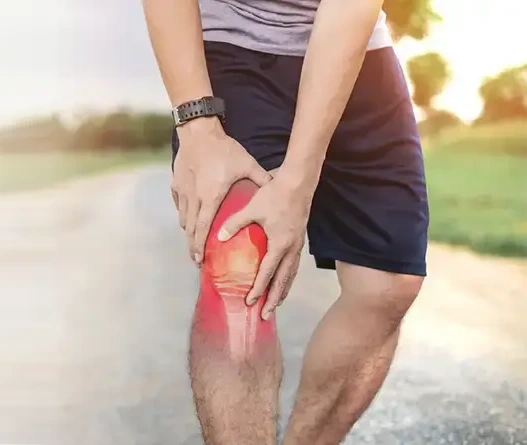
Genicular Artery Embolization is a minimally invasive procedure used to relieve pain in the knee, which is, in most instances, related to knee osteoarthritis, by extinguishing the abnormal blood vessels adding to the inflammatory processes of the lining of the knee joint, known as the synovium.
Advanced osteoarthritis can lead to increasing amounts of inflammation within the knee, and, as a consequence, the abnormal growth of accessory blood vessels in the regions of the inflammation can develop. These blood vessels may be associated with pain pathways and ongoing inflammatory signals. GAE works by selectively reducing blood flow in those abnormal, inflamed micro-vessels while preserving the overall blood supply needed for healthy tissues. It acts to reduce pain caused by inflammation and thereby improves function.
It is not “joint replacement,” it does not change your bone structure directly, and it does not mechanically rebuild cartilage. Rather, it targets one important driver of pain-inflammation supported by abnormal vascularity. Because GAE is performed through a small puncture and guided with imaging, many patients opt for it as a non-surgical option when they need pain relief but prefer to avoid or delay knee replacement surgery.
How Genicular Artery Embolization Works
The question many patients ask is, “How can reducing blood flow reduce knee pain?” The answer has to do with the relationship between inflammation and abnormal vascular growth. In most cases of osteoarthritis, the lining of the knee joint becomes inflamed and develops increased micro vascularity. Those abnormal vessels can maintain inflammation and are often associated with pain signaling.
The process of Genicular Artery Embolization in Jaipur generally involves this concept:
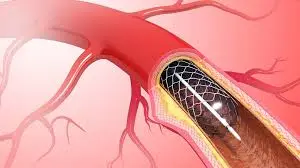
The interventional radiologist accesses an artery through a tiny puncture, often at the groin area or wrist, depending on technique and suitability. Guided by real-time imaging, a thin catheter is advanced to the arteries supplying the knee region, called the genicular arteries. The doctor then identifies small branches that show abnormal vascularity linked to inflamed synovium.
With the confirmation of the target vessels, very small embolic particles are delivered that selectively reduce blood flow in those abnormal vessels. This controlled reduction aims to decrease inflammation-driven pain over time. Because the treatment is precise and image-guided, it is designed to minimize impact on normal blood supply.
After GAE, many patients experience gradual improvement. People might notice improvement in a couple of days to a couple of weeks, and then there might be more pronounced improvement over several weeks with reduced inflammation and increased mobility.
Genicular Artery Embolization Treatment In Jaipur: Who Can Benefit?
GAE is recommended for patients suffering from chronic knee pain primarily driven by osteoarthritis issues when conventional methods offer marginal relief. Many patients exploring the option of genicular artery embolization treatment in Jaipur fit into one of the following scenarios: They have knee pain in walking, climbing stairs, getting up from sitting to standing position, or at night in sleeping position. They have undergone physiotherapy, made some lifestyle modifications, and taken medications but got limited relief.
They underwent knee injections: lubrication injection or steroid injection, and got short-term relief or relief that was insufficient. Such patients want to avoid knee replacement surgery or are Planning to avoid knee replacement surgery. Such patients might Not be suitable candidates for surgery due to several reasons like older age/medical conditions/preference of patients. The GAE treatment shall attract these patients as it offers a faster recovery period compared to other surgeries. But optimum results are usually obtained by appropriate selection of candidates through clinical examination and imaging, and by care during planning of embolization. GAE in RH serves to control the repeated bleeding into the knee joint by targeting and sealing the small abnormal vessels responsible for the bleed.
It helps reduce episodes of knee swelling and pain caused by recurrent blood accumulation. In cases of RH which persist following knee surgery, such as total knee replacements, or in which conservative treatment has failed, GAE may prove to be highly beneficial. Its non-invasive nature makes it highly conducive to speedy recovery and may even preclude subsequent surgeries.
Benefits & Recovery after Genicular Artery Embolization
Among the top reasons patients decide to have Genicular Artery Embolization In Jaipur is the recovery experience. Compared with major surgery, GAE is minimally invasive and usually has fewer limitations during recovery.
Advantages of GAE (in real-life terms)
For many patients, the big benefit is a meaningful reduction in pain that allows improved walking, improved confidence in movement, and better participation in physiotherapy or strengthening routines.
Another key benefit is the fact that the GAE procedure is done via a small puncture incision as opposed to an open incision in regular surgery. This means shorter healing times and the ability to return to normal daily activities sooner. In some instances, the GAE procedure may be used in patients wanting to delay knee replacement surgery, especially in the event the patient is not ready to undergo the procedure.
It can be considered for one knee or both knees, based on symptoms and clinical suitability, although treatment planning is personalized.
What Recovery Feels Like
After GAE, many patients experience mild discomfort around the access site and sometimes temporary knee soreness. Most people find recovery easier than with surgery but still need rest and proper care.
While some patients may realize an improvement in pain sooner, others may realize gradual improvement over several weeks. The overall objective is to reduce pain intensity and facilitate functional movement.
Typical recovery routine
A patient is usually advised to resume normal gentle ambulation and mobilization, but the patient should avoid heavy exercise for a short while. Your physician will give you specific directions about your activities, fluid, and medications for the short term.
Physiotherapy and strengthening measures have often been recommended after pain begins improving because stronger muscles around the knee help support better long-term function. A highly structured rehab plan augmented with GAE can yield good results rather than relying upon the procedure per se in many patients.
Does Genicular Artery Embolization Really Work?
This is the most important question-and it should be answered honestly and straightforwardly.
GAE should be utilized to reduce pain through inflammation by targeting abnormal blood vessels in the knee. Many patients report reduced pain and improved function after the procedure, especially those with osteoarthritis-related symptoms and inflammation patterns matching what GAE would treat.
However, “work” can mean different things for different patients: some want complete pain relief, while others want enough relief to walk comfortably, reduce dependency on pain medicines, or delay surgery. For many, even a partial reduction in pain can be life-changing because it restores mobility and daily independence.
Results may vary based on a number of factors, including, but not limited to, the stage of osteoarthritis, source of the pain, body weight and lifestyle factors, adherence to physiotherapy, and whether an inflammation-driven pain is a big contributor. That is why evaluation is so important. If pain is mostly mechanical due to severe bone changes or other structural problems, improvement may be more limited.
The best is a detailed consultation where symptoms, imaging, and goals are aligned. Under Dr. Rakesh Kumar Kumawat, patients coming for Genicular Artery Embolization Treatment in Jaipur are guided regarding realistic expectations and whether GAE fits their condition.
Why Might I Need Genicular Artery Embolization?
It is recommended that you try Genicular Artery Embolization (GAE) if your issue with knee pain is a long-term problem, as well as if the pain is not reducing significantly with treatment. The most frequent reasons for which people in Jaipur search for GAE as a treatment solution for their knee pain.
– Pain due to knee osteoarthritis that prevents people from doing their daily tasks.
– Already undergoing physio and pain meds, but still in pain.
– Looking for a least invasive path to avoid or postpone knee replacement.
– Not being ideal surgery candidates due to age, other health problems, or choice.
– Desiring improved pain management in order to fully participate in physiotherapy and strength exercises. For many people the goal of treatment may not only be “less pain” but “more life.” The possibility of walking without any concern and pain, going up and down stairs without any pain, and sleeping soundly at night are often big factors regarding the quality of their life.
How Do I Get Ready for Genicular Artery Embolization?
Preparation is essential to ensure I remain safe and comfortable before undergoing Genicular Artery Embolization. The steps to prepare for this procedure are similar to those followed in Jaipur and consist of evaluation, imaging tests when necessary, lab tests when required, and a discussion about my medications.
Step 1: Talk and confirm the diagnosis
An extensive conversation would involve your pain, its duration, presenting factors that trigger it, you’re walking ability, your swelling, stiffness, and your response to current therapies. It is for your physician to decide if your pain pattern is similar to that associated with osteoarthritis-related inflammation.
Step 2: Examine Radiology Views
X-rays or, if recommended, an MRI can give some indication as to how progressed the osteoarthritis is, as well as rule out other pain-causing sources. The results can help determine the treatment plan, which can help prevent GAE from being the wrong treatment for you.
Step 3: Review medication and health information
The first your previous medical history, any allergies you have, the medications you take (especially the blood thinners), diabetes, blood pressure problems, renal issues, and previous surgery experiences would also be discussed. Step
Step 4: Getting ready for the procedure
For the surgical abortion procedure, there is the requirement to fast for some hours, depending on the sedation technique used. You can wear clothes suitable for going back home. For your brief recovery period, your activities should be light.
Step 5: Planning for recovery
You require resting for the first two days, heavy fluid intake, light and healthy food intake, and as directed, taking pain medications if prescribed. There is the aspect of avoiding heavy exercises for the brief recovery period, yet later on, there is the need to start exercises like walks.
Safety, Side Effects, and Expectations GAE is considered to be minimally invasive, yet like all other proceedings, there is the presence of some level of risk.
However, serious complications are unlikely but possible should embolic particles find themselves in the wrong area; the reason precise techniques and accurate imaging are cardinal. The presence of an experienced interventional radiologist and following post-procedure instructions will go a long way to lower the risks.
Your doctor will point out warning signs to watch for, such as increasing swelling, severe pain, fever, worsening redness, or other unusual symptoms you must watch for that would indicate the need to seek urgent care or call the clinic.
Why Choose Dr. Rakesh Kumar Kumawat?
When you come to us for Genicular Artery Embolization (GAE) in Jaipur, you are dealing with a lot more than a medical treatment. There’s knowledge, future planning, and post-procedure care involved as well. Dr. Rakesh Kumar Kumawat refers to a much more patient-friendly approach which also involves:
– Assessment and feedback about whether you’re a right candidate for GAE treatment solutions.
– Image-guided, precise treatment for safely targeting pathologies in blood flow.
– A realistic recovery plan to help you recover quickly and regain your daily activities.
– Providing continuous support and assistance regarding the healing process. If you are looking at Genicular Artery Embolization Treatment in Jaipur or Genicular Arteries Embolization in Jaipur, it is recommended that you go in for a consultation. This is because it enables you to determine whether your pattern of knee pain is amenable to treatment by embolization and to what degree.
Frequently Asked Questions
1) What is Genicular Artery Embolization (GAE)?
Genicular Artery Embolization is an image-guided procedure that is minimally invasive with the end goal of relieving abnormal blood flow, which leads to knee inflammation, then to knee pain from osteoarthritis.
2) Who is the best Genicular Artery Embolization Doctor in Jaipur?
Generally, the patient encounters the doctor as they need the services of the doctor for GAE in Jaipur, which is Dr. Rakesh Kumar Kumawat, Vascular & Interventional Radiologist, for his expertise in carrying out the procedure of minimally invasive embolization.
3) What conditions can GAE help treat?
Primarily: specifically dealing with knee pain resulting from osteoarthritis, which does not respond to conservative treatment offered by the patient, as his knee inflammation AMHAI
4) How does GAE reduce knee pain?
GAE targets abnormal small blood vessels that support inflammation in the knee lining. By reducing this abnormal flow, inflammation-related pain may decrease over time.
5) Is Genicular Artery Embolization Treatment in Jaipur a surgery?
No. GAE is minimally invasive and performed through a tiny puncture using a catheter under imaging guidance. It is not open surgery and does not involve joint replacement.
6) Is Genicular Artery Embolization effective?
Most patients will have a significant reduction in pain and improvement of function when the pain of osteoarthritis is related to inflammation. The degree of success will be dependent upon the stage of the disease and how vigorously the rehab is pursued.
7) How long is the recovery time for GAE?
In most cases, it’s possible to return to light activity fairly quickly. It is generally quicker than after surgical treatment, although this can vary according to your overall health and pain condition.
8) Is the process of dialysis painful?
During the process, any pain will be addressed with medication and local analgesics. Thereafter, you can experience a certain degree of pain, and pain relief will be given as needed.
9) Can GAE delay knee replacement?
Patients who have not progressed to the stage where they require a knee replacement surgery may benefit from GAE in managing their pain and limitations in a manner that will put off their surgery.
10) Which patients should not have GAE?
People whose knee pain is driven largely by conditions other than osteoarthritis-related inflammation, or those who have an active infection or certain vascular conditions, may not be ideal patients. Evaluation by consultation with imaging study is important.
11) What should be done for preparation prior to undergoing Genicular Artery Embolization surgery at Jaipur?
Commonly, it will entail a pre-procedure consultation, a review of your images, a review of your medications, especially blood thinners, and following their guidelines related to the process, for instance, fasting.
12) What are the risks or side effects of GAE?
There might be bruising at the puncture site and a slight ache in the short term. Though rare, complications might arise, and this is why GAE has to be performed under the skillful care of an interventional radiologist and follow-up treatment.