Do I Need a Colour Doppler Test Before Varicose Vein Treatment?
Varicose veins are enlarged veins that commonly appear on the legs. They may cause aching, heaviness, swelling, itching, or visible changes in the skin. If you are considering treatment, you may wonder whether a Colour Doppler test is necessary before choosing a procedure. Varicose Vein Laser Treatment In Jaipur may be considered for suitable patients after proper clinical assessment and ultrasound evaluation.
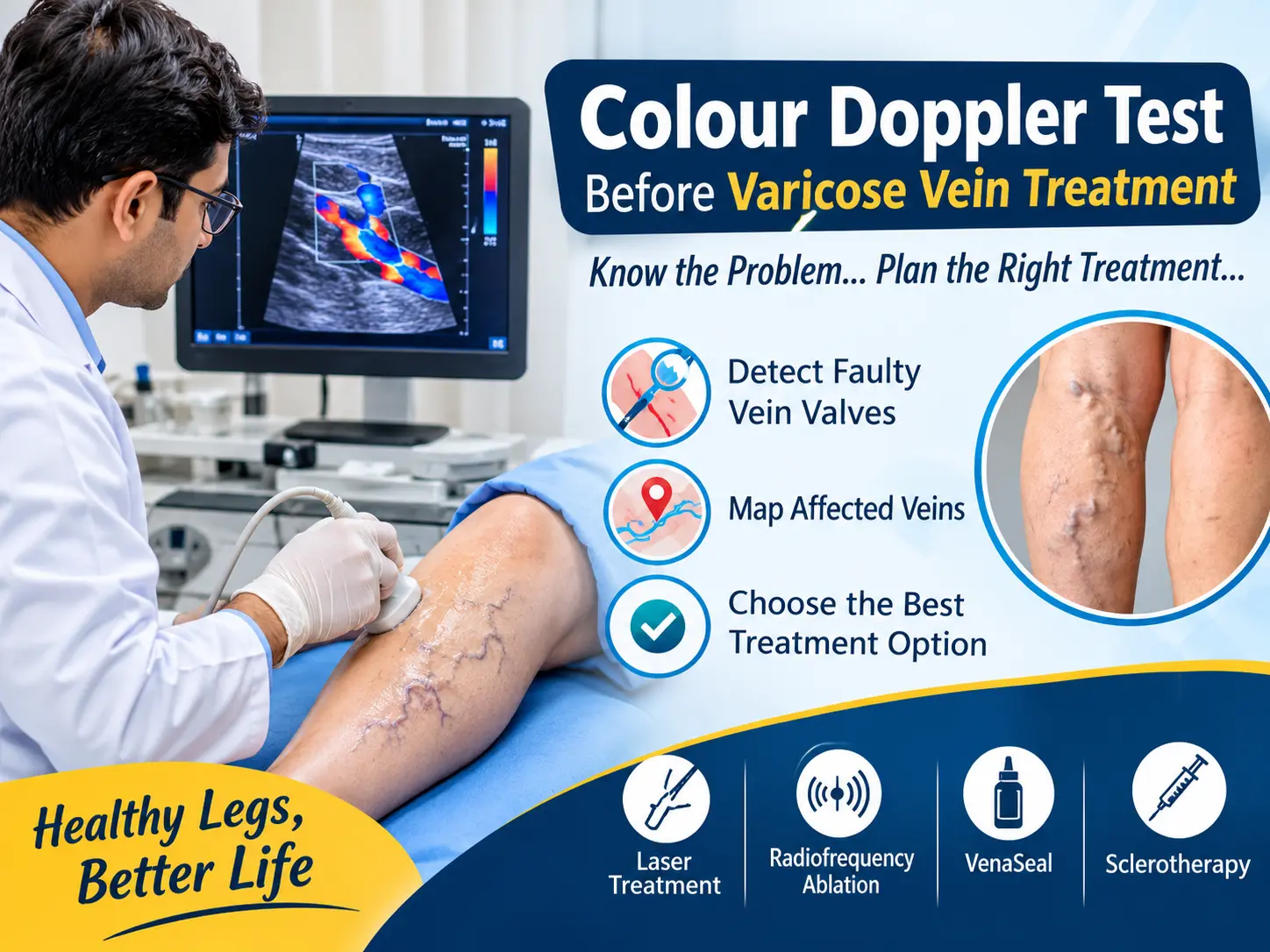
Colour Doppler ultrasound is an important investigation for many patients being evaluated for varicose vein treatment. It helps doctors assess blood flow, identify faulty vein valves, and determine which veins may be responsible for the symptoms.
However, the need for testing depends on your symptoms, examination findings, and the treatment being considered. Understanding how this scan works can help you prepare for your consultation.
What Is a Colour Doppler Test for Varicose Veins?
A Colour Doppler ultrasound is a non-invasive test that uses sound waves to examine blood flow through the veins. It provides information about the direction and pattern of blood movement and can help identify venous reflux.
Venous reflux occurs when blood flows backwards through a vein because its valves are not functioning properly. This can increase pressure in the veins and contribute to varicose veins and related symptoms.
Unlike an X-ray, Doppler ultrasound does not use ionising radiation. The examination generally involves applying gel to the skin and moving an ultrasound probe over the affected leg.
Why Do Doctors Recommend Doppler Ultrasound?
1. To Identify Faulty Vein Valves
Healthy vein valves help blood travel towards the heart. When these valves fail to close properly, blood can flow backwards and collect in the lower legs.
Doppler ultrasound helps doctors identify the location and extent of this reflux.
2. To Map the Affected Veins
Not every visible vein is responsible for the underlying problem. Ultrasound can help map the veins and identify which sections may require treatment.
This information is useful when planning procedures such as endovenous laser treatment or radiofrequency ablation.
3. To Help Choose the Right Treatment
Different vein problems may require different approaches. Depending on the findings, a specialist may discuss laser treatment, radiofrequency ablation, VenaSeal, sclerotherapy, or another appropriate option.
The choice depends on the vein anatomy, symptoms, reflux pattern, and individual medical circumstances.
4. To Investigate Other Causes of Symptoms
Leg pain and swelling are not always caused by varicose veins. Ultrasound may be used to investigate suspected venous conditions, including a possible blood clot, when clinically indicated.
Sudden swelling or pain in one leg requires urgent assessment rather than routine elective testing.
How Is the Colour Doppler Test Performed?
The examination usually takes place in an ultrasound room.
First, the sonographer or clinician applies gel to the skin. An ultrasound probe is then moved over the leg to assess the veins and blood flow.
You may be asked to stand or change position during parts of the examination because gravity can help reveal venous reflux. The duration depends on the complexity of the assessment.
The test is generally painless, although slight pressure from the probe may cause discomfort if the leg is already tender.
Can Varicose Veins Be Treated Without Traditional Surgery?
Yes. Several minimally invasive treatments are available for suitable patients.
Endovenous laser treatment (EVLT) uses heat delivered through a catheter to close a selected diseased vein.
Radiofrequency ablation uses controlled heat to close an affected vein.
VenaSeal uses a specialised medical adhesive to close a targeted vein in appropriate patients.
Sclerotherapy involves injecting a solution or foam into selected veins.
Colour Doppler findings help determine whether these treatments are appropriate and which veins should be targeted. Not every patient needs a procedure, and treatment should be based on symptoms and clinical findings.
For suitable patients, Varicose Vein Laser Treatment In Jaipur may be an option depending on the Doppler findings and individual vein condition.

What Should You Do Before Your Scan?
Follow the instructions provided by your imaging centre. In many cases, no special preparation is required.
Tell your clinician about previous vein procedures, current medications, relevant medical conditions, and any history of blood clots. Bring previous ultrasound reports if available.
Do not delay urgent medical assessment if you develop sudden leg swelling, significant pain, warmth, or redness.
Conclusion
A Colour Doppler test can provide valuable information before varicose vein treatment by identifying faulty valves, mapping affected veins, and helping doctors plan an appropriate procedure.
If you have persistent leg heaviness, swelling, aching, or visible varicose veins, a clinical assessment can help determine whether ultrasound is necessary and which treatment options may suit your condition.
Consulting an experienced specialist can help you understand whether Varicose Vein Laser Treatment In Jaipur is appropriate for your symptoms and ultrasound findings.
Frequently Asked Questions
1. Is Colour Doppler ultrasound necessary before laser treatment for varicose veins?
It is commonly used to assess venous reflux and map the affected veins before endovenous treatment. Your clinician can confirm the investigations required for your case.
2. Is a Colour Doppler test painful?
The test is generally painless and does not involve needles. Some pressure may cause mild discomfort over a tender area.
3. How long does a leg Doppler test take?
The duration varies with the examination and complexity of the vein assessment. Your imaging centre can provide an estimate.
4. Can Doppler ultrasound detect a blood clot?
Venous ultrasound can help detect deep vein thrombosis when performed for that purpose. Suspected DVT requires prompt clinical assessment.
5. Does every patient with varicose veins need laser treatment?
No. Treatment depends on symptoms, examination findings, ultrasound results, and personal circumstances. Some patients may be managed with conservative measures, while others may benefit from a procedure.