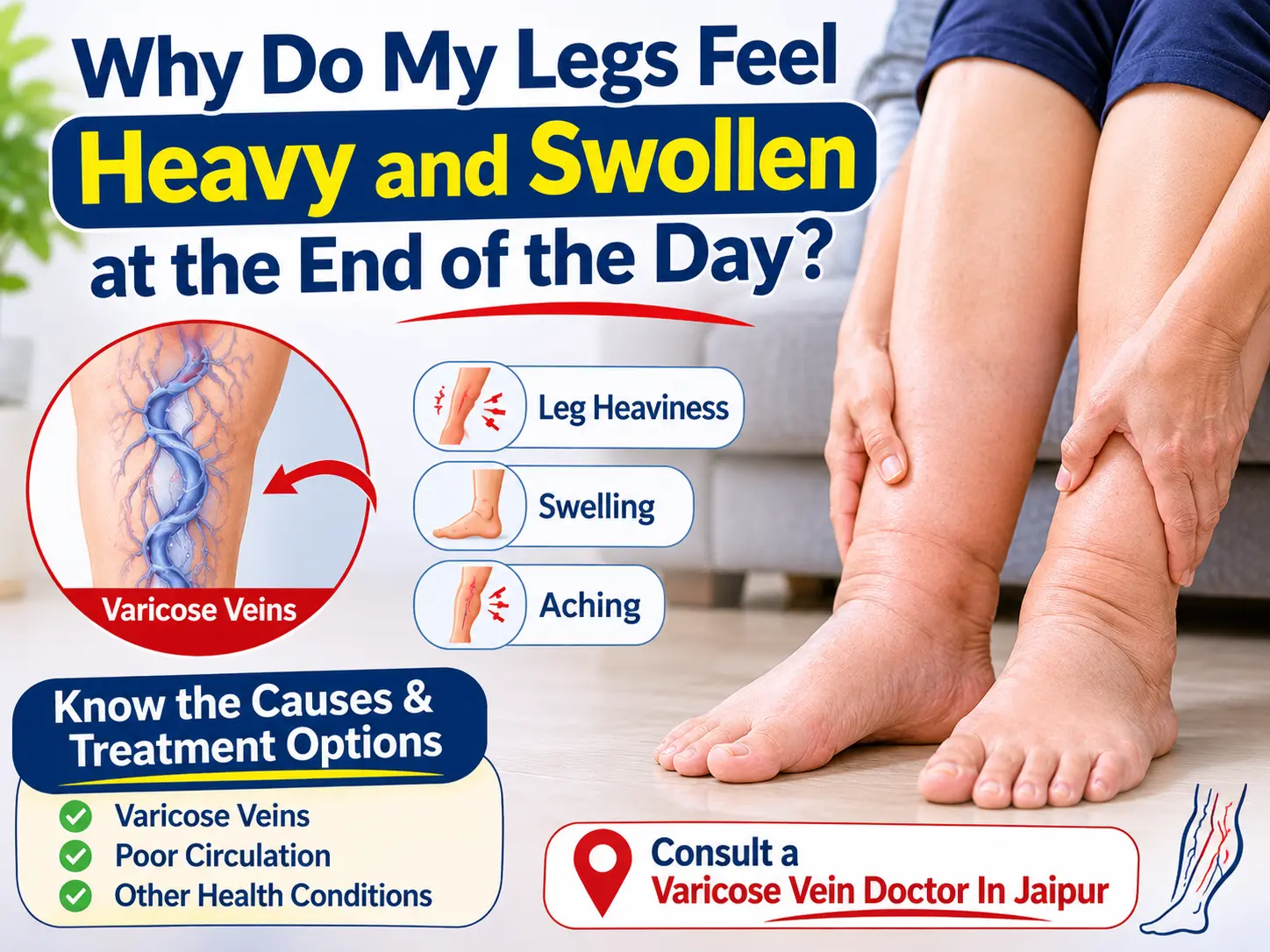
Why Do My Legs Feel Heavy and Swollen at the End of the Day?
Do your legs feel tired, heavy, or swollen after a long day at work? You may notice tightness around your ankles, discomfort while standing, or sock marks that become more noticeable in the evening. These symptoms can occur after prolonged sitting or standing, but they may also indicate an underlying medical condition. If symptoms persist, consulting a Varicose Vein Doctor In Jaipur can help assess whether a vein-related problem may be responsible.
One possible cause is a problem with the veins that return blood from the legs to the heart. However, leg swelling can also be associated with medications, injury, lymphatic problems, and conditions affecting the heart, kidneys, or liver.
Understanding the possible causes can help you recognise when simple changes may help and when medical assessment is necessary.
Why Do Legs Become Heavy and Swollen?
Gravity naturally encourages fluid to collect in the lower legs when you remain upright for long periods. Normally, leg muscles and veins help move blood back towards the heart.
When this process becomes less efficient, fluid may accumulate in surrounding tissues. This can produce swelling, heaviness, tightness, or aching.
The reason varies from person to person, so persistent or unexplained swelling should not automatically be attributed to varicose veins.
5 Common Causes of Heavy and Swollen Legs
1. Chronic Venous Insufficiency
Chronic venous insufficiency occurs when the veins have difficulty returning blood effectively towards the heart. Faulty valves can allow blood to flow backwards and increase pressure within the veins.
Symptoms may include ankle swelling, aching, heaviness, visible varicose veins, and skin changes. Discomfort may worsen after standing or sitting for a long time. A Varicose Vein Doctor In Jaipur can evaluate these symptoms and recommend appropriate investigations when venous disease is suspected.
2. Prolonged Sitting or Standing
Remaining in one position for hours can reduce the normal action of the calf muscles that help move blood through the veins.
Taking regular movement breaks and walking comfortably may help reduce temporary swelling. Persistent symptoms, however, may need further assessment.
3. Deep Vein Thrombosis
Deep vein thrombosis (DVT) occurs when a blood clot forms in a deep vein, usually in the leg. It can cause pain, swelling, warmth, or redness, often affecting one leg.
DVT can be dangerous because a clot may travel to the lungs. Sudden one-sided swelling or pain requires urgent medical evaluation, particularly after surgery, prolonged immobility, or a long journey.
4. Lymphatic Problems
The lymphatic system helps remove excess fluid from tissues. When lymph drainage is impaired, swelling can develop in the legs.
Lymphatic swelling may persist and can sometimes affect the feet and toes. A clinician can assess whether this or another condition is responsible.
5. Medication or Other Health Conditions
Certain medicines and medical conditions can contribute to leg swelling. These include some blood pressure medications and conditions affecting the heart, kidneys, or liver.
Do not stop prescribed medication yourself. Seek medical advice to determine whether your treatment or health needs reassessment.
How Can You Reduce Leg Heaviness and Swelling?
The appropriate approach depends on the cause. If symptoms are mild and related to prolonged sitting or standing, the following measures may help:
Move regularly: Take short walking breaks and avoid remaining in one position for extended periods.
Elevate your legs: When resting, support your legs comfortably if this helps reduce swelling.
Stay physically active: Gentle walking activates the calf muscles and supports normal circulation.
Avoid restrictive clothing: Choose comfortable clothing that does not unnecessarily constrict the legs.
Discuss compression stockings: These may help certain people with venous disease, but medical advice is important when the cause of swelling is unclear or arterial circulation may be impaired.
Do not rely on home measures alone if swelling is persistent, unexplained, or getting worse.
How Do Doctors Diagnose the Cause?
The assessment may include a review of when swelling started, whether one or both legs are affected, your medications, and any associated symptoms.
A physical examination helps identify visible veins, skin changes, tenderness, and the pattern of swelling.
A Colour Doppler ultrasound may be used to assess blood flow and investigate suspected venous reflux or a blood clot. Other tests may be required if the clinician suspects a lymphatic problem or a condition affecting another organ. A Varicose Vein Doctor In Jaipur may recommend a Doppler examination when symptoms and clinical findings suggest an underlying vein problem.

What Treatments Are Available for Venous Problems?
If chronic venous insufficiency is confirmed, treatment depends on the affected veins, symptoms, and ultrasound findings.
Options may include activity changes, leg elevation, compression when appropriate, and minimally invasive procedures.
Endovenous laser treatment, radiofrequency ablation, VenaSeal, or sclerotherapy may be considered for selected patients, depending on the type of venous disease. These treatments address specific vein problems rather than every possible cause of leg swelling. A Varicose Vein Doctor In Jaipur can help determine which treatment options may be suitable after proper evaluation.
When Should You Seek Medical Help?
Arrange a medical appointment for persistent swelling, recurrent heaviness, skin discolouration, or symptoms that affect daily activities.
Seek urgent assessment for sudden swelling or pain in one leg, especially with warmth or redness. Call emergency services if leg symptoms occur with chest pain, sudden shortness of breath, or coughing up blood.
Conclusion
Heavy, swollen legs at the end of the day can be related to prolonged sitting or standing, venous insufficiency, lymphatic problems, medications, or other medical conditions.
Regular movement may help when symptoms are related to inactivity, but ongoing swelling deserves proper evaluation. Identifying the cause allows treatment to be tailored to your needs and helps avoid overlooking more serious conditions.
Frequently Asked Questions
1. Why are my legs swollen in the evening but better in the morning?
Fluid can accumulate in the lower legs during the day because of gravity and prolonged standing or sitting. Venous insufficiency is one possible cause, but other conditions may also contribute.
2. Can varicose veins cause heavy legs?
Yes. Varicose veins associated with venous reflux can cause heaviness, aching, and ankle swelling, particularly after long periods of standing.
3. Is walking good for swollen legs?
Gentle walking activates the calf muscles and may help circulation. However, sudden or unexplained swelling, particularly in one leg, should be assessed before assuming exercise is appropriate.
4. Do swollen legs always mean poor blood circulation?
No. Swelling may be related to venous disease, lymphatic problems, medication, injury, or other medical conditions. The cause requires assessment.
5. When should I get a Colour Doppler ultrasound for leg swelling?
A clinician may recommend ultrasound when symptoms suggest venous reflux or a blood clot. Sudden one-sided swelling or pain requires urgent evaluation rather than waiting for a routine appointment.