Why Some Chronic Pain Patients Benefit from Interventional Pain Management
Chronic pain can affect almost every part of daily life. Walking, working, sleeping, climbing stairs, exercising, or even sitting comfortably may become difficult when pain continues for months. Many people initially rely on painkillers, rest, physiotherapy, or home remedies. These approaches can be useful, but what happens when the pain keeps returning despite routine treatment?
For selected patients, interventional pain management provides another approach. Instead of focusing only on temporary symptom relief, it aims to identify the likely pain source and, when appropriate, use targeted procedures to interrupt or modify specific pain pathways. A Pain Management Specialist Doctor In Jaipur can assess persistent pain and help determine whether a targeted treatment approach may be appropriate.
Interventional treatments are not necessary for every patient, but they can become useful when chronic pain continues to significantly affect function and quality of life.
What Is Chronic Pain?
Pain is considered chronic when it continues beyond the expected healing period, commonly for three months or longer.
Chronic pain may develop from osteoarthritis, nerve irritation, previous injuries, spinal disorders, joint problems, inflammation, or several factors occurring together.
Unlike acute pain, which often improves as an injury heals, chronic pain can become more complicated. The original tissue problem may remain, but changes in nerves, muscles, movement patterns, and pain processing can also influence symptoms.
This is why simply prescribing stronger painkillers may not always provide a long-term solution.
What Is Interventional Pain Management?
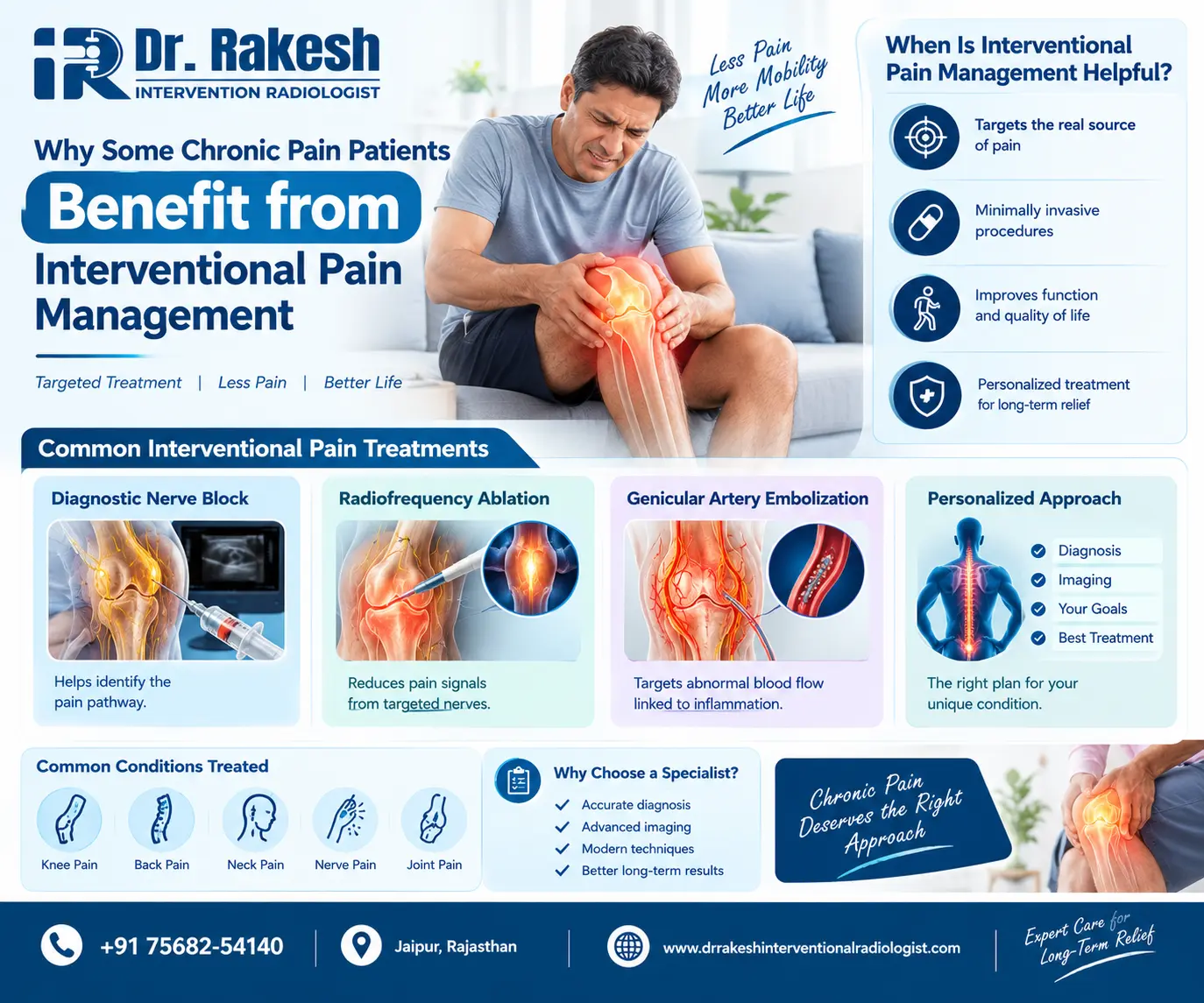
Interventional pain management uses targeted diagnostic and therapeutic procedures to evaluate or manage persistent pain.
Depending on the condition, these may include image-guided injections, diagnostic nerve blocks, radiofrequency procedures, and other minimally invasive techniques.
Rather than treating all chronic pain in the same way, the approach asks an important question:
Which structure or pain pathway is most likely responsible for this patient’s symptoms?
Once the likely pain generator is identified, treatment can be personalized accordingly.
Why May Painkillers Become Insufficient?
Pain medication can play an important role in managing acute and chronic pain. However, repeatedly taking medication without reassessing persistent symptoms may not address the underlying problem.
A patient with chronic knee pain, for example, may have osteoarthritis combined with inflammation, muscle weakness, and pain transmitted through specific sensory nerves. Patients seeking Knee Pain Treatment In Jaipur may need an assessment to identify these contributing factors before an appropriate treatment plan is selected.
Medication may temporarily reduce discomfort, but the pain can return when its effect wears off.
Long-term use of some medicines can also produce side effects, particularly in patients with certain kidney, liver, stomach, cardiovascular, or other medical conditions.
The objective of pain management is therefore not simply to eliminate medication but to avoid relying on medication as the only strategy.
Diagnostic Procedures Can Help Identify Pain Pathways
One advantage of interventional pain management is that certain procedures can provide diagnostic information.
For example, patients with chronic osteoarthritis-related knee pain may be evaluated with a genicular nerve block.
During this procedure, medication is placed near selected sensory nerves around the knee. If the patient’s familiar pain temporarily decreases after the block, the response may suggest that these nerves are significantly involved in transmitting pain.
This information can help guide further treatment decisions.
However, a diagnostic block does not mean that the underlying arthritis has disappeared. It evaluates a pain pathway rather than repairing damaged cartilage.
What Is Radiofrequency Ablation?
For selected patients who respond appropriately to diagnostic evaluation, radiofrequency ablation (RFA) may be considered.
RFA uses controlled radiofrequency energy near targeted sensory nerves to reduce pain transmission.
For chronic knee pain, genicular nerve radiofrequency ablation may help selected patients whose pain is being transmitted through these nerves.
The treatment does not rebuild cartilage or cure osteoarthritis. Nerves can also recover over time, so pain relief may not be permanent.
Patient selection remains important for achieving appropriate results.

What About Genicular Artery Embolization?
Some patients with symptomatic knee osteoarthritis may have an inflammatory component contributing to persistent pain.
Genicular Artery Embolization (GAE) is a minimally invasive, image-guided treatment that targets abnormal increased blood flow associated with inflammation around selected painful areas of the knee.
An interventional radiologist guides a thin catheter through blood vessels to selected genicular arteries and delivers tiny embolic particles.
GAE works through a different mechanism from a genicular nerve block or nerve ablation. It targets abnormal vascularity associated with inflammation rather than directly targeting sensory nerves.
It is not appropriate for every patient, and research continues regarding long-term outcomes and optimal patient selection.
Who May Benefit From Interventional Pain Management?
Patients may be evaluated for interventional treatment when pain continues despite appropriate conservative care and significantly affects everyday activities.
Examples include persistent pain that limits walking, prevents comfortable stair climbing, interrupts sleep, repeatedly returns after medication, or makes normal work and exercise difficult.
Before recommending a procedure, specialists may review previous treatments, physical examination findings, X-rays or other imaging, pain patterns, and overall health.
Not everyone with chronic pain requires an intervention. Physiotherapy, strengthening, lifestyle modification, medication, and treatment of the underlying disease may remain the most appropriate approach for many people.
Why Personalized Pain Treatment Matters
Two patients with similar X-rays can experience dramatically different symptoms.
One person may have substantial structural changes with limited pain, while another may experience significant discomfort despite relatively mild imaging findings.
Modern pain management therefore focuses increasingly on pain mechanisms and functional limitations, not imaging alone.
The goal is to combine appropriate conservative treatment with targeted interventions only when they are likely to provide meaningful benefit.
For chronic pain patients who have tried routine treatments without adequate improvement, specialist assessment can help determine whether an interventional approach deserves consideration. A Pain Relief Doctor In Jaipur can help evaluate persistent symptoms and discuss suitable options based on the underlying cause.
Frequently Asked Questions
1. What conditions can interventional pain management treat?
It may be considered for selected cases of chronic knee pain, back pain, neck pain, nerve-related pain, joint pain, and other persistent pain conditions depending on the underlying diagnosis.
2. Does interventional pain management mean surgery?
No. Many interventional pain procedures use needles, imaging guidance, or small access points rather than major surgical incisions.
3. Can a nerve block permanently cure chronic pain?
Usually not. A diagnostic nerve block generally provides temporary effects and may help determine whether specific nerves contribute to the pain.
4. Is radiofrequency ablation suitable for every chronic knee pain patient?
No. Suitability depends on the cause of pain, clinical findings, previous treatments, and response to appropriate diagnostic evaluation.
5. When should I see a pain management specialist?
Consider specialist evaluation when pain persists for months, repeatedly returns despite treatment, disturbs sleep, limits mobility, or significantly interferes with work and normal daily activities.