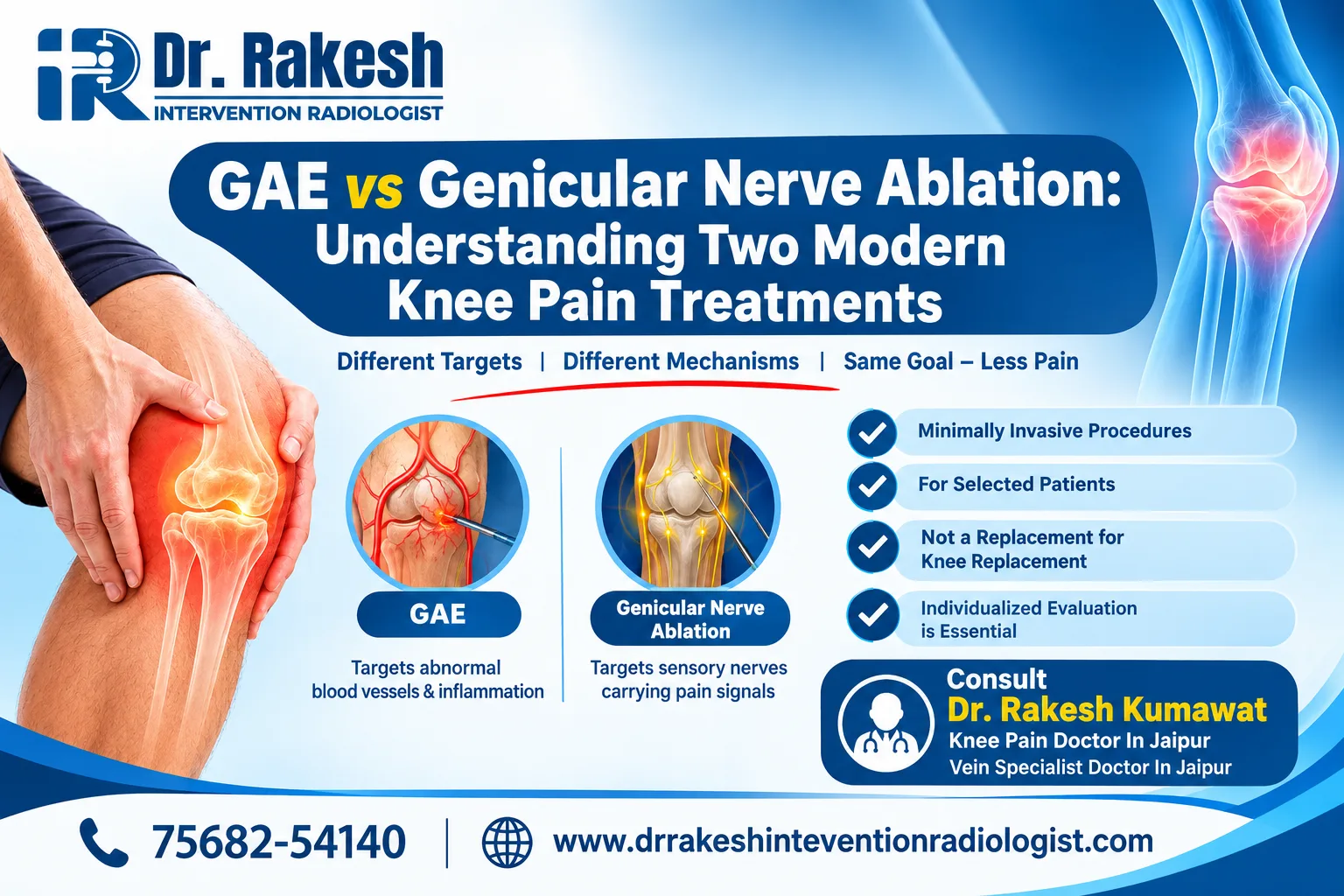
GAE vs Genicular Nerve Ablation: Understanding Two Modern Knee Pain Treatments
Chronic knee pain can make walking, climbing stairs, exercising, and even sleeping uncomfortable. While medicines, physiotherapy, weight management, and lifestyle changes remain important treatments, some patients continue to experience persistent pain. When knee replacement is not immediately required or a patient wants to explore minimally invasive options, procedures such as Genicular Artery Embolization (GAE) and Genicular Nerve Ablation may be considered.
Although both procedures can help selected patients with chronic knee pain, they work very differently. Understanding GAE vs Genicular Nerve Ablation can help patients have a more informed discussion with their specialist. Patients looking for a Genicular Artery Embolization Doctor In Jaipur can discuss their symptoms and treatment options with an experienced specialist.
What Is Genicular Artery Embolization?
Genicular Artery Embolization is a minimally invasive, image-guided procedure primarily studied for symptomatic knee osteoarthritis.
Osteoarthritis is not simply cartilage wear. In some patients, inflammation within the knee is associated with increased abnormal blood flow around the joint. These small blood vessels can contribute to ongoing inflammatory activity and pain.
During GAE, an interventional radiologist inserts a thin catheter into an artery, usually through a small puncture. Using imaging guidance, the catheter is directed toward selected genicular arteries supplying areas of abnormal vascularity around the painful knee.
Tiny embolic particles are then delivered to reduce this abnormal blood flow. The goal is to decrease inflammation-related pain while preserving normal circulation.
GAE does not replace damaged cartilage or reverse advanced arthritis. Instead, it targets a vascular and inflammatory component of osteoarthritis in appropriately selected patients.
What Is Genicular Nerve Ablation?
Genicular Nerve Ablation, commonly performed using radiofrequency energy, takes a different approach.
Several sensory nerves around the knee, known as genicular nerves, transmit pain signals from the joint to the brain. During genicular nerve ablation, needles are positioned near selected nerve branches using imaging guidance.
Radiofrequency energy is then used to disrupt pain transmission through these targeted nerves.
Before ablation, some patients undergo a genicular nerve block. Local anesthetic is placed around the target nerves to assess whether temporarily blocking them provides meaningful pain relief. A positive response may help determine whether nerve ablation could be appropriate. Patients exploring Genicular Nerve Block Treatment In Jaipur should undergo an appropriate clinical assessment to determine whether this approach may suit their condition.
Like GAE, nerve ablation does not rebuild cartilage or cure osteoarthritis.
GAE vs Genicular Nerve Ablation: What’s the Main Difference?
The biggest difference is what each treatment targets.
GAE targets abnormal blood vessels associated with inflammation around an osteoarthritic knee. Genicular nerve ablation targets sensory nerves responsible for carrying pain signals.
Therefore, these treatments address knee pain through different biological mechanisms.
A patient whose symptoms appear strongly associated with inflammatory osteoarthritis may be evaluated differently from someone whose chronic joint pain responds significantly to a diagnostic genicular nerve block.
Neither procedure should automatically be considered better for every patient.
Who May Be Considered for GAE?
GAE may be evaluated for patients experiencing persistent knee pain associated with osteoarthritis, particularly when conservative treatments have not provided adequate improvement.
Patient selection is important. Clinical examination and imaging are typically reviewed before recommending treatment.
GAE may not be appropriate for every type of knee pain. Pain caused primarily by acute ligament injuries, fractures, severe mechanical instability, infection, or certain other conditions requires different management.
Who May Be Considered for Genicular Nerve Ablation?
Genicular nerve ablation may be considered for selected patients with chronic knee pain when conventional treatments have not provided sufficient relief.
A diagnostic nerve block may sometimes be performed first to evaluate whether genicular nerves are significant contributors to the patient’s symptoms.
The treatment focuses on reducing pain transmission rather than treating inflammation or repairing structural joint abnormalities.
What About Recovery?
Both procedures are generally performed using minimally invasive techniques and usually avoid the large incision associated with major knee surgery.
Recovery recommendations depend on the procedure, individual health, and treatment response. Patients should follow their specialist’s instructions regarding walking, exercise, medications, and return to normal activities.
Results also vary. Neither GAE nor nerve ablation can guarantee permanent pain relief.
How Do Doctors Choose Between Them?
Choosing between GAE and Genicular Nerve Ablation requires more than simply measuring pain severity.
Doctors may consider the underlying diagnosis, arthritis severity, inflammation, imaging findings, location of pain, previous treatments, response to nerve blocks, medical history, and functional limitations.
Sometimes the most important step is not immediately selecting a procedure but accurately identifying why the knee hurts. Patients seeking Knee Pain Treatment In Jaipur should receive an individualized evaluation to identify the cause of their symptoms and understand the available treatment options.

Modern Knee Pain Treatment Should Be Personalized
Two patients with similar knee pain scores may have very different causes of pain. This is why modern knee pain management increasingly focuses on individualized assessment.
GAE may target inflammation-related abnormal vascularity, while genicular nerve ablation focuses on pain-carrying nerves. Both can have a role in carefully selected patients, but neither is a universal alternative to knee replacement or appropriate for every painful knee.
A specialist evaluation can determine whether either procedure fits the patient’s diagnosis and treatment goals. Choosing a Genicular Artery Embolization Doctor In Jaipur can help patients discuss whether GAE is appropriate, while those considering Genicular Nerve Block Treatment In Jaipur or other options for Knee Pain Treatment In Jaipur can explore a personalized management plan based on their clinical findings.
Frequently Asked Questions
1. Is GAE the same as genicular nerve ablation?
No. GAE reduces abnormal blood flow associated with inflammation, while genicular nerve ablation targets sensory nerves transmitting knee pain.
2. Does GAE permanently cure knee osteoarthritis?
No. GAE does not regenerate cartilage or cure osteoarthritis. Its purpose is to reduce symptoms in selected patients by targeting inflammation-related vascularity.
3. How does genicular nerve ablation reduce knee pain?
Radiofrequency energy is applied near selected genicular sensory nerves to reduce their ability to transmit pain signals.
4. Can these treatments help avoid knee replacement?
Some appropriately selected patients may obtain symptom relief and delay surgery, but neither treatment guarantees that knee replacement will never be necessary.
5. Which treatment is right for my knee pain?
The appropriate option depends on the cause of pain, examination findings, imaging, arthritis severity, previous treatments, and individual medical factors. A specialist assessment is necessary before choosing either procedure.