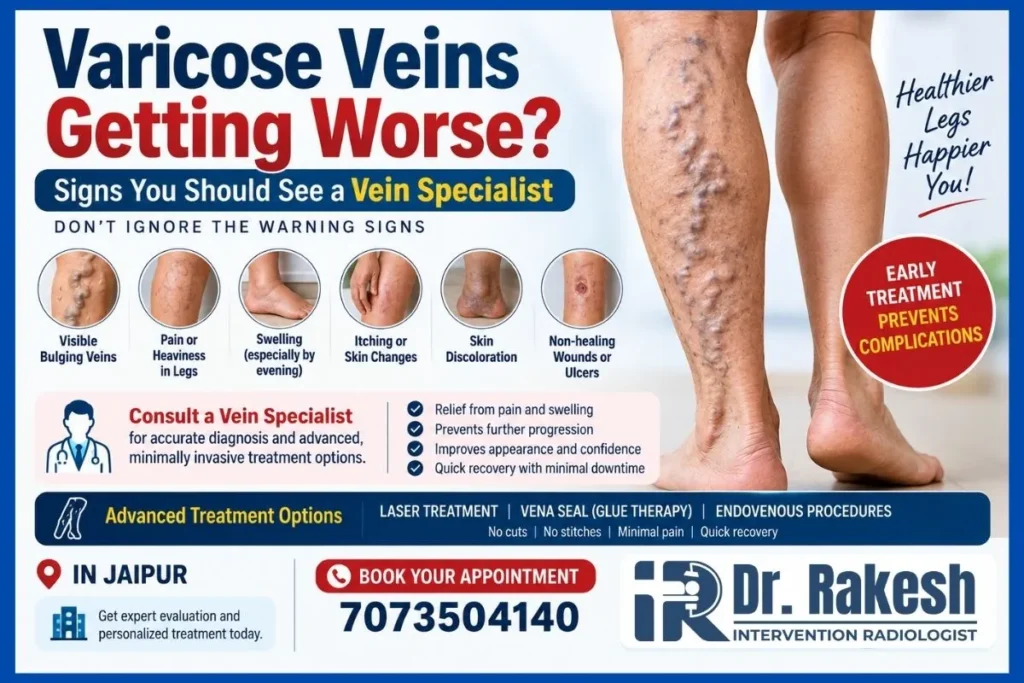
Varicose Veins Getting Worse? Signs You Should See a Vein Specialist
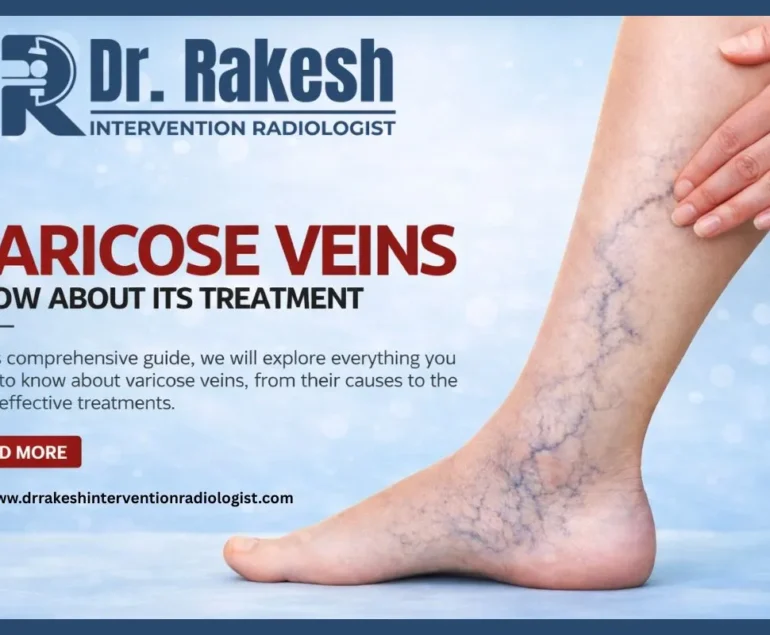
Varicose Vein Laser Treatment In Jaipur rarely change overnight. More often, the warning signs appear gradually: legs feel heavier in the evening, ankle swelling becomes frequent, itching develops around visible veins, or the skin near the ankle begins changing colour.
Because these changes happen slowly, people often adapt to them instead of recognizing that the condition may be progressing.
Varicose veins are not always simply enlarged veins. In some people, they are a visible sign of chronic venous insufficiency, where damaged vein valves allow blood to flow backward and increase pressure inside the leg veins.
Knowing which changes deserve attention can help you seek a Vein Specialist Doctor before complications develop.
The Important Question: What Has Changed?
If you have had visible veins for years, their presence alone may not tell you whether the condition is progressing.
Instead, compare your legs with six or twelve months ago.
Has swelling become more frequent? Are veins becoming larger? Does standing cause more discomfort? Have you noticed pigmentation or itching that was not present earlir?
Changes in the pattern of symptoms often provide more useful information than appearance alone.
1. Your Legs Feel Increasingly Heavy
A heavy or dragging sensation in the legs is commonly associated with venous insufficiency.
When vein valves do not close properly, gravity encourages blood to pool downward while standing. This increases venous pressure.
You may notice relatively comfortable legs in the morning but increasing heaviness toward evening. Symptoms may become particularly noticeable after prolonged standing at work or travelling.
When this pattern becomes frequent, a venous evaluation is reasonable.
2. Ankle Swelling Is Becoming a Daily Problem
Occasional swelling can occur for many reasons, but recurring swelling around the ankle deserves attention when Varicose Vein Laser Treatment In Jaipur are also present.
Persistent venous pressure can encourage fluid to move into surrounding tissues.
Initially, swelling may appear only late in the day and improve overnight. As venous disease progresses, it may become more persistent.
Importantly, swelling has several possible causes, so it should not automatically be blamed on varicose veins without evaluation.
3. The Skin Around Your Ankle Is Changing Colour
One of the clearest signs that venous disease may have moved beyond a cosmetic stage is skin change.
Long-standing venous hypertension can affect the tissues around the lower leg and ankle.
You may notice:
• Brown or darker pigmentation
• Redness
• Dryness
• Scaling
• Persistent itching
• Thickened or hardened skin
These changes suggest that abnormal venous pressure has begun affecting more than the visible vein itself.
4. Itching Has Become Difficult to Ignore
Itching around varicose veins is sometimes mistaken for dry skin.
When it repeatedly occurs around the lower leg, particularly alongside pigmentation or swelling, venous inflammation may be contributing.
Constant scratching can further damage already vulnerable skin.
Instead of repeatedly applying creams without identifying the cause, persistent itching around varicose veins should be assessed.
5. A Small Wound Is Taking Too Long to Heal
A wound around the ankle that heals unusually slowly is an important warning sign.
Advanced chronic venous insufficiency can damage skin and tissues sufficiently to produce a venous leg ulcer.
These ulcers commonly develop around the lower leg or ankle and can become recurrent without appropriate management of the underlying venous problem.
A non-healing wound should never be treated as merely a cosmetic consequence of varicose veins.
6. A Varicose Vein Has Started Bleeding
Enlarged superficial veins can sometimes lie very close to thin, fragile skin.
Minor trauma or scratching may cause bleeding. Although the amount can appear alarming, direct pressure can help control superficial bleeding while medical care is sought.
Any episode of bleeding from a varicose vein deserves specialist evaluation because the underlying vein remains abnormal even after bleeding stops.
7. Pain Is Changing From Occasional to Persistent
Early Varicose Vein Surgeon In Jaipur symptoms may involve intermittent aching after prolonged standing.
Increasingly frequent pain, throbbing, burning, tenderness, or discomfort that begins affecting walking, work, exercise, or sleep suggests that reassessment is appropriate.
The goal is not simply to prescribe pain medication. A specialist needs to determine whether venous reflux is responsible or another condition is causing the symptoms.
Why Colour Doppler Matters Before Treatment
Visible veins show where a problem appears, while Colour Doppler Ultrasound helps reveal how blood is actually flowing.
Doppler assessment can identify venous reflux, evaluate valve function, map affected superficial veins, and examine deeper venous circulation.
This information is particularly important before procedures because treatment should target the abnormal circulation responsible for symptoms rather than simply the most visible vein.
When Is Varicose Vein Laser Treatment Considered?
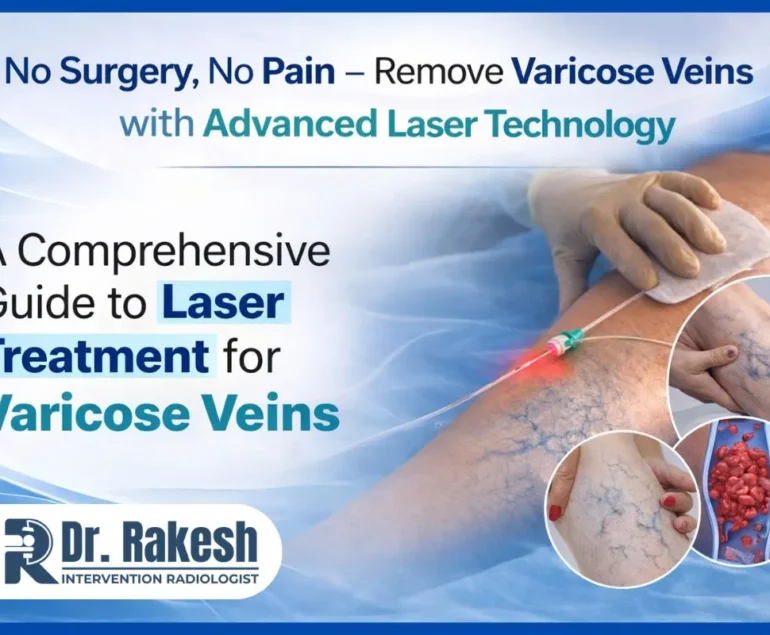
When significant superficial venous reflux is identified, suitable patients may be evaluated for Endovenous Laser Treatment (EVLT/EVLA).
Under ultrasound guidance, a thin laser fibre is positioned inside the affected vein. Controlled thermal energy closes the incompetent vein, allowing blood to redirect through functioning veins.
EVLT avoids the large incisions associated with traditional open vein surgery, although suitability depends on individual venous anatomy and clinical findings.
One Situation That Should Not Wait
Gradually worsening varicose veins and sudden leg swelling are not the same situation.
If one leg suddenly becomes significantly swollen, painful, warm, or red, prompt medical evaluation is important because Deep Vein Thrombosis (DVT) may need to be excluded.
Sudden breathlessness or chest pain requires emergency medical attention.
Vein Specialist Doctor in Jaipur
At VascuCare Diagnostics & Interventions, Dr. Rakesh Kumawat – Best Interventional Radiologist and Pain Management Specialist Doctor In Jaipur evaluates varicose veins using clinical examination and Colour Doppler assessment when appropriate.
Patients seeking a Varicose Vein Doctor in Jaipur can be evaluated for conservative management or minimally invasive treatment according to the actual pattern of venous disease.
Conclusion
The strongest warning that varicose veins are worsening is often not that the veins look larger—it is that the leg begins behaving differently.
Increasing heaviness, recurring swelling, itching, pigmentation, persistent pain, bleeding, or slow-healing wounds deserve specialist assessment. Identifying venous reflux early can help guide appropriate treatment before chronic venous disease causes more significant skin and tissue changes.
Frequently Asked Questions
1. Do varicose veins always get worse?
No. Progression varies considerably between individuals.
2. Is leg heaviness related to varicose veins?
Yes. Venous pooling can contribute to heaviness, particularly after prolonged standing.
3. Why do my ankles swell by evening?
Venous insufficiency can contribute, although other medical conditions can also cause swelling.
4. Are brown patches near the ankle concerning?
They may indicate chronic venous changes and should be evaluated.
5. Can varicose veins cause itching?
Yes. Venous inflammation and associated skin changes can cause itching.
6. Can varicose veins bleed?
Yes. Superficial enlarged veins beneath fragile skin can occasionally bleed.
7. What is a venous ulcer?
It is a chronic wound associated with prolonged venous hypertension, commonly around the lower leg.
8. Why is Colour Doppler performed?
It evaluates blood flow, venous reflux, valve function, and deeper veins.
9. Can worsening varicose veins be treated without open surgery?
Yes. Suitable patients may qualify for minimally invasive treatments such as EVLT.
10. When should I see a vein specialist?
Seek evaluation when symptoms increase or you develop recurring swelling, skin changes, bleeding, significant pain, or a non-healing wound.