How an Interventional Radiologist Treats Disease Without Major Surgery
Modern medicine has made it possible to treat many health conditions without traditional open surgery. One specialty at the center of this change is Interventional Radiology (IR).
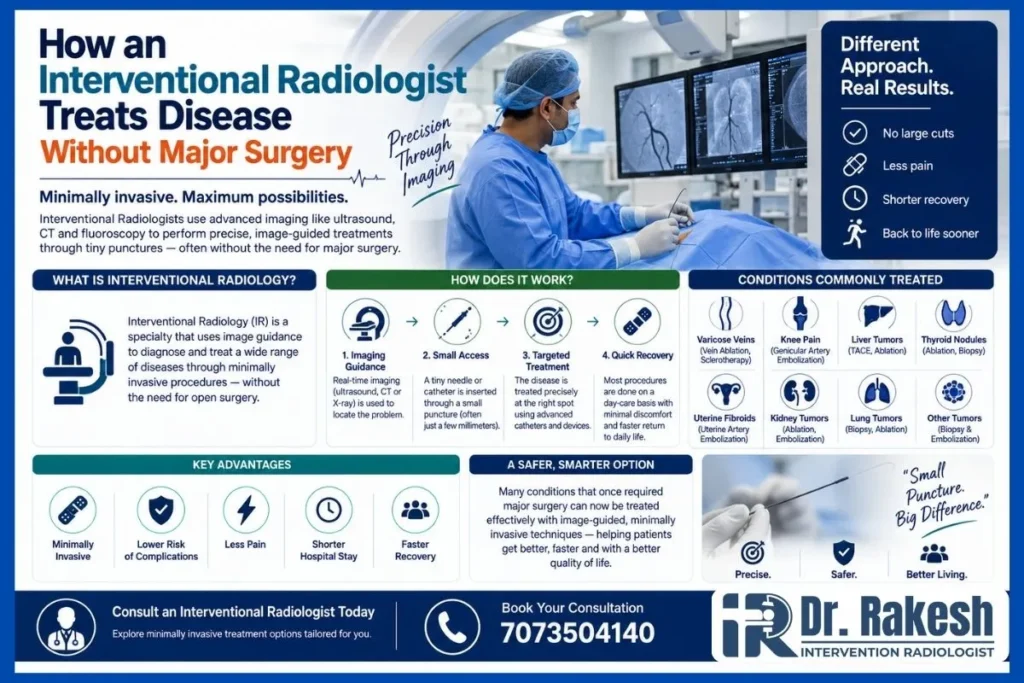
An Interventional Radiologist uses advanced medical imaging such as ultrasound, X-ray, CT, or fluoroscopy to guide tiny needles, wires, and catheters through the body. Instead of making a large surgical incision, many procedures can be performed through a small needle puncture.
From uterine fibroids and enlarged prostate to Varicose Vein Surgeon In Jaipur, thyroid nodules, chronic knee pain, and image-guided biopsy, Interventional Radiology offers minimally invasive treatment and diagnostic options for carefully selected patients.
What Is Interventional Radiology?
Interventional Radiology is a medical specialty that combines diagnostic imaging with minimally invasive procedures.
Imaging allows the Interventional Radiologist to see structures inside the body and accurately guide medical instruments toward the area requiring diagnosis or treatment.
Depending on the procedure, imaging may include:
• Ultrasound
• Fluoroscopy
• X-ray
• CT scan
• Angiography
Because the treatment is precisely targeted, many procedures can be performed without the large incisions associated with conventional surgery.
How Can Disease Be Treated Without Open Surgery?
Traditional surgery often requires an incision to directly reach the affected organ or tissue.
Interventional Radiology uses a different approach.
For many procedures, the doctor creates a tiny access point in the skin and introduces a needle or thin catheter. Using real-time imaging, the instrument is carefully guided through blood vessels or tissues to the treatment site.
Once the target is reached, the physician may block abnormal blood flow, apply thermal energy, inject medication, close an abnormal vein, or collect a tissue sample.
The exact technique depends on the condition being treated.
Uterine Artery Embolization for Fibroids
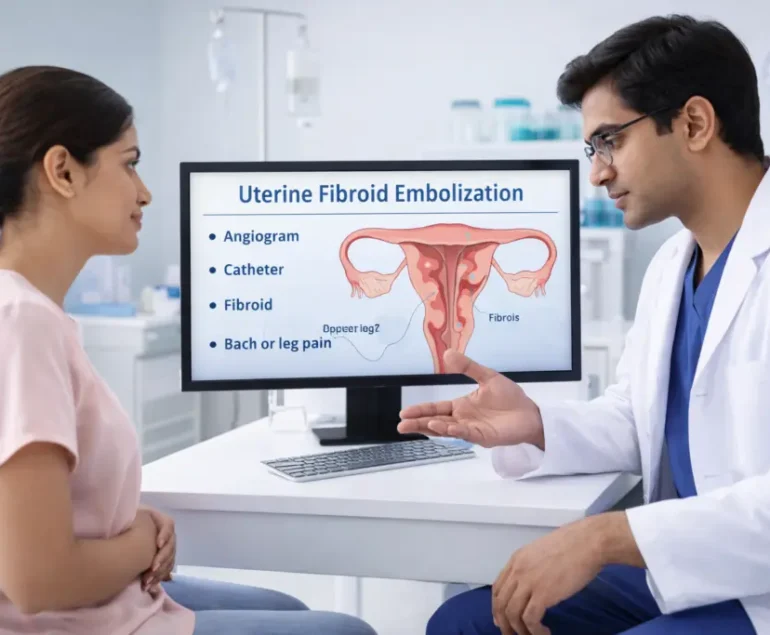
Uterine Artery Embolization Doctor In Jaipur (UAE) is a minimally invasive treatment option for selected women with symptomatic uterine fibroids.
Fibroids may cause symptoms such as:
• Heavy menstrual bleeding
• Pelvic pressure
• Abdominal enlargement
• Frequent urination
• Pain or discomfort
During UAE, an Interventional Radiologist guides a small catheter into the arteries supplying the fibroids. Tiny embolic particles are then delivered to reduce their blood supply.
Over time, the treated fibroids can shrink and symptoms may improve.
UAE can provide a uterus-preserving alternative to surgery for appropriately selected patients, although it is not suitable for every fibroid case.
Prostate Artery Embolization for Enlarged Prostate
Benign Prostatic Hyperplasia (BPH) can cause urinary problems in men, particularly as they age.
Symptoms may include frequent urination, difficulty starting urination, weak urine flow, or waking repeatedly at night to urinate.
Prostate Artery Embolization (PAE) is an image-guided procedure in which selected arteries supplying the enlarged prostate are treated with embolic particles.
Reducing blood flow can gradually decrease prostate volume and improve urinary symptoms in appropriately selected patients.
A detailed urological and imaging evaluation is important before considering PAE.
Genicular Artery Embolization for Knee Pain
Interventional Radiology is also being used in the management of selected patients with knee osteoarthritis.
Chronic inflammation can contribute to persistent pain in some patients with osteoarthritis.
During Genicular Artery Embolization (GAE), a small catheter is guided into selected blood vessels around the knee. The physician then reduces abnormal vascularity associated with inflamed areas.
GAE may be considered for selected patients who continue to experience symptomatic knee osteoarthritis despite appropriate conservative treatment.
It does not rebuild damaged cartilage or replace a severely damaged knee joint.
Thyroid Ablation for Thyroid Nodules
Some benign thyroid nodules can grow large enough to cause pressure, swallowing difficulties, visible swelling, or cosmetic concerns.
For selected patients, Thyroid Radiofrequency Ablation (RFA) may provide a minimally invasive alternative to surgery.
Under ultrasound guidance, a specialized electrode is inserted into the nodule. Controlled radiofrequency energy is applied to targeted tissue.
The treated nodule gradually reduces in volume over the following months while surrounding healthy thyroid tissue is preserved as much as possible.
Proper ultrasound assessment and benign confirmation through FNAC or biopsy when indicated are essential before treatment.
Varicose Vein Treatment Without Open Surgery
Varicose Vein Laser Treatment In Jaipur occur when faulty valves allow blood to pool within superficial veins, causing enlarged and twisted veins.
Modern treatments such as Endovenous Laser Treatment (EVLT/EVLA) can close an incompetent vein from inside.
Using ultrasound guidance, a thin laser fiber is positioned within the affected vein. Laser energy closes the abnormal vein, and blood naturally redirects through healthier veins.
This approach usually avoids traditional vein-stripping surgery in suitable patients.
Image-Guided FNAC and Biopsy
Interventional Radiology is not limited to treatment. Image guidance can also play an important role in obtaining an accurate diagnosis.
When a suspicious lump, nodule, or mass is detected, FNAC or core needle biopsy may be required.
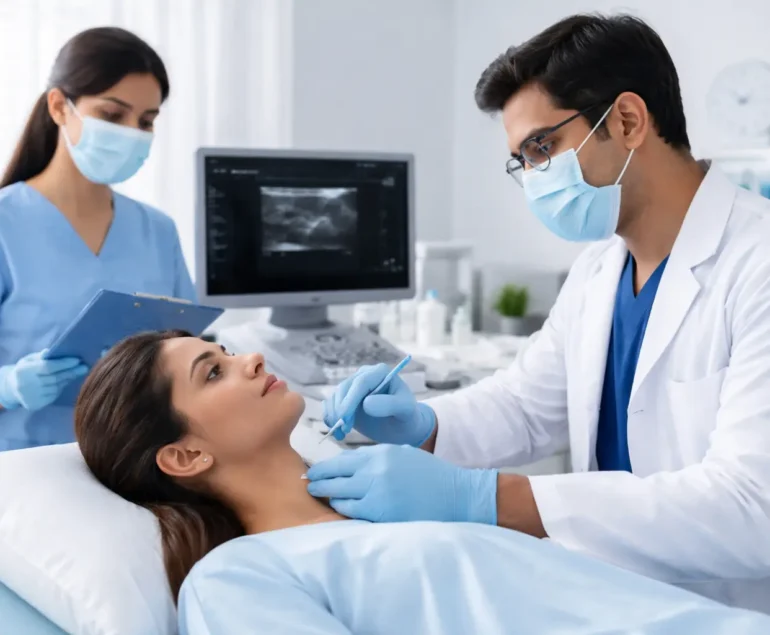
Using ultrasound or CT guidance, the physician can accurately target the abnormal tissue and collect cells or tissue for pathological examination.
Image guidance is particularly useful when the lesion is small, deep, or located close to important structures.
What Are the Benefits of Minimally Invasive Procedures?
Depending on the condition and procedure, potential advantages may include:
• Smaller skin puncture instead of a large incision
• Less tissue disruption
• Shorter hospital stay in many cases
• Faster recovery compared with major surgery
• Targeted treatment
• Reduced postoperative discomfort in some procedures
• Preservation of the affected organ in selected treatments
However, minimally invasive does not mean risk-free. Every procedure has specific benefits, limitations, and possible complications that should be discussed before treatment.
Does Interventional Radiology Replace Surgery?
No.
Interventional Radiology does not replace surgery in every situation.
Some patients are better treated with conventional surgery, while others may benefit from minimally invasive procedures.
The appropriate choice depends on the diagnosis, disease severity, anatomy, previous treatments, overall health, and individual goals.
In many cases, Interventional Radiologists work alongside surgeons, physicians, oncologists, gynecologists, urologists, and other specialists.
Interventional Radiologist in Jaipur
Patients looking for minimally invasive treatment options can consult Dr. Rakesh Kumawat – Best Interventional Radiologist and Pain Management Specialist in Jaipur at VascuCare Diagnostics & Interventions.
Depending on the condition, evaluation may include imaging, laboratory investigations, clinical assessment, and review of previous medical reports before deciding whether an image-guided procedure is appropriate.
Conclusion
Interventional Radiology makes it possible to diagnose and treat many conditions without major open surgery. Using ultrasound, CT, fluoroscopy, and angiography, an Interventional Radiologist can guide tiny instruments precisely to the area requiring treatment.
Procedures such as Uterine Artery Embolization, Prostate Artery Embolization, Genicular Artery Embolization Doctor In Jaipur, Thyroid Ablation, varicose vein laser treatment, and image-guided biopsy demonstrate how targeted treatment is changing modern healthcare.
The key is appropriate patient selection. Minimally invasive treatment should be chosen according to the patient’s diagnosis and individual medical needs rather than simply as an alternative to surgery.
Frequently Asked Questions (FAQs)
- What does an Interventional Radiologist treat?
Interventional Radiologists treat and diagnose a wide range of conditions using image-guided procedures, including vascular disorders, fibroids, enlarged prostate, selected thyroid nodules, knee osteoarthritis, and suspicious masses requiring biopsy.
- Is Interventional Radiology the same as surgery?
No.
Most IR procedures use needles or thin catheters guided by medical imaging instead of large surgical incisions.
- Are Interventional Radiology procedures safe?
They are generally minimally invasive, but every procedure has potential risks. Safety depends on the procedure, patient’s health, anatomy, and appropriate clinical evaluation.
- Can Interventional Radiology help with knee arthritis?
Yes.
Genicular Artery Embolization may be considered for selected patients with symptomatic knee osteoarthritis, particularly when inflammation contributes to persistent pain.
- Does every patient qualify for minimally invasive treatment?
No.
Patient selection is essential. Some conditions are better managed with medication, observation, conventional surgery, or another specialist treatment.