Why Ignoring Varicose Veins Can Lead to Bigger Leg Problems
Varicose veins are often dismissed as a cosmetic concern, but they are much more than enlarged, twisted veins visible beneath the skin. They are a sign that the veins are not functioning properly, allowing blood to pool in the legs instead of flowing efficiently back to the heart. While many people ignore the early symptoms because they appear harmless, untreated varicose veins can gradually progress into serious health problems that affect mobility, comfort, and overall quality of life.
If you are experiencing aching legs, swelling, heaviness, or visible bulging veins, seeking timely medical advice can help prevent complications. Dr. Rakesh Kumawat – Best Interventional Radiologist and Pain Management Specialist in Jaipur specializes in advanced, minimally invasive treatments that effectively manage Varicose Vein Surgeon In Jaipur with faster recovery and excellent outcomes.
What Are Varicose Veins?
Varicose veins develop when the valves inside the veins become weak or damaged. These valves normally ensure that blood flows upward toward the heart. When they fail, blood collects in the veins, causing them to enlarge and become twisted.
Although varicose veins most commonly affect the legs, they can become progressively worse if left untreated. Risk factors include aging, prolonged standing, obesity, pregnancy, family history, and a sedentary lifestyle.
Early Signs You Should Never Ignore
Many people live with varicose veins for years without realizing that the condition is gradually worsening. Early symptoms may include:
- Visible blue or purple bulging veins
- Leg heaviness after standing for long periods
- Aching or throbbing pain
- Swelling around the ankles
- Night cramps
- Itching near the affected veins
- Burning sensation in the legs
- Restlessness in the lower limbs
These symptoms may seem minor initially but often indicate underlying venous insufficiency that requires proper evaluation.
Bigger Leg Problems Caused by Untreated Varicose Veins
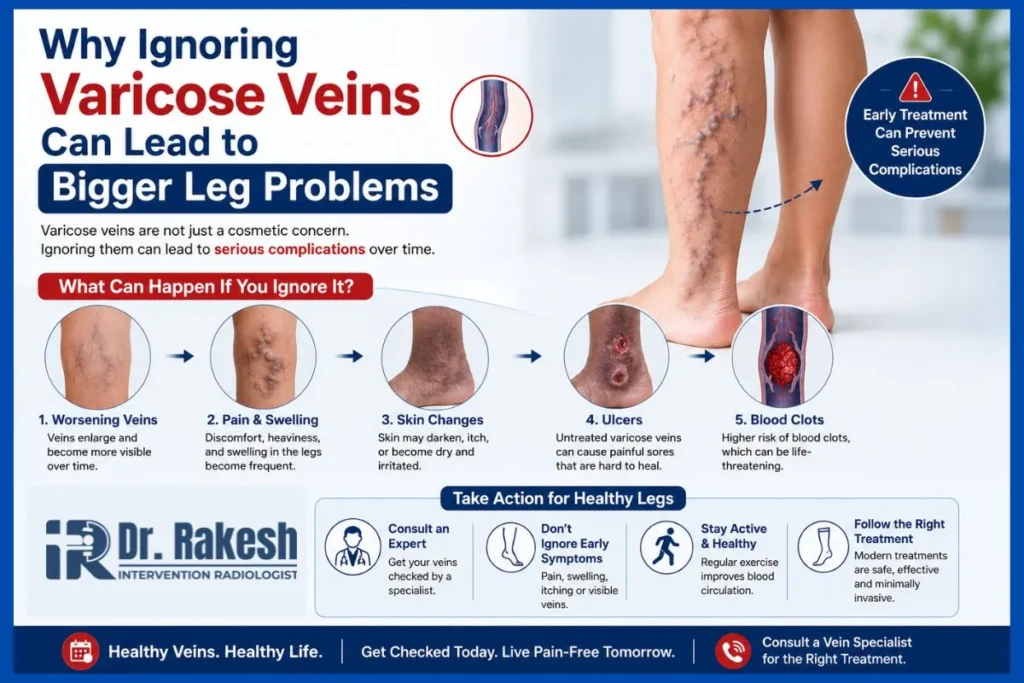
1. Chronic Leg Pain
As blood continues pooling inside damaged veins, pressure increases within the leg veins. This causes persistent aching, heaviness, throbbing, and fatigue that gradually interfere with everyday activities such as walking, climbing stairs, or standing for long periods.
2. Persistent Swelling
One of the most common complications is chronic swelling around the ankles and lower legs. Over time, the swelling may become permanent and difficult to control, leading to discomfort and reduced mobility.
3. Skin Damage and Discoloration
Poor blood circulation can cause brown or dark discoloration around the ankles. The skin may become dry, itchy, inflamed, or hardened due to prolonged venous hypertension.
Without treatment, these skin changes often become irreversible.
4. Venous Ulcers
One of the most serious complications of untreated varicose veins is venous leg ulcers. These are slow-healing wounds, usually around the ankle, caused by poor blood circulation.
Venous ulcers can be painful, prone to infection, and significantly reduce quality of life. Treatment becomes much more complicated once ulcers develop.
5. Blood Clots
Ignoring Varicose Vein Laser Treatment In Jaipur increases the risk of superficial thrombophlebitis, where blood clots form within superficial veins.
In some cases, patients may also develop deep vein thrombosis (DVT), a potentially dangerous condition where clots form in deeper veins and may travel to the lungs, causing a life-threatening pulmonary embolism.
6. Bleeding Veins
The walls of enlarged varicose veins become thin and fragile. Even a minor injury can result in significant bleeding, especially in elderly individuals.
Prompt medical treatment helps reduce this risk.
7. Reduced Mobility
Persistent pain, swelling, skin changes, and ulcers can make walking increasingly difficult. Many patients eventually reduce their physical activity, which further worsens blood circulation and overall vascular health.
Modern Treatment Options
The good news is that varicose veins no longer require major surgery in most cases. Modern interventional radiology offers minimally invasive treatments with minimal pain and faster recovery.
Treatment options may include:
- Endovenous Laser Treatment (EVLT)
- Radiofrequency Ablation (RFA)
- Foam Sclerotherapy
- Glue Therapy (Venaseal)
- Ultrasound-guided minimally invasive procedures
- Compression therapy when appropriate
The most suitable treatment depends on the severity of the condition, vein anatomy, and overall health of the patient.
Why Early Treatment Matters
Seeking treatment in the early stages offers several advantages:
- Relief from pain and heaviness
- Prevention of skin damage
- Lower risk of blood clots
- Reduced chances of venous ulcers
- Better cosmetic appearance
- Improved circulation
- Faster recovery with minimally invasive procedures
- Improved quality of life
Early diagnosis allows specialists to treat the underlying cause before permanent complications develop.
Expert Care in Jaipur
If you notice symptoms of varicose veins, do not wait until complications arise. Dr. Rakesh Kumawat – Best Interventional Radiologist in Jaipur and Pain Management Specialist provides comprehensive evaluation and advanced minimally invasive treatment for varicose veins using the latest technology. Personalized treatment plans help patients experience less pain, minimal downtime, and quicker return to normal activities.
Conclusion
Varicose veins are not merely a cosmetic issue—they are a progressive medical condition that can lead to chronic pain, swelling, skin damage, venous ulcers, and even blood clots if ignored. Early diagnosis and modern minimally invasive treatment can prevent these complications while improving both comfort and long-term leg health.
If you are experiencing symptoms of varicose veins, consulting an experienced specialist at the earliest can help protect your legs and maintain an active, healthy lifestyle.
Frequently Asked Questions (FAQs)
1. Are varicose veins dangerous?
Varicose veins are not always dangerous initially, but untreated cases can lead to pain, swelling, ulcers, skin damage, and blood clots.
2. What causes varicose veins?
They occur when vein valves become weak or damaged, allowing blood to pool inside the veins instead of flowing efficiently toward the heart.
3. Can varicose veins disappear without treatment?
No. Lifestyle changes may reduce symptoms, but damaged veins generally do not disappear without medical treatment.
4. When should I see a doctor for varicose veins?
You should consult a specialist if you experience leg pain, swelling, heaviness, skin discoloration, itching, ulcers, or enlarging veins.
5. Is varicose vein treatment painful?
Most modern treatments such as EVLT, RFA, and sclerotherapy are minimally invasive and involve minimal discomfort with quick recovery.
6. Can exercise help varicose veins?
Regular walking and leg exercises improve circulation and help reduce symptoms, although they cannot cure damaged veins.
7. Who is most at risk of developing varicose veins?
People with a family history, obesity, prolonged standing or sitting jobs, pregnancy, and increasing age are at higher risk.
8. Can untreated varicose veins cause leg ulcers?
Yes. Long-standing venous insufficiency can reduce skin nutrition and eventually lead to painful venous leg ulcers.
9. How long is the recovery after minimally invasive treatment?
Most patients return to normal daily activities within one to three days, depending on the procedure and individual health.
10. Who is the best specialist for varicose vein treatment in Jaipur?
For advanced minimally invasive treatment and comprehensive vascular care, many patients consult Dr. Rakesh Kumawat – Best Interventional Radiologist and Pain Management Specialist in Jaipur, who specializes in modern image-guided treatments for Varicose Vein Doctor In Jaipur and chronic pain.