Prostate Enlargement without Major Surgery: How Prostate Artery Embolization May Help
Prostate enlargement is a common health problem in men, especially after the age of 40 or 50. Many men experience urinary symptoms but ignore them for a long time, thinking they are a normal part of aging. However, frequent urination, weak urine flow, difficulty starting urination, incomplete emptying of the bladder, and waking up multiple times at night can affect sleep, comfort, and daily life.
One modern treatment option for selected patients with prostate enlargement is Prostate Artery Embolization Doctor In Jaipur, also known as PAE. It is a minimally invasive image-guided procedure that may help reduce symptoms caused by an enlarged prostate without major surgery.
Dr. Rakesh Kumawat, Best Interventional Radiologist and Pain Management Specialist in Jaipur, provides advanced image-guided treatment options for patients with vascular, pain-related, and interventional conditions.
What Is Prostate Enlargement?
Prostate enlargement is commonly known as Benign Prostatic Hyperplasia, or BPH. The prostate is a small gland located below the bladder and around the urine passage. As men age, the prostate may become larger. When it grows, it can press on the urethra and affect normal urine flow.
BPH is not the same as prostate cancer. It is a non-cancerous enlargement of the prostate. However, the symptoms can become troublesome and should not be ignored.
Common Symptoms of Enlarged Prostate
Men with prostate enlargement may experience different urinary symptoms. These may include frequent urination, urgency to pass urine, weak urine stream, interrupted urine flow, difficulty starting urination, dribbling after urination, feeling that the bladder is not fully empty, and waking up several times at night to urinate.
In some cases, untreated prostate enlargement may lead to urinary retention, repeated urinary infections, bladder stones, or kidney-related problems. That is why proper diagnosis and timely treatment are important.
Why Medicines May Not Always Be Enough
Many patients are first treated with medicines for prostate enlargement. Medicines may relax the prostate muscles or help reduce prostate size in some cases. However, not every patient gets enough relief. Some men may continue to have symptoms despite medicines, while others may experience side effects or may not want long-term medication.
When symptoms affect quality of life and medicines are not giving proper relief, doctors may discuss advanced treatment options. For selected patients, Prostate Artery Embolization may be considered as a minimally invasive alternative.
What Is Prostate Artery Embolization?
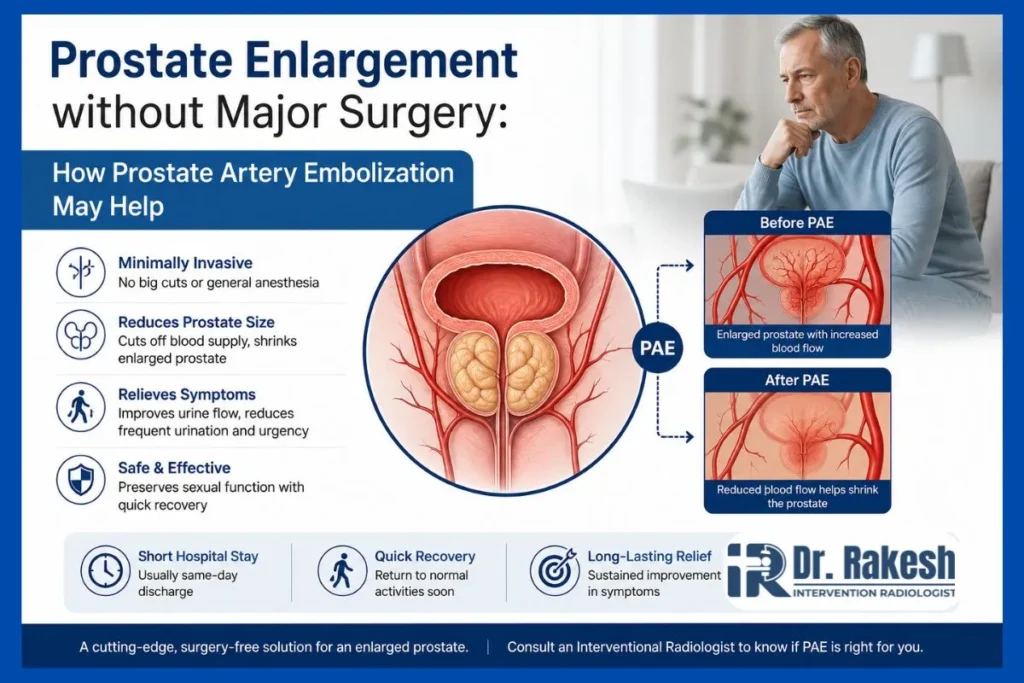
Prostate Artery Embolization Doctor In Jaipur is an image-guided procedure performed by an interventional radiologist. In this treatment, the doctor uses a thin catheter to reach the arteries supplying blood to the enlarged prostate. Tiny particles are then released to reduce blood flow to the prostate.
When the blood supply is reduced, the enlarged prostate tissue may gradually shrink or soften. This can help reduce pressure on the urethra and improve urinary symptoms in suitable patients.
Is PAE a Major Surgery?
No, PAE is not major surgery. It does not involve cutting or removing prostate tissue through a traditional surgical approach. It is usually performed through a small puncture, commonly in the wrist or groin area, depending on the doctor’s technique and patient condition.
Because it is minimally invasive, many patients may experience shorter recovery compared to major surgery. However, suitability depends on prostate size, symptoms, vascular anatomy, medical history, and diagnostic evaluation.
How Is PAE Different from Traditional Surgery?
Traditional prostate surgery often involves removing or cutting prostate tissue through the urinary passage or surgical approach. PAE works differently. It does not remove tissue directly. Instead, it reduces blood supply to the enlarged prostate so that the prostate may gradually shrink.
This makes PAE a useful option for selected patients who want to avoid major surgery, are at higher surgical risk, or are looking for a minimally invasive treatment approach.
Who May Benefit from Prostate Artery Embolization?
PAE may be considered for men with moderate to severe urinary symptoms caused by BPH, especially when medicines are not working well or are causing side effects. It may also be considered for patients who want to avoid major surgery or are not ideal candidates for surgery due to age, bleeding risk, heart disease, or other medical conditions.
However, PAE is not suitable for every patient. A detailed consultation, prostate evaluation, urine tests, imaging, and sometimes urology assessment may be needed before planning the procedure.
What Happens Before PAE?
Before PAE, the doctor evaluates symptoms, prostate size, urine flow issues, medical history, medicines, and previous reports. Blood tests, urine tests, ultrasound, prostate imaging, or other investigations may be advised.
Patients should inform the doctor about blood thinner medicines, allergies, kidney problems, diabetes, high blood pressure, heart conditions, or previous prostate treatment. This helps the doctor plan the procedure safely.
What Happens After PAE?
After Prostate Artery Embolization Doctor In Jaipur, improvement may not be immediate. Symptoms usually improve gradually as the prostate responds to reduced blood supply. Some patients may experience mild pelvic discomfort, urinary burning, frequent urination, or temporary symptoms after the procedure. These are usually managed with medicines and follow-up care.
The doctor may advise rest, hydration, medicines, and follow-up visits. Patients should report fever, severe pain, difficulty passing urine, or worsening symptoms.
Benefits of Prostate Artery Embolization
PAE may offer several benefits for suitable patients. It is minimally invasive, image-guided, does not require major surgical cuts, and may help improve urinary symptoms caused by prostate enlargement. It may also be helpful for patients who want to avoid traditional surgery or have medical conditions that make surgery riskier.
The treatment plan should always be personalized because every patient’s prostate size, symptoms, and health condition are different.
Why Choose Dr. Rakesh Kumawat in Jaipur?
Dr. Rakesh Kumawat is known as the Best Interventional Radiologist and Pain Management Specialist in Jaipur. His expertise in image-guided procedures helps patients receive targeted and minimally invasive care for selected vascular, pain, and interventional conditions.
For prostate enlargement, Prostate Artery Embolization may be considered after careful evaluation and patient selection. The goal is to provide safe, precise, and patient-focused treatment planning.
Conclusion
Prostate enlargement can affect sleep, comfort, confidence, and daily routine. While medicines help many patients, some men continue to struggle with urinary symptoms. For selected patients, Prostate Artery Embolization may offer a minimally invasive option without major surgery.
If you are experiencing frequent urination, weak urine flow, night-time urination, or incomplete bladder emptying, consult Dr. Rakesh Kumawat, Best Interventional Radiologist and Pain Management Specialist in Jaipur, for expert evaluation and guidance about advanced treatment options.
FAQs
1. What is Prostate Artery Embolization?
Prostate Artery Embolization is a minimally invasive image-guided procedure that reduces blood flow to the enlarged prostate to help improve urinary symptoms.
2. Is PAE a surgery?
No, PAE is not major surgery. It is performed through a small puncture using a thin catheter and imaging guidance.
3. Who needs PAE?
PAE may be considered for men with urinary symptoms due to enlarged prostate who do not get enough relief from medicines or want to avoid major surgery.
4. Does PAE cure prostate enlargement?
PAE may help shrink or soften enlarged prostate tissue and improve symptoms, but suitability and results vary from patient to patient.
5. Is prostate enlargement cancer?
No, benign prostate enlargement is not cancer. However, proper medical evaluation is important to rule out other conditions.
6. What are common symptoms of enlarged prostate?
Common symptoms include frequent urination, weak urine flow, urgency, night-time urination, dribbling, and incomplete bladder emptying.
7. How long does it take to improve after PAE?
Improvement is usually gradual and may take weeks. The exact timeline varies depending on the patient’s condition.
8. Is PAE suitable for every patient?
No, PAE is suitable only for selected patients after proper evaluation, imaging, and medical assessment.
9. Are there side effects after PAE?
Some patients may experience temporary discomfort, urinary burning, frequent urination, or mild pain after the procedure.
10. Who is the best doctor for Prostate Artery Embolization in Jaipur?
Dr. Rakesh Kumawat, Best Interventional Radiologist and Pain Management Specialist in Jaipur, provides advanced image-guided treatment options for selected patients.