Why Doctors Use Genicular Nerve Block Before Advanced Knee Pain Procedures
Knee pain can make everyday activities difficult, from walking and climbing stairs to sitting, standing, and sleeping comfortably. Many patients with chronic knee pain try medicines, physiotherapy, exercises, and home care, but the pain may still continue. In such cases, doctors may recommend advanced pain management procedures. Before moving to these advanced treatments, one important step is often performed: a genicular nerve block.
A Genicular Nerve Block Treatment In Jaipur is a minimally invasive injection-based procedure used to understand whether the nerves around the knee are responsible for the patient’s pain. It can also provide temporary pain relief. This is why doctors often use it before planning advanced knee pain procedures such as genicular nerve ablation.
Dr. Rakesh Kumawat, Best Interventional Radiologist and Pain Management Specialist in Jaipur, provides advanced image-guided pain management care for patients suffering from chronic knee pain, arthritis-related knee pain, and nerve-related pain conditions.
What Is a Genicular Nerve Block?
A genicular nerve block is a procedure in which medicine is injected near the genicular nerves around the knee joint. These nerves carry pain signals from the knee to the brain. When these nerves are temporarily blocked, the patient may feel reduced pain and improved comfort.
This procedure does not replace the knee joint or repair damaged cartilage. Instead, it helps identify whether the pain is mainly coming through the genicular nerve pathway. That information is very useful before planning more advanced pain procedures.
Why Is Genicular Nerve Block Done Before Advanced Procedures?
Doctors use genicular nerve block as a diagnostic and therapeutic step. In simple words, it helps answer an important question: “Will blocking these knee nerves reduce the patient’s pain?”
If the patient gets significant relief after the block, it suggests that the genicular nerves are contributing to the knee pain. This positive response helps the doctor decide whether a longer-lasting procedure, such as genicular nerve ablation, may be suitable.
Without this step, advanced procedures may be less targeted. The block helps the doctor avoid unnecessary treatment and plan the next step more accurately.
How Does It Help in Treatment Planning?
Knee pain can come from many sources, including arthritis, ligament injury, cartilage damage, inflammation, muscle weakness, or nerve irritation. Sometimes, X-rays or MRI reports show arthritis, but the exact pain source still needs clinical confirmation.
Genicular nerve block works like a “test procedure.” If pain reduces after the injection, it gives the doctor useful information about the pain pathway. This helps create a personalized treatment plan instead of using the same approach for every patient.
What Advanced Knee Pain Procedures May Follow?
If a patient responds well to genicular nerve block, the doctor may consider genicular nerve ablation. In this procedure, controlled heat energy is used to reduce pain signals from selected genicular nerves. It may help suitable patients with chronic knee pain, especially when medicines and physiotherapy are not enough.
Other advanced Knee Pain Treatment In Jaipur may include PRP therapy, joint injections, or genicular artery embolization in selected arthritis-related pain cases. The right treatment depends on the patient’s age, arthritis stage, pain severity, medical history, and diagnostic findings.

Who May Need a Genicular Nerve Block?
Genicular nerve block may be considered for patients with chronic knee pain, knee osteoarthritis, age-related knee pain, persistent pain after knee surgery, or patients who want to delay or avoid knee replacement surgery.
It may also be useful for patients who cannot undergo major surgery due to age, medical conditions, or personal preference. However, every patient needs proper evaluation before the procedure.
Is Genicular Nerve Block a Surgery?
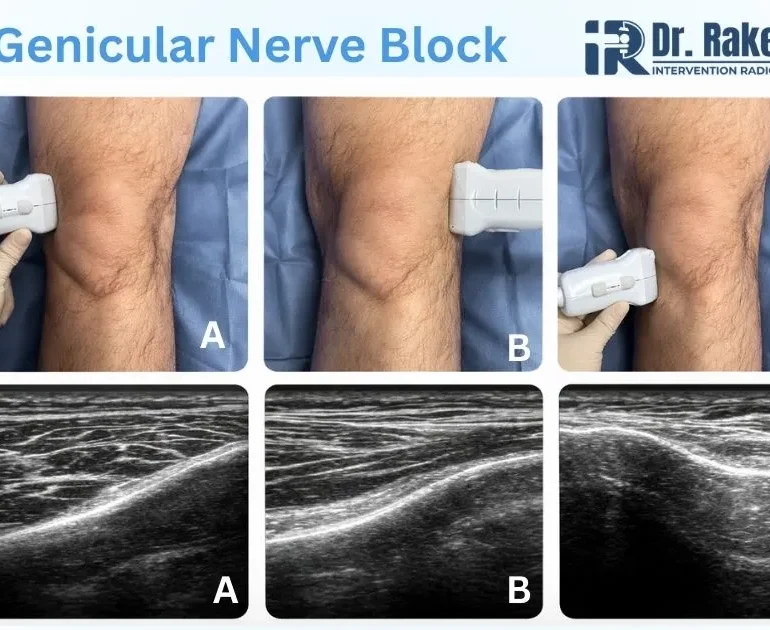
No, genicular nerve block is not a surgery. It is a minimally invasive injection procedure. It is usually performed using image guidance so the doctor can accurately target the nerves around the knee.
Because there is no large cut or joint replacement, recovery is usually faster than surgical treatment. Most patients can return home the same day, depending on their condition and doctor’s advice.
What Should Patients Expect?
Before the procedure, the doctor reviews symptoms, medical history, previous treatment, and imaging reports. During the procedure, the patient is positioned comfortably, and the target area is cleaned. The doctor then places the needle near the selected genicular nerves and injects the medicine.
After the block, the patient is observed and asked to notice the level of pain relief. This response helps the doctor decide whether advanced procedures may be helpful.
Why Choose Dr. Rakesh Kumawat in Jaipur?
Dr. Rakesh Kumawat is known as the Best Interventional Radiologist and Pain Management Specialist Doctor In Jaipur. His expertise in image-guided procedures helps patients receive targeted treatment for knee pain, back pain, nerve pain, shoulder pain, and vascular conditions.
For knee pain, he focuses on identifying the real pain source before suggesting advanced treatment. Genicular nerve block is an important step in this patient-specific approach.
Conclusion
Genicular nerve block plays an important role before advanced knee pain procedures. It helps confirm whether the genicular nerves are involved in pain and guides the doctor in planning further treatment like genicular nerve ablation. For patients suffering from chronic knee pain, this step can support better decision-making and more targeted pain care.
If you are looking for advanced knee pain treatment in Jaipur, consult Dr. Rakesh Kumawat, Best Interventional Radiologist and Pain Management Specialist in Jaipur, for expert evaluation and personalized treatment planning.
FAQs
1. What is a genicular nerve block?
A genicular nerve block is an injection procedure that targets nerves around the knee to reduce pain signals.
2. Why is it done before advanced knee pain procedures?
It helps doctors check whether the genicular nerves are the main source of knee pain before planning advanced treatment.
3. Is genicular nerve block a surgery?
No, it is a minimally invasive injection procedure and does not involve major surgery.
4. Does genicular nerve block cure knee arthritis?
No, it does not cure arthritis. It helps manage pain by blocking pain signals from selected nerves.
5. What happens if the block gives good pain relief?
If good relief occurs, the doctor may consider advanced options like genicular nerve ablation for longer-lasting pain control.
6. Is genicular nerve block painful?
Most patients feel only mild discomfort or pressure during the procedure.
7. Who can benefit from genicular nerve block?
Patients with chronic knee pain, knee arthritis, or pain after knee surgery may benefit after proper evaluation.
8. Can it help avoid knee replacement?
In selected patients, it may help manage pain and delay surgery, but it does not replace the need for surgery in advanced cases.
9. How long does relief last?
Pain relief varies from patient to patient. Some get short-term relief, while others may feel better for longer.
10. Who is the best doctor for genicular nerve block in Jaipur?
Dr. Rakesh Kumawat, Best Interventional Radiologist and Pain Management Specialist Doctor In Jaipur, provides advanced image-guided treatment for knee pain.