Best Interventional Radiologist in Jaipur: What Makes a Doctor Truly Reliable?
Choosing the Best Interventional Radiologist in Jaipur is an important decision, especially when a patient is dealing with chronic pain, vascular problems, liver conditions, kidney-related procedures, varicose veins, spine pain, knee pain, or other complex medical issues. Interventional radiology is not just about diagnosis; it is a highly advanced medical specialty where doctors use imaging guidance such as ultrasound, CT scan, MRI, fluoroscopy, or angiography to perform minimally invasive treatments. These procedures are often done through a small needle puncture or tiny incision, which may help reduce pain, recovery time, and hospital stay compared to traditional open surgery in selected conditions.
A truly reliable interventional radiologist is not only defined by technology or procedure names. Reliability comes from medical experience, accurate diagnosis, patient safety, ethical treatment advice, transparent communication, and the ability to choose the right treatment for the right patient. Many patients search online for the “best doctor,” but the real question should be: Does the doctor understand my condition deeply, explain my options clearly, and recommend only what is genuinely needed?
Who Is an Interventional Radiologist?
An interventional radiologist is a specialist doctor trained to perform image-guided, minimally invasive procedures. Instead of using large surgical cuts, the doctor uses real-time imaging to guide small instruments inside the body with high precision. Interventional radiology is used for both diagnosis and treatment across many parts of the body, including blood vessels, liver, kidney, spine, joints, and pain-related conditions. The Society of Interventional Radiology describes interventional radiologists as highly trained physicians who use advanced imaging with minimally invasive procedures to diagnose and treat many diseases throughout the body.
What Makes an Interventional Radiologist Truly Reliable?
A reliable doctor is not someone who only offers the latest treatment. A reliable doctor is someone who knows when to treat, when not to treat, and which treatment is safest for the patient. Below are some key qualities that patients should look for.
1. Strong Medical Knowledge and Accurate Diagnosis
The first quality of a good interventional radiologist is accurate diagnosis. Before suggesting any procedure, the doctor should carefully review the patient’s history, symptoms, reports, imaging scans, previous treatments, and overall health condition. For example, a patient with knee pain may need PRP therapy, genicular nerve block, Genicular Nerve Block Treatment In Jaipur, genicular nerve ablation, genicular artery embolization, physiotherapy, medicines, or sometimes referral for surgery. The right treatment depends on the exact cause of pain.
A reliable specialist does not rush into procedures. Instead, the doctor explains why a particular treatment is suitable and what results can realistically be expected.
2. Experience in Image-Guided Procedures
Interventional radiology requires precision. The doctor must be skilled in using imaging tools to reach the exact treatment area safely. Whether the procedure involves blood vessels, nerves, joints, or organs, experience plays a major role in planning and execution. RadiologyInfo explains that interventional radiology treatments use radiologic imaging to guide minimally invasive procedures and are used for many medical conditions.
Patients should look for a doctor who regularly performs the required procedure and has experience handling similar cases.
3. Focus on Patient Safety
Safety is one of the most important factors in any medical procedure. A trustworthy interventional radiologist follows proper safety protocols, reviews patient fitness, checks blood reports when required, explains possible risks, and performs procedures in a well-equipped setup. Radiation safety is also important in image-guided procedures, and the American College of Radiology provides resources focused on effective imaging while minimizing potential risk from ionizing radiation.
A reliable doctor should always balance treatment benefits with safety considerations.
4. Clear and Honest Communication
Patients often feel nervous before a medical procedure. A good doctor explains the condition and treatment in simple language. The patient should clearly understand:
- What is the actual diagnosis?
- Why is the procedure needed?
- Are there non-surgical or conservative options?
- What are the benefits?
- What are the possible risks?
- How long will recovery take?
- How many follow-ups are required?
- What results are realistic?
A reliable doctor never creates fear or pressure. Instead, the doctor helps the patient make an informed decision.
5. Ethical Treatment Advice
The best doctor is not the one who suggests the most expensive procedure. The best doctor is the one who suggests the most appropriate treatment. In many cases, patients may first need medicines, physiotherapy, lifestyle changes, or observation before any intervention. In other cases, delaying treatment may worsen the condition.
A reliable interventional radiologist gives ethical guidance and recommends procedures only when they are medically justified.
6. Advanced Treatment Options
Modern interventional radiology offers several minimally invasive treatment options for pain and vascular conditions. Depending on the patient’s problem, these may include:
- Genicular nerve block for chronic knee pain diagnosis and temporary relief
- Genicular nerve ablation for selected patients with nerve-mediated knee pain
- Genicular artery embolization for selected cases of knee osteoarthritis-related inflammation
- PRP therapy for selected joint and soft tissue pain conditions
- Varicose vein treatment using minimally invasive techniques, including Varicose Vein Laser Treatment In Jaipur
- Spine pain interventions for selected back pain and nerve pain cases
- Vascular and non-vascular image-guided procedures
The availability of advanced treatments is helpful, but the most important factor is choosing the correct procedure after proper evaluation.

Why Patients in Jaipur Prefer Minimally Invasive Treatment
Many patients today prefer minimally invasive treatment because it may offer smaller cuts, less pain, shorter recovery, and quicker return to routine activities in suitable cases. However, not every patient is a candidate for every procedure. The final decision should always be made after consultation, examination, imaging review, and discussion of risks and benefits. Interventional radiology is increasingly used for targeted treatment because imaging helps doctors guide instruments precisely inside the body.
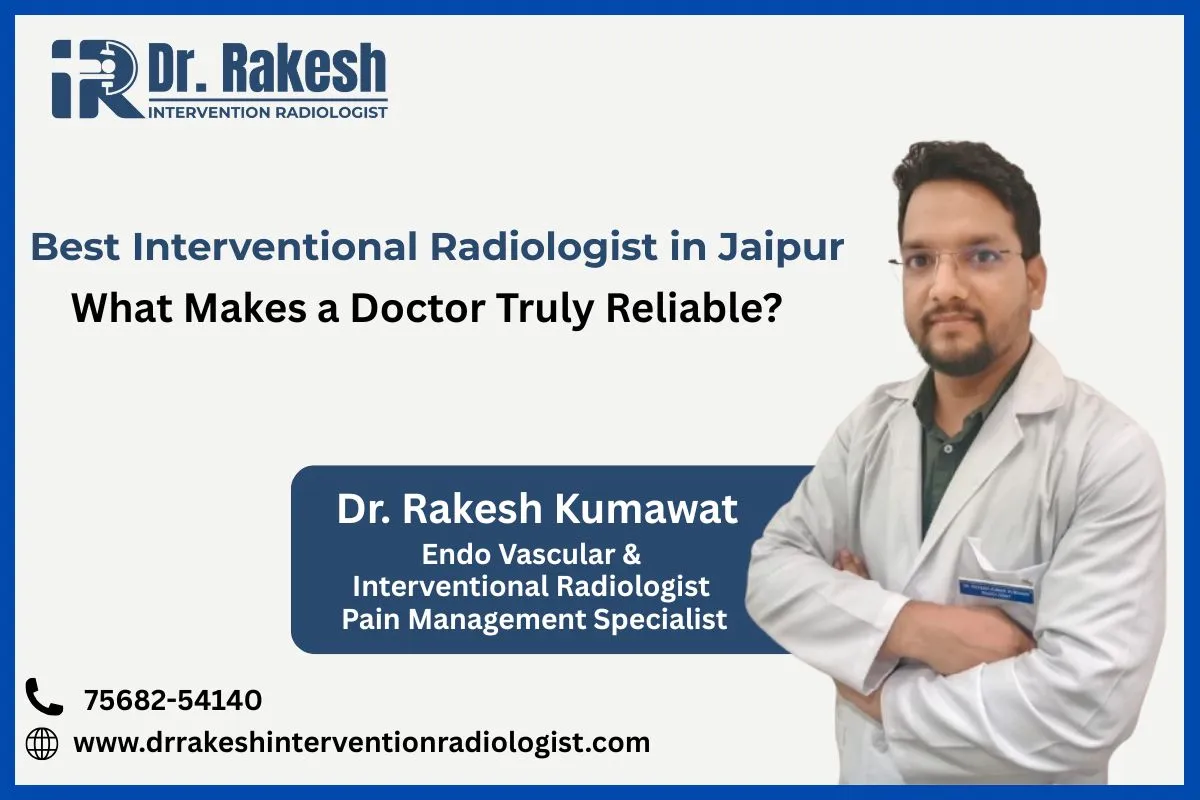
Dr. Rakesh Kumawat – Best Interventional Radiologist and Pain Management Specialist in Jaipur
For patients searching for Dr. Rakesh Kumawat – Best Interventional Radiologist and Pain Management Specialist In Jaipur, the focus should be on expert evaluation, patient-centric treatment planning, and advanced image-guided care. Patients dealing with chronic knee pain, back pain, joint pain, vascular problems, or long-standing pain conditions need a specialist who can understand the root cause and suggest a treatment plan that is safe, practical, and result-oriented.
A good interventional radiologist and pain management specialist helps patients avoid unnecessary delay, repeated temporary treatments, and confusion between multiple treatment options. The aim is not only pain relief but also better mobility, improved function, and better quality of life.