Varicose Vein Laser Treatment In Jaipur
Varicose Vein Laser Treatment Jaipur: Varicose veins can’t be neglected only for their aesthetic value. They become a cause of discomfort for many. Over time, they lead to serious concern for your overall well-being, too. Symptoms include noticing blue or purple veins visible along your lower limbs. You might not see anything serious about it to begin with. With time, you may notice symptoms like heaviness, pain, swollen ankles, burning, itching, and tiredness of your lower limbs increasing. This can happen to you when you are standing for too long, or after travel, or towards the end of your working hours.
Some people suffer due to standing-related jobs, travel, and more often than not, due to a lack of exercise, too. People who belong to Jaipur find it more risky to their health due to long working hours and less exercise. People can go for months or even years because they hope their condition will resolve on its own. This isn’t true because varicose veins can deteriorate when left untreated when you have.
If the valves aren’t working in the deeper veins, the veins can begin to bulge and twist. Luckily, it is much safer, faster, and less invasive than the former surgical options to treat the issue of Varicose Veins today. Also, among the leading options for Varicose Vein Laser Treatment in Jaipur is offered due to its ability to precisely mark the affected veins, with minimal, it doesn’t require large cuts, and recovery is fast.
This comprehensive guide includes everything you need to learn about Varicose Veins and Laser Treatment—more about what they are, what causes Varicose Veins, the symptoms and risks, the procedure of laser treatments, benefits and safety considerations, recovery period, the right candidate, and what to expect, pre- and post-procedure. Additionally, it also mentions other advanced alternatives such as RFA and glue treatments. If searching for Varicose Vein Laser Treatment in Jaipur, hopefully, this write-up will offer you all the answers and inform wise choices.
What Are Varicose Veins?
Varicose veins are dilated and twisted veins that are visible and appear mainly in the legs as a result of high pressure in the veins. It develops as a result of weakened walls in the veins or if there is failure in the functioning of vein valves, making them allow reverse or pooling of blood flow. It can result in pain or discomfort, and if not addressed, may lead to more serious conditions such as swelling, formation of ulcers and/ or wounds, and pain, and may even lead to blood clots.
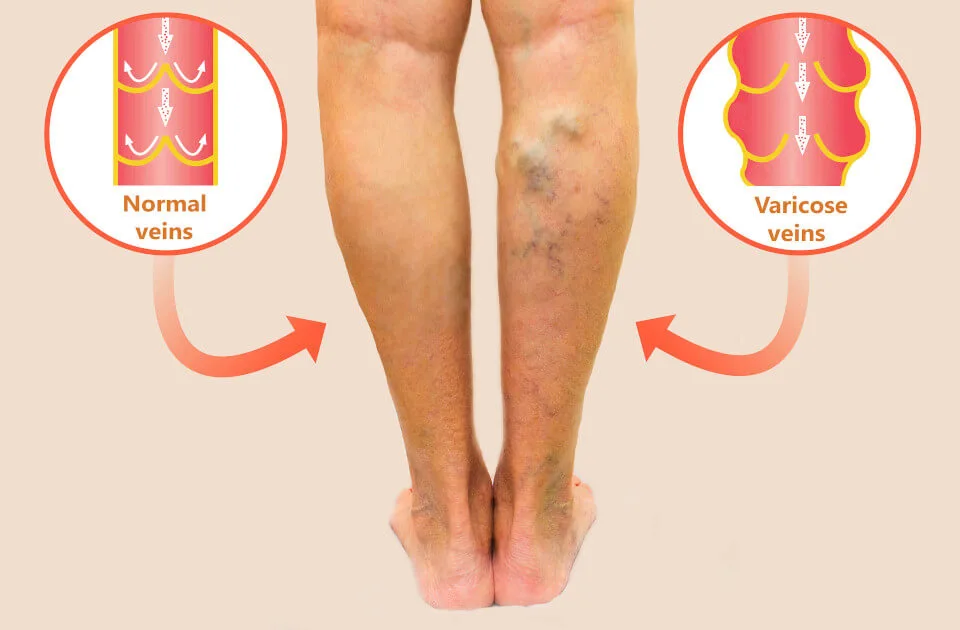
The best way to cope with varicose veins is to know more about vein functioning in general: Veins are responsible for blood circulation in the body, specifically from the legs toward the heart against gravity, and this is achieved using one-way valves in the thin walls of the vein to prevent backward blood flow. If all the valves are functioning properly, the blood flows upwards smoothly. However, if the valves lose their strength or fail, the blood may begin to pool in the veins, increasing the pressure and causing the veins to swell and turn red.
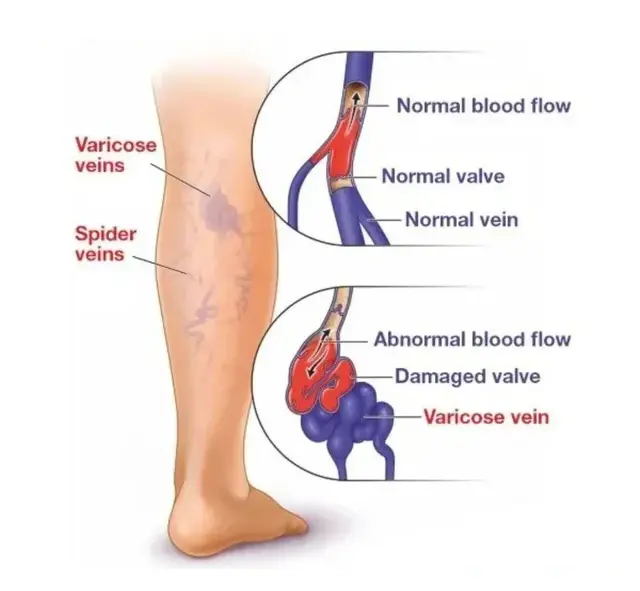
This pressure eventually makes itself known in the form of visible varicose veins. These varicose veins always appear in the legs, which is because the veins in the legs manage a large flow of blood. Additionally, they face the heaviest pull of gravity due to prolonged standing. This particular condition usually reveals itself in the form of veins appearing on the legs. This condition is actually a result of the primary or main veins leaking blood in reverse due to an improper sealing mechanism in their valves.
Signs and Symptoms of Varicose Veins
– Pain or Heaviness in the legs
– Swelling, especially of the lower legs and ankles
– Visible dilated veins that are of a blue or purplish colour
– Burning or throbbing pain
– Skin discolouration in the surrounding location
Some people feel mild heaviness only after long standing. Others feel constant pain and swelling even with normal routine walking. Many patients say their legs feel better when they elevate them or rest, and worse when they stand still for long periods.
Some individuals also experience additional symptoms, including:
Itching around the area of the varicose vein,
Nighttime leg cramps with restless legs, swelling of the legs due to tight/tired calf muscles, dry skin with eczema-like areas, increased skin thickness around the ankle region, and hyperpigmentation due to prolonged venous pressure. An important point that should not be forgotten: The apparent visibility of a vein does not correlate with the severity of its conditions, and reflux can occur even prior to the noticeable dilation of veins. This is where a proper assessment becomes important if you are also experiencing swelling and discomfort, even though the veins are not very enlarged.
Why Varicose Veins Should Not Be Ignored
Veins are also seen as merely a cosmetic issue by many individuals. The reality is that they can be a sign of a condition related to venous insufficiency, where the valves within the veins are not working properly. This can result in further issues, such as swelling of the ankle region due to the fluid that seeps into the surrounding tissues from prolonged reflux.
Finally, as time progresses, it may become harder to control swelling, causing your shoes to feel tight by the time evening comes.
Skin alterations and discolouration: Swelling and pooling of fluids may lead to skin discolouration in this region as it turns a brownish or dark colour and may become itchy, dry, or inflamed.
This is often the warning stage before ulcer formation. Venous ulcers are common around the area where the leg and foot meet and are very resistant and recurrent if the venous reflux is not treated. They can significantly interfere with mobilising, functioning, sleeping, and confidence as a whole. veins, on the other hand, can come with severe aching and dragging feelings that hinder everyday functioning because they cannot be tolerated during activity or rest alike.
As a result, reduced mobility slows blood flow further, feeding into a vicious circle of soreness and weakness. There is even a chance of surface clots forming in veins due to the pooling of blood, a condition known as superficial thrombophlebitis. Though DVT is different, with chronic venous disease complicating things in general vein health, timely care becomes essential.
If you find that your symptoms are persistently getting worse or if you are showing any skin changes, such as swelling or open wounds, it would be best to consult early in order to ascertain an adequate treatment plan for the same.
It Varicose Vein Treatments
The dependence on purely invasive surgeries has become a thing of the past. Today’s options are quick and effectively relieve pain, with no cutting or stitching, and often no extended periods of recovery. Here are the latest options for treatment:
RFA
is a radiofrequency ablation technique that uses the heat coming from radiofrequency energy to close the malfunctioning vein. It is minimally invasive, not requiring significant incisions, and has a fast recovery rate with a high efficacy for symptom relief.
Laser Therapy:
Targeted laser beams close off damaged veins perfectly. It’s a completely painless and non-scarring treatment option that is in huge demand by people seeking a quick and painless solution.
Glue Therapy:
The affected vein is closed using a medical-grade adhesive, which reroutes blood flow to other veins in the body. It’s a painless process that takes no time. and at all, and is in huge demand—people who are looking for a non-thermal and non-invasive treatment method.
Advantages of New-Age Varicose Veins Treatments:
Pain-free treatment, no cuts, stitches, or scars. Most patients get back to their activities in a few days and even go to work the next day. Among these, Varicose Vein Laser Treatment in Jaipur (often called EVLT or Endovenous Laser Treatment) is highly popular because it is precise, minimally invasive, and provides strong long-term relief in appropriate cases.
EVLT for Varicose Vein Laser Treatment:
This treatment involves minimal invasion using laser energy to close off the abnormal/saphenous vein that has been refluxing. Once the problematic vein has been closed off, nature takes over by routing blood flow through normal/saphenous veins, which helps improve circulation and allows the varicose vein to compress as the normal vein takes over.
The laser treatment targets this basic condition: reflux in the major vein. This is important because if you treat only surface veins without addressing the reflux source, the veins can recur. An effective treatment program typically starts where the refluxing vein is identified via a duplex scan.
Jaipur practices the treatment for a varicose vein via laser as it provides a quick treatment, less pain, excellent cosmetic outcome, and the fastest possible recovery time. This is a favourite among patients who opt for treatment instead of undergoing the traditional surgical process.
How Varicose Vein Laser Treatment Works:
If you’re wondering about “how it works” when it comes to Varicose Vein Laser Treatment in Jaipur, here’s a simplified guide:
- Evaluation & Duplex Ultrasound Mapping. Before undergoing treatment, the mandatory test would be the venous Doppler/duplex ultrasound. • Which vein valves are failing
- Where reflux is happening
- Which vein is the main source (often GSV/SSV)
- The size and pathway of veins
- Any clot-related concerns. This mapping is essential because varicose veins are not the same for everyone.
- Good mapping leads to better results and lower recurrence.
2) The laser procedure is performed under local anaesthesia to ensure comfort and quick healing. The skin surrounding the vein is injected with tumescent anaesthesia—a fluid solution injected along the vein to make the vein numb.
. This fluid also helps protect surrounding tissues and improves safety.
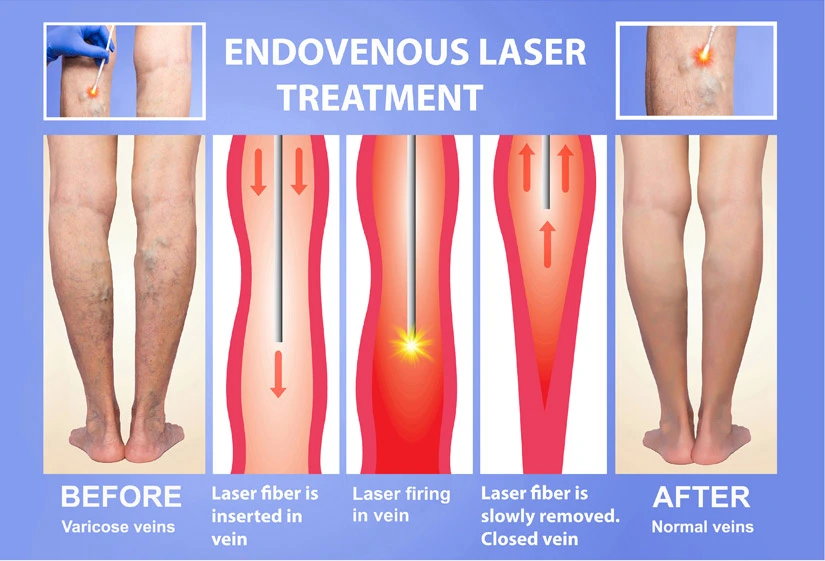
3) Laser Fibre Placement inside the Vein. A tiny entry point is made in the skin. A thin catheter and laser fibre are guided into the target vein under ultrasound guidance. The fibre is positioned carefully along the refluxing segment.
4) Controlled Delivery of Laser Energy Once the fibre is in place, laser energy is delivered in a controlled manner as the fibre is slowly withdrawn. The heat causes the vein wall to collapse and seal shut. Over time, the body naturally absorbs the closed vein.
5) Post-Procedure Compression and Walking Following the procedure, patients are usually directed to wear compression stockings. It is important to stay up and move about, as elevation and ambulation aid in venous blood flow in healthy veins, reducing the chances of blood clot formation in the new veins.
Most patients are usually discharged on the same day, but depending on the clinic’s procedure, discharge time may vary. The aim of carrying out the procedure is to correct the basic problem of valve failure and reflux, as opposed to merely addressing the surface veins.
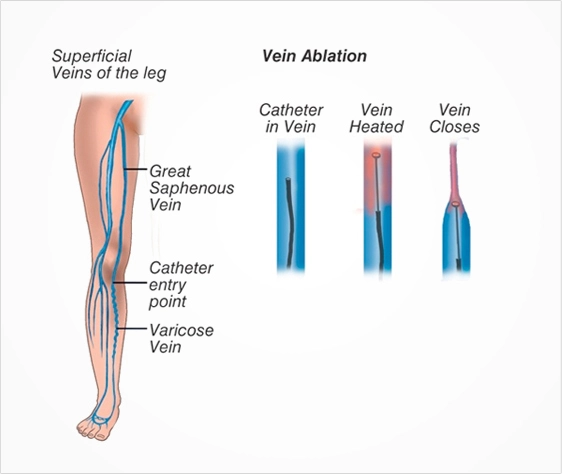
Benefits of Varicose Vein Laser Treatment Jaipur include:
The treatment has several benefits over traditional surgical procedures, like stripping, because:
– Minimally invasive and scarless result – Not involving large cuts. The treatment involves tiny punctures, which usually heal with minimal marks. For people concerned about appearance, this is a major advantage. Fast Relief from Symptoms Once reflux is corrected, pressure reduces in surface veins.
Many patients notice relief in heaviness, swelling, and aching over time. Visible veins also improve gradually. Rapid recovery with minimal downtime. For most patients, returning to normal activities takes only a couple of days, while most patients can return to work the next day, provided they do not have any strenuous work. Accurate precision by ultrasound guidance. This method enables accurate precision of the procedure by the use of ultrasound, thus avoiding the risk of damaging healthy tissues.
Long-lasting correction. If the refluxing vein has been correctly closed and the recommended lifestyle adjustments are followed, patients experience a full correction that lasts for a considerably longtime.
Varicose Vein Laser Treatment Recovery Time (What to Expect)
Recovery is one of the biggest reasons people choose Varicose Vein Laser Treatment in Jaipur. Still, it helps to know realistic timelines.
Same Day: Most patients walk soon after the procedure. Mild tightness, pulling sensation, or tenderness along the treated vein can occur. Some patients feel minimal discomfort, while others feel moderate tightness—especially when standing for long. The first couple of days (24 to 48 hours post-procedure): Most people tend to revert to their normal activities. Some swelling or bruising around where you received the procedure may be apparent.
Light walking is perfectly acceptable, and you are encouraged to do so, though you are advised to steer clear of heavy workouts or standing.
First 1 Week: Patients typically feel improvement in heaviness and pain. Compression stockings may be advised for a specific duration as per your doctor’s plan. A follow-up ultrasound may be scheduled to confirm vein closure and rule out complications. 2–4 Weeks: Most bruising and tightness have reduced. Cosmetic improvement begins to become visible.
Swelling reduces further, and comfort improves noticeably in many patients. 1–3 Months: Surface veins often shrink significantly. Skin reactions like itching and colour changes can begin to clear up, but the rate is dependent on how bad and for how long the skin disease existed.
How quickly a person can recover is dependent on the number of veins treated for this skin disease, the level to which it progressed, how physically active one is at a job, and compliance with follow-up instructions for aftercare.
Is Laser Treatment for Varicose Veins Safe?
Yes, laser treatment for varicose veins is widely considered safe when performed by an experienced specialist under proper ultrasound guidance and sterile technique. Like every medical procedure, it has potential risks, but serious complications are uncommon when:
- Proper Doppler mapping is done
- The correct vein is treated
- Adequate anaesthesia technique is used
- Post-procedure walking and follow-up are maintained
Common Temporary Effects
- Mild bruising
- Temporary tightness/pulling sensation
- Mild swelling
- Small lumps along the treated vein (often due to healing response)
Less Common Risks
- Skin burns (rare with proper tumescent anaesthesia and technique)
- Temporary numbness or tingling (due to nerve irritation near the vein)
- Inflammation in the treated vein (usually manageable)
- Clot extension risk in rare cases (why follow-up ultrasound matters)
Safety is highest when the procedure is planned and performed by a vein specialist/interventional radiologist with strong imaging guidance experience.
Who is a Good Candidate for Varicose Vein Laser Treatment?
• You have visible varicose veins with symptoms of pain, heaviness, or swelling – Doppler ultrasound study reveals reflux in the saphenous vein
• You have recurrent varicose veins after previous treatment
• You want a minimally invasive option with faster recovery
• Your lifestyle/work requires a quick return to routine. A laser treatment is particularly effective when reflux is coming from a superficial vein.
Key things to remember after laser treatment would be:
While laser treatment suffices to close off the vein, one would want to practice good vein habits to ensure that veins other than the treated one do not develop reflux issues. Such would include:
• Walk regularly and avoid long sitting/standing without breaks • Maintain healthy body weight • Use compression stockings if advised • Elevate legs when resting • Stay hydrated and active during travel • Follow up as per the schedule for ultrasound checks
Varicose Vein Specialist in Jaipur
A Varicose Vein Specialist in Jaipur focuses on diagnosing the exact vein causing reflux (backflow) and selecting the most suitable treatment. Varicose veins are not always “one visible vein problem.” In many cases, the main issue is deeper reflux in the great saphenous vein (GSV), or other trunk veins, and surface veins are only the visible result.
A specialist uses Venous Doppler to map the faulty veins and plan a treatment that reduces recurrence and improves long-term relief.
If you want proper, lasting results, always look for a doctor who:
- performs or recommends a Doppler ultrasound before treatment
- explains which vein is faulty and why symptoms are happening
- offers modern non-surgical options like laser, RFA, glue, and sclerotherapy
- provides follow-up guidance and lifestyle prevention tips
Varicose Vein Clinic in Jaipur (What You Should Expect)
A good Varicose Vein Clinic in Jaipur usually provides complete care—from diagnosis to treatment and follow-up. Patients should expect:
- consultation with symptom and lifestyle assessment
- Venous Doppler test for accurate mapping
- treatment planning (laser/RFA/glue/sclerotherapy) based on stage and vein size
- post-treatment instructions, stockings guidance (if needed), and follow-up Doppler
A clinic that follows a structured process generally provides better outcomes and reduces the chance of incomplete treatment or recurrence.
Varicose Vein Stages
Varicose Vein Stages: It progresses over time if reflux continues. Understanding stages helps patients take action earlier.
Stage 1 (Early signs): You may witness a heaviness sensation, slight swelling, appearance of minute varicose veins, and episodic muscle cramps in the legs.
Stage 2 (Presence of Varicose veins): The veins tend to protrude, accompanied by constant pains, itching, and tiredness in the legs.
Stage 3 (Recurrent swelling of ankles): The swelling in the ankles tends to increase, accompanied by increasing pain.
Stage 4 (Skin changes): The ankles tend to have a tan or brownish complexion, accompanied by a possibility of eczema development in the skin.
Stage 5 (Healed ulcer): There is a history of ulcer development that may heal; however, the skin remains fragile.
Phase 6 (Active Venous Ulcer): Open sore located close to the ankle area—requires urgent treatment of the veins. The earlier stages take fewer exercises to recover from to avoid complications such as ulcers, bleeding, and other issues.
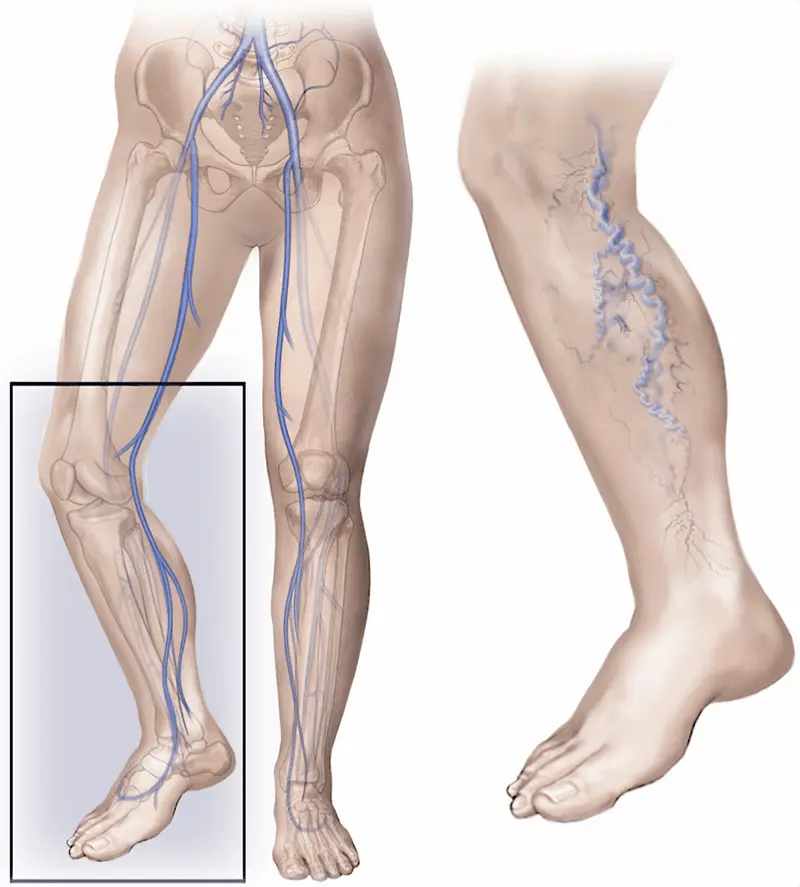
Easy-to-follow exercises for Varicose Vein Treatment
Do not get rid of varicose veins, but promote blood flow, reduce swelling, and aid in recovery—most particularly after an operation.
- walking daily (best natural pump for veins)
- ankle pumps (up-down foot movement while sitting/lying)
- calf raises (standing and lifting heels slowly)
- leg elevation (10–15 minutes, 2–3 times daily)
- cycling or swimming (low-impact, circulation-friendly activities)
The best habit is movement—avoiding long sitting/standing without breaks.
Why Choose Dr Rakesh Kumar Kumawat for Varicose Vein Laser Treatment in Jaipur?
When you search for Varicose Vein Laser Treatment in Jaipur, you want something more than a quick remedy—you want a proper diagnosis, planning, and long-lasting results. The right Doppler mapping, precision in technique, and a planned follow-through can be a huge difference-maker by themselves. With Dr Rakesh Kumar Kumawat at the helm, his patients receive:
- – Evaluation and reflux mapping by Doppler
- – Advanced minimally invasive techniques (Laser, RFA, Glue)
- – Comfort first strategy with minimal downtime
- – Counselling following procedures and planning for ultrasound follow-up
- – A plan that will work within your lifestyle and stage of illness
If your legs experience heaviness, swelling, or pain, as well as dilated veins that are progressively increasing in size, going for earlier consultations will help avoid complications and improve your life.
Frequently Asked Questions
1) What is Varicose Vein Laser Treatment?
The laser procedure for varicose vein treatment is a semi-invasive procedure involving the use of laser energy to close off a leaking vein and reroute the blood flow to more normal veins, and alleviate varicose vein symptoms.
2) How does laser treatment for varicose veins work?
The action of Laser treatment relies on inserting a Laser fiber into the relevant vein under ultrasound guidance and applying local heat to close off the vein. 3) Is the laser treatment effective and safe when applied to the case of varicose veins? Yes, it is, if performed properly by a qualified practitioner.
3) Is laser treatment for varicose veins safe?
Yes, it is, if performed properly by a qualified practitioner.
4) What is the recovery time after varicose vein laser treatment?
Most individuals usually take only a few days to resume normal activities, although some individuals usually get back to work on the very next day.
5) Does varicose vein laser treatment leave scars?
Not usually. This method involves very small punctures, rather than cuts, so scarring will be tiny or nonexistent in most instances.
6) Will I need hospital admission for laser treatment?
Generally, it is a day-care procedure—you’ll be able to leave the same day.
7) Will varicose veins come back after laser treatment?
While recurrence is reduced if the underlying cause of the reflux is treated correctly in the first place, new veins may develop in the future if underlying risk factors continue to be present.
8) Do I need compression stockings after laser treatment?
In many cases, yes, for a short period as advised by your doctor. This supports healing and comfort.
9) Is laser better than RFA or glue therapy?
Each has its advantages. The choice depends on vein and personal comfort levels. The decision is made through a Doppler assessment.
10) Can laser treatment help leg swelling and pain?
Absolutely, many patients report a reduction in heavy feeling, pain, and leg swelling as their reflux is normalised.
11) Who is the right candidate for varicose vein laser treatment in Jaipur?
Typically, patients having symptomatic varicose veins confirmed by reflux in the major superficial veins on Doppler assessment are considered.
12) What happens if varicose veins are left untreated?
Varicose veins generally progress and can lead to swelling, skin colour change, ulcers, marked pain, and, in selected instances, the possibility of clots.