
Thyroid Artery Embolization in Jaipur
Thyroid Artery Embolization in Jaipur — Advanced, Minimally Invasive Thyroid Care By Dr. Rakesh Kumar Kumawat
Problems of the thyroid are so much more than a bump in the throat. For instance, thyroid enlargement, nodules, or a swollen throat might make swallowing painful, visible because of a noticeable mass in the throat, pressing on other areas to make one have to deal with a hoarse voice, as well as difficulties in breathing when one is lying down. Moreover, an unbalance of thyroid due to thyroid problems might affect heart rate, sleep, mood, levels of energy, and weight. Historically, conventional medicine might consider surgery, among other treatments, once noticeable symptoms appear or once nodules develop. . Today, thyroid disorders can possibly be assessed for treatment through a very novel, non-invasive method known as Thyroid Artery Embolization in modern medicine.
If you are searching for Thyroid Artery Embolization Jaipur, you are presumably seeking something which has less invasiveness than conventional surgery and faster healing cycles. This treatment for thyroid disorder can be provided by Jaipur’s interventional radiologist, who is a trained specialist for procedures of vessels. This is done through gradual reduction of blood supply to certain parts of the thyroid. This is very effective for certain patients as long as they receive appropriate assessment and care.
Dr. Rakesh Kumar Kumawat, offers meticulous consultation and treatment planning considering embolization-based therapies. He focuses on safety, precision, and the comfort of the patient with an emphasis not on forcing every thyroid problem toward embolization but as a meaningful, minimally invasive option for the right patient at the right moment.
Thyroid embolization is not your typical shot, nor a simple medicine switch. This is a catheter-based procedure that relies on excellent knowledge of vascular anatomy, cautious interpretation of images, and an embolization technique that is meticulous in order to limit risk and maximize benefit. That is where the choice of a specialist comes into play.
Working closely with a Vascular & Interventional Radiology Specialist like Dr. Kumawat, who has expertise in performing minimally invasive procedures via a very small entry point, often guided by advanced imaging techniques, can go a long way for most patients contemplating Thyroid Artery Embolization procedures in Jaipur. Many patients seeking Thyroid Artery Embolization Jaipur have been eager to understand: what to expect regarding scarring, rapid recovery, and follow-up plans. This not only includes a full diagnostic discussion, possibly coordination with your endocrinologist or ENT or thyroid specialist too when necessary, but guidance according to your individual requirements of what you can reasonably expect concerning your final outcomes.
If your thyroid situation has pushed your thyroid to compress against other structures, creating pressure symptoms or a mass, and you are looking for a minimally invasive procedure to correct your issue, a consultation appointment can allow you to see if embolization therapy can help you.
What is Thyroid Artery Embolization?
Thyroid Artery Embolization is thus a minimally invasive procedure where a physician reduces blood flow to certain areas of the thyroid tissue by blocking certain thyroid arteries. This procedure basically entails “embolization,” where certain blood vessels are blocked with small particles through a catheter. This process can thereby reduce the size of certain areas of the thyroid tissue and even relieve symptoms associated with the enlargement and overactivity of such tissues.
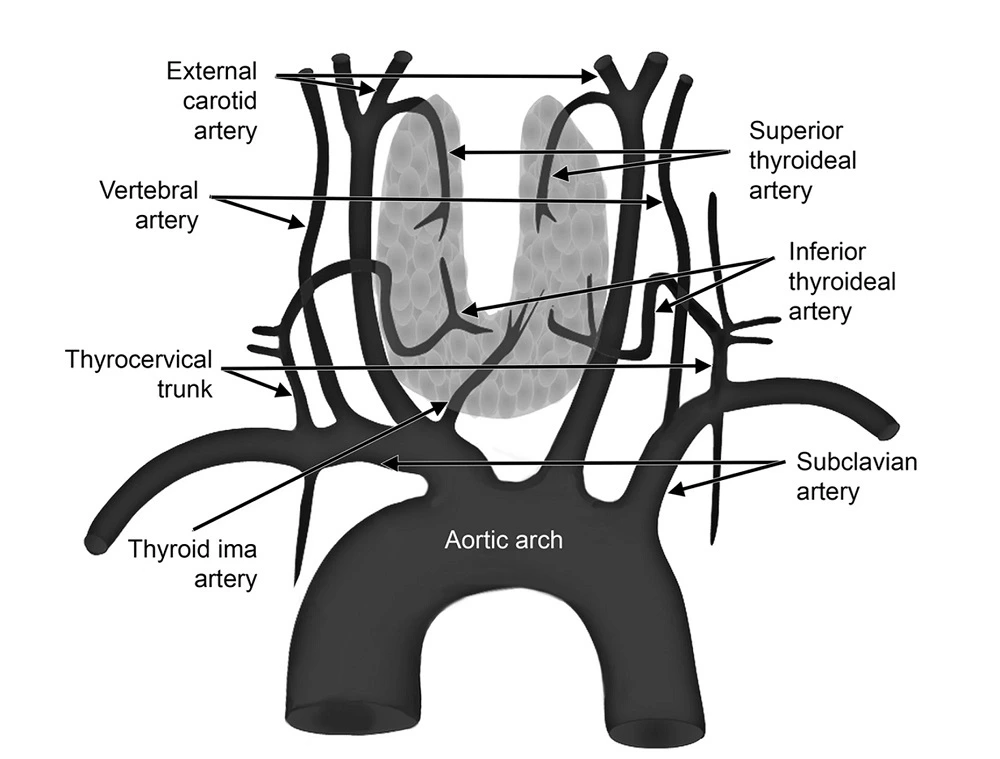
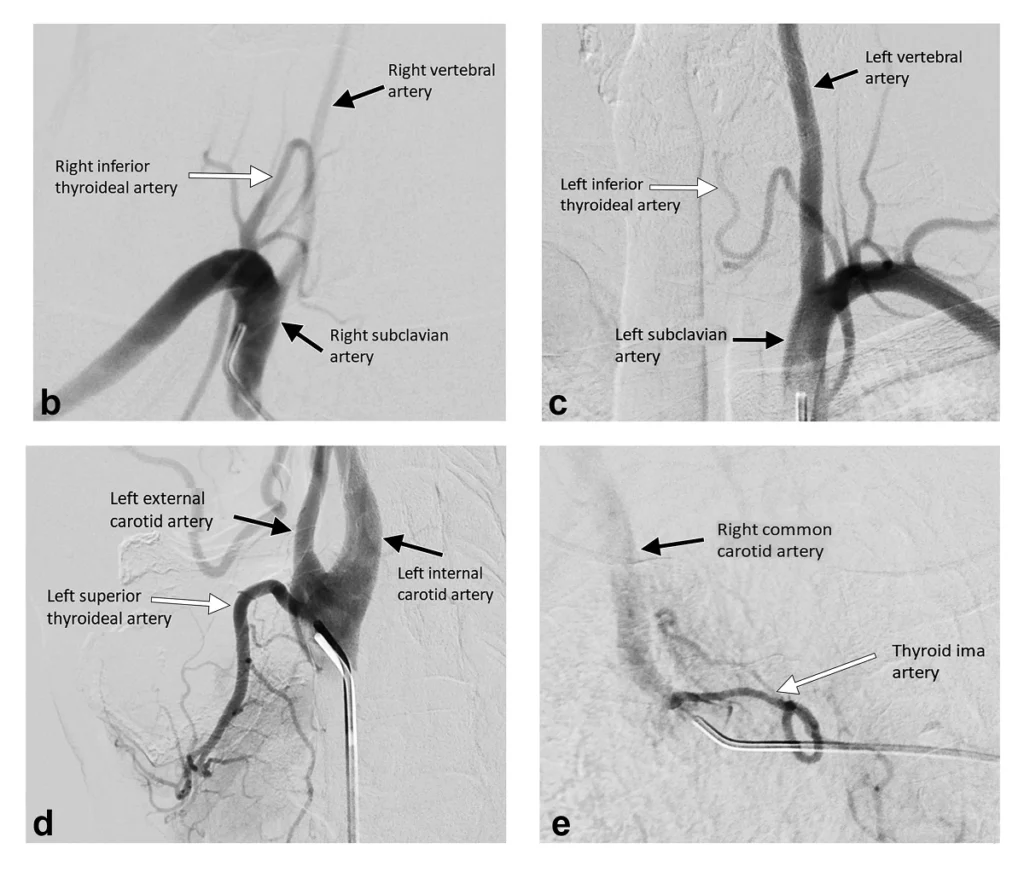
People commonly confuse embolization with surgery; it’s two completely different procedures. There’s no huge incision, no gland excised, and no stitches in the neck. However, this procedure involves only a little hole, which is commonly in the groin area but can vary depending on the procedure and patient. The procedure involves using a very thin catheter guided to the arteries supplying the thyroid gland; then particles are injected to decrease blood flow to a targeted area.
Jaipur Thyroid Artery Embolization Treatment is generally recommended to selected patients after a comprehensive assessment. This is largely depending upon the underlying cause of symptoms, the nature of thyroid nodules, the size of goiters, as well as the patient’s medical conditions.
How Thyroid Artery Embolization Works
To understand what kind of treatment it is, consider the single following concept: in order for the tissue to grow and thrive, it needs blood. The thyroid gets plenty of blood. In some cases, especially if the thyroid itself is partially enlarged or overactive, it can help to deliberately restrict its blood supply.
And here is generally how it’s done: It is performed with imaging after making sure you are a good candidate. This procedure begins with a catheter being directed towards your arteries that supply your thyroid. The physician identifies and focuses on particular branches supplying that area that is affected and releases emboli to decrease blood flow. This is a selective process – it focuses entirely on that particular part that is making you symptomatic, and it avoids all areas around it and your overall thyroid that have to be perfused.
After embolization is completed, the body can begin a slow healing process. The treated areas of the thyroid gland will begin to shrink in size, which will alleviate any symptoms of pressure that may have been suffered. Should the hyperactive portions of the gland be treated, symptoms should begin to diminish as the activity decreases.
Who May Consider Thyroid Artery Embolization in Jaipur?
Usually, in Jaipur, patients turn to Thyroid Artery Embolization when the symptoms become so troublesome that they want other choices than surgery. This procedure is recommended for patients when they experience the following situations, among others, and the consultant thinks that embolization would help them:
– Constant neck swelling from a large goiter and nodules that cause symptoms from pressure and difficulty swallowing to cosmetic concerns.
– Specific instances such as patient preference for an alternative treatment when undergoing the surgery poses a threat to their health or when they prefer to avoid surgery altogether.
– Conditions wherein selectively decreasing blood flow might be beneficial for symptom management, with appropriate evaluation and management.
It is important to note that thyroid management is a very person-specific process. There are thyroid nodules which might require a biopsy, others which need surgery, while others simply need to be monitored. This is dependent on what is being done in a patient’s thyroid, image studies, hormone levels, together with symptoms.
Benefits & Recovery after Thyroid Artery Embolization
One of the major reasons why patients are seeking Thyroid Artery Embolization Treatment in Jaipur is because of its recovery benefits over open surgery. Though each case is different, it is very much intended to be minimally invasive.
Patients are generally pleased with the fact that the procedure involves a small puncture and not a cut in the neck. In most cases, the result of the surgery leaves little or no scar and also takes a relatively short period to go back to normal activities as opposed to major surgery. Patients can go back to their normal everyday activities.
A further important consideration is precision. Because an image-guided procedure is involved, a precise pathway to reach the area of concern is utilized. For patients with symptomatology associated with the involved area of enlargement, the option of selective embolization may offer relief within an organized regimen of follow-up. Healing will involve rest for a period of time, fluids, and pain medication if necessary. Neck pain, soreness, or feelings of fullness may occur during the healing of the tissues. Activity and diet recommendations will be provided by the patient’s care team.
Does Thyroid Artery Embolization Really Work?
This is a very relevant question, and it really depends on what type of problem is being addressed and to what degree of relevance it is to embolization. “Embolization of thyroid tissue is a procedure aimed primarily at, but not exclusively, reducing vascularity of the target thyroid tissue, which then results in a reduction in its volume mass or function.” There is, of course, a degree to which patients will be looking to have symptoms of compression relieved, in regard to a pressing sensation in the throat, swallowing difficulties, and actual visibility of enlargement.
However, the success rates depend on various things like the size of the thyroid, the type of nodules, the number of nodules, the vascular system, hormone function, and compliance with follow-up care. Patient selection and the method of selective embolization are the key to success. Hence, consultation, imaging, and communication with the thyroid specialists are mandatory prior to undergoing this procedure.
A realistic expectation is the development of improvement over time. Symptoms of improvement may manifest by the reduction of symptoms and/or the resolution of swelling. Improvement may take weeks to develop. Size reduction is generally tracked through imaging studies.
Why May I Require Thyroid Artery Embolization?
You would want to consider thyroid embolization if you have a thyroid condition that is giving you persistent symptoms and you will prefer a minimally invasive procedure. Reasons why you would want to have this procedure done, as a patient, would include:
You have an enlarged thyroid or nodules resulting in neck pain, pressure, dysphagia, or visible masses.
- You want to avoid or delay a surgical procedure whether personally or from a medical standpoint.
- In your case, you would benefit from a precise guided procedure that emphasizes tissue reduction and bypasses a neck incision.
- You want to have a treatment plan that has shorter downtime and follow-ups.
The first step is determining if your thyroid problem qualifies for embolization. Some cases may need surgery, some medications, and some to be monitored. It is important you seek the right advice.
How Do I Prepare for Thyroid Artery Embolization?
First of all, you will require a complete thyroid assessment. This will include checking the functional status of the thyroid regarding hormone production, and assessment through ultrasound for any nodules present. If there is a suspicious nodule, you will probably be advised to undergo a biopsy. This will be part of a complete assessment for any treatment.
Secondly, your medical history will be considered. Kidney problems, allergy to the contrast dye used in imaging studies, bleeding disorders, or active infection may contraindicate procedures. Your list of current medications will also be considered, specifically blood-thinning medications.
Third, there are procedural directions on what is expected on the day of the procedure, for example, fasting for a few hours in preparation for sedation if the procedure warrants it. It is recommended that you come alone for the convenience and relaxation benefits. Lastly, you will be told what to expect regarding the recovery, management of symptoms, and follow-up visits. Thyroid issues can impact different systems in your body; therefore, it is fundamental to follow up with the assessment of the level of your hormones in the body.
Possible Side-Effects and Precautions Regarding its Safety
Most forms of minimal invasive techniques will entail a number of common adverse reactions and complications. To be prepared is to be prepared with confidence. Swelling, low fever, weakness, and sore throat while swallowing for a few days might occur in some patients following thyroid artery embolization. Other potential but not rare complications include non-target embolization, changes in voice due to inflammation around nerves pathways, major inflammation, or changes in function. Because the thyroid is involved with hormone function, follow-up care is necessary following the procedure. When imaging is accurate, the best possible result will be obtained.
This is also the reason why a comprehensive evaluation of suitability becomes necessary. In case where malignancy or uncontrolled thyroid hormone problems are suspected, the treatment course might have to be altered.
Why Choose Dr. Rakesh Kumar Kumawat for Thyroid Artery Embolization Treatment in Jaipur?
“Searches for Thyroid Artery Embolization in Jaipur: Not a Procedure but Good Decision-Making and Long-Term Follow-Up”. By searching for “thyroid artery embolization in Jaipur,” what you are searching for is not a “procedure” but sound “decision-making” and “good surgical technique.” “Embolization.
With Dr. Rakesh Kumar Kumawat, the best interventional radiologist in Jaipur, the patients are availed with:
Comprehensive consultation with symptom mapping and review of imaging.
Personalized candidacy assessment with safety as the No. 1 consideration.
Image-guided precision embolization is carried out through a small puncture.
Clear recovery instructions and structured follow-up planning.
Coordination of care with specialists in dealing with the thyroid if needed for comprehensive management. In case you are looking for Thyroid Artery Embolization Treatment in Jaipur, the most appropriate thing to do next is to determine if you need to undergo this treatment for your thyroid and have any idea about how much improvement you may expect.
Frequently Asked Questions
1) What is Thyroid Artery Embolization?
Thyroid Artery Embolization Procedure: Thyroid artery embolization is a minimal invasive process which uses image guidance to reduce the flow of blood to targeted thyroid tissues by injectable materials using a catheter.
2) Who provides the Thyroid Artery Embolization Treatment in Jaipur?
This will be done by Vascular & Interventional Radiologist having experience in catheter-based procedures for embolizations under image guidance. Patients in Jaipur, India, meet specialists such as Dr. Rakesh Kumar Kumawat for the planning of care employing embolization.
3) Which are the thyroid conditions that are suitable candidates for embolization?
Based on diagnosis, embolization procedures might be considered for select patients with a large thyroid or for patients presenting with nodular thyroid and symptoms from compression, among other select patients who would benefit from specific blood flow distribution adjustment.
4) Is Thyroid Artery Embolization a surgery?
No. It is a minimally invasive catheterization procedure. It requires a puncture, not a cut in the neck.
5) How long does it take to see results?
Outcomes can take time. Relief of symptoms, as well as a reduction in the tissue volume, can take weeks to months, depending on the case type.
6) Is it painful?
Most of these patients cope well with the procedure. Neck pain or soreness in the neck area may result after the procedure of embolization.
7) Which tests are required before performing Thyroid Artery Embolization in Jaipur?
Common assessments for the patient will be thyroid function tests and ultrasonology. In cases when the physician requires further information, procedures such as biopsy (FNAC) may be advised.
8) Can thyroid function occur after embolization?
Yes, there are changes in thyroid function depending on the amount of tissue treated and individual response. This explains why there is follow-up and monitoring for thyroid hormones.
9) What are the common side effects?
It may also have some short terms symptoms, which may include mild neck stiffness, a fever, fatigue, or mild dysphagia.
10) What are the risks of Thyroid Aretic Embolization?
The rare possible complications are as follows: Embolization to a non-target site. Inflammation. Change of voice. Infection. Imbalance of thyroid function.
11) What do I need to do before Thyroid Artery Embolization Treatment in Jaipur?
The preparation usually will include: consultation, radiology and laboratory testing, review of medications, particularly anti-coagulants, instructions about fasting if sedation is to be used, and transportation instructions for one companion.
12) Who may not be suitable for thyroid embolization?
Suitability depends upon diagnosis and health status. Unsuspected malignancy without appropriate analysis, active infection, certain vascular contraindications, and uncontrolled medical conditions may require alternative courses of treatment.